You’ve probably seen “FRL” pop up in a message and paused for a second.
Is it a typo? A shortcut? Something deeper?
That moment of confusion is exactly why so many people search for what does FRL mean. In a world where texting is fast, emotional, and sometimes cryptic, even a small abbreviation can carry a lot of meaning.
FRL isn’t just random letters—it’s a reflection of how people communicate today. It can show honesty, emphasis, or even emotional intensity depending on the context.
This guide breaks it down clearly—so next time you see “FRL,” you won’t just understand it… you’ll feel what it means.
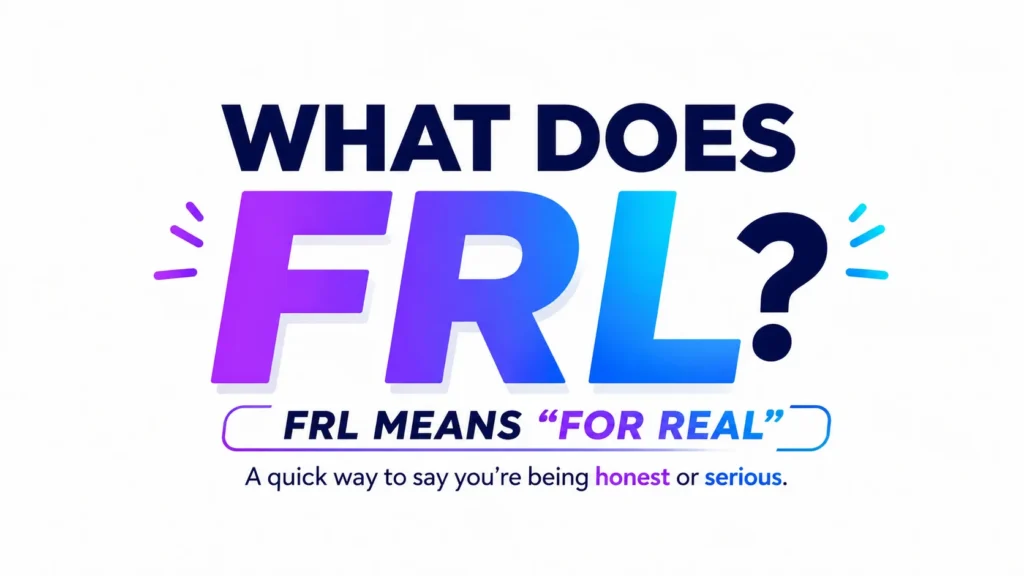
FRL – Quick Meaning
FRL stands for:
👉 “For Real”
It’s used to:
- Emphasize truth or honesty
- Agree strongly with something
- Express surprise or disbelief
Simple examples:
- “That movie was amazing, FRL.”
- “FRL? You actually did that?”
- “I miss those days, FRL.”
Think of it as a stronger, more emotional version of saying “seriously” or “honestly.”
Origin & Background
FRL didn’t appear out of nowhere.
It evolved from everyday spoken English—specifically the phrase “for real.” People have used that phrase for decades to confirm truth or express disbelief.
But as texting culture grew, especially with platforms like:
- TikTok
People started shortening everything.
“for real” → “fr” → eventually → “frl”
Why add the “L”?
Because it gives the phrase a bit more weight and clarity. “FR” can feel quick and casual, while “FRL” sounds more intentional—almost like you’re leaning into the emotion.
Social media played a huge role in spreading it. TikTok comments, meme culture, and fast-paced chats made abbreviations like FRL feel natural and expressive.
Real-Life Conversations
Here’s how FRL actually shows up in everyday chats.
WhatsApp Chat
Person A: I just got the job 😭
Person B: FRL?? That’s insane, I’m so proud of you
Instagram DM
Person A: That sunset yesterday was unreal
Person B: FRL, I couldn’t stop staring at it
TikTok Comments
User 1: This song hits different at night
User 2: FRL, especially when you’re alone
Text Message
Person A: I think I messed things up with her
Person B: FRL? What happened
Notice something?
FRL adds emotion. It’s not just about facts—it’s about feeling the moment.
Emotional & Psychological Meaning
FRL isn’t just a shortcut. It’s emotional shorthand.
When someone uses FRL, they’re often:
- Being genuine
- Emphasizing sincerity
- Seeking connection or validation
It signals: “I’m not joking. I mean this.”
Why people use it
In digital conversations, tone is hard to read. There’s no voice, no facial expression.
So people use words like FRL to:
- Show seriousness
- Strengthen emotional impact
- Avoid being misunderstood
A real-life scenario
Imagine a friend texting you late at night:
“I feel really lost right now, FRL.”
That “FRL” changes everything.
Without it, it might sound casual.
With it, you know they mean it deeply.
That’s the power of this tiny abbreviation.
Usage in Different Contexts
Social Media
FRL is everywhere—comments, captions, replies.
Example:
“This trend is actually fun, FRL.”
It adds authenticity to opinions.
Friends & Relationships
Used to express honesty or emotional depth.
Example:
“I appreciate you, FRL.”
It feels more personal than just saying “I appreciate you.”
Work / Professional Settings
Not recommended.
FRL can feel too informal or unclear in emails or formal communication.
Instead of:
“Your feedback helped me, FRL”
Say:
“Your feedback was genuinely helpful.”
Casual vs Serious Tone
- Casual: “That food was good, FRL”
- Serious: “I didn’t expect this to hurt so much, FRL”
Same word—different emotional weight.
When NOT to Use It
FRL isn’t always appropriate.
Avoid using it in:
- Professional emails or reports
- Formal academic writing
- Serious discussions with unclear tone
- Conversations with older or non-native speakers unfamiliar with slang
Why?
Because it can:
- Sound immature
- Cause confusion
- Reduce clarity
Sometimes, being direct is better than being trendy.
READ MORE: What Does Skibidi Mean? The Meaning Behind This Viral Slang
Common Misunderstandings
1. Thinking it’s a typo
Some people assume FRL is just mistyped “FR.”
But it’s intentional.
2. Confusing tone
“FRL?” can mean:
- Genuine curiosity
- Shock
- Doubt
Tone depends entirely on context.
3. Literal vs Emotional Meaning
It doesn’t always mean truth in a strict sense.
Sometimes it just amplifies emotion:
“That hurt, FRL” → emotional emphasis, not a factual claim.
Comparison Table
| Expression | Meaning | Tone | Usage |
| FRL | For real | Emotional, strong | Honest reactions |
| FR | For real | Casual, quick | Everyday chats |
| ONG | On God | Very strong, intense | Swearing truth |
| TBH | To be honest | Reflective | Sharing opinions |
| IDC | I don’t care | Detached | Indifference |
| NGL | Not gonna lie | Honest but casual | Confessions |
Key Insight
FRL sits in the middle—it’s stronger than casual slang like “FR,” but not as intense as “ONG.” That balance makes it versatile and widely used.
Variations / Types
Here are common related expressions:
- FR – Short version of “for real”
- FRFR – “For real, for real” (extra emphasis)
- FRL tho – Adds emotional confirmation
- FRL?? – Shock or disbelief
- FRL 😂 – Lighthearted agreement
- FRL 😭 – Emotional or overwhelmed
- FRL bro – Friendly emphasis
- FRL I swear – Strong sincerity
- FRL man – Casual agreement
- FRL honestly – Reinforces truthfulness
Each variation tweaks the tone slightly.
How to Respond When Someone Uses It
Casual Replies
- “Same here”
- “I get you”
- “Exactly”
Funny Replies
- “FRL? Or are you just dramatic again?”
- “You always say FRL 😂”
Mature Replies
- “I understand what you mean”
- “That sounds serious”
Respectful Replies
- “I hear you”
- “Thanks for being honest”
Your response should match the emotion behind it, not just the word.
Regional & Cultural Usage
Western Culture
Highly common among Gen Z and Millennials. Used freely in casual conversations.
Asian Culture
Used mostly in English-speaking online spaces. Less common in everyday speech.
Middle Eastern Culture
Growing in popularity, especially among younger users on social media.
Global Internet Usage
FRL is part of a shared digital language. It crosses borders easily thanks to platforms like TikTok.
Generational Differences
- Gen Z: Uses it naturally and frequently
- Millennials: Understand it, but may use it less
- Older generations: Often unfamiliar or confused
Is It Safe for Kids?
Yes—FRL is generally safe.
It doesn’t carry offensive or harmful meaning.
However:
- Kids should understand context
- Overuse may affect formal writing skills
It’s fine in casual chats—but balance is important.
FAQs
1. What does FRL mean in text?
It means “for real”, used to emphasize honesty or strong feelings.
2. Is FRL the same as FR?
Almost. FR is shorter and more casual, while FRL feels slightly more expressive.
3. Can FRL be used in serious conversations?
Yes—but it depends on tone. It can add emotional depth when used carefully.
4. Is FRL rude?
No. It’s neutral and friendly, depending on context.
5. Why do people use FRL instead of full words?
Speed and expression. It’s quicker and feels more natural in digital conversations.
6. Is FRL popular on TikTok?
Yes. It’s widely used in comments and captions.
7. Can I use FRL in emails?
Not recommended. Stick to clear, formal language.
Conclusion
FRL may look like just three letters—but it carries real emotion.
It’s about honesty. and
It’s about emphasis.
It’s about connection in a fast-moving digital world.
Understanding what FRL means helps you read between the lines of modern communication. And once you start noticing it, you’ll realize how often people use it to express something genuine.
So next time someone says “FRL,” don’t just translate it.
Feel what they’re trying to say.