You’ve probably seen “ICL” pop up in a message and paused for a second.
Is it sarcasm? A typo? Something emotional?
That moment of confusion is exactly why people search for ICL meaning in text. It looks simple, but its tone can shift depending on context—and that’s where most misunderstandings happen.
In modern texting culture, small abbreviations carry big emotional weight. One three-letter phrase can signal honesty, frustration, vulnerability, or even passive aggression.
This guide breaks it all down in a clear, real-world way—so you don’t just understand “ICL,” you feel how it’s used.
ICL Meaning in Text – Quick Meaning
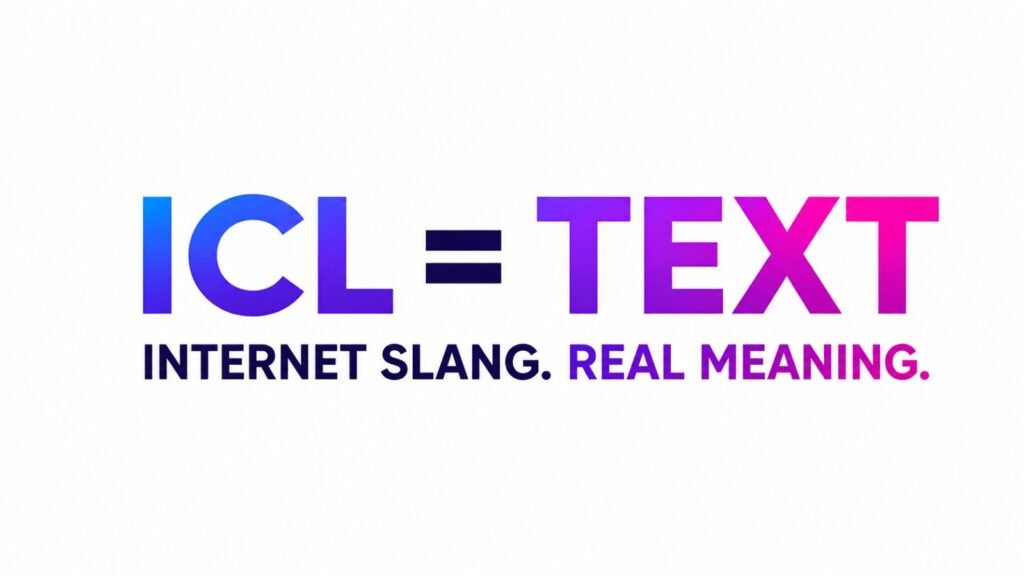
ICL = “I Can’t Lie”
It’s used to show honesty, emphasis, or emotional truth in a conversation.
Simple breakdown:
- Expresses sincerity
- Signals honesty before a statement
- Adds emotional weight to what follows
Example uses:
- “ICL, that movie was actually good.”
- “ICL, I miss how things used to be.”
- “ICL, you handled that really well.”
Think of it as a softer, more casual version of saying:
“Honestly…” or “To be real with you…”
READ MORE: We Regret to Inform You Meaning: Why It Feels So Heavy
Origin & Background
“ICL” grew out of everyday conversational English—especially in urban slang and youth culture where honesty is emphasized with phrases like “I can’t lie” or “I won’t lie.”
Over time, texting shortened everything.
Instead of typing the full phrase, people trimmed it to ICL, especially on platforms where speed matters:
- TikTok comments
- Instagram DMs
- Snapchat chats
Cultural influence
The phrase became popular through:
- Street-style conversational English
- Music lyrics and pop culture
- Influencers and short-form content creators
Evolution of meaning
Originally, “I can’t lie” meant literal honesty.
Now, “ICL” can also imply:
- Emotional vulnerability
- Slight hesitation before truth
- A way to soften blunt opinions
It’s not just about honesty anymore—it’s about how honesty feels.
Real-Life Conversations
WhatsApp Chat
Person A: Did you like the party?
Person B: ICL, it was kinda boring after 10.
Instagram DM
Person A: Be honest, how do I look?
Person B: ICL, you look amazing in that outfit.
TikTok Comments
User 1: This trend is overrated
User 2: ICL, I thought the same at first ��
Text Message
Person A: You still mad at me?
Person B: ICL… yeah, a little.
These examples show how flexible the phrase is—it works in light, emotional, and even slightly tense situations.
Emotional & Psychological Meaning
“ICL” isn’t just about honesty. It’s about emotional transparency with a safety layer.
When someone uses it, they’re often:
- Preparing you for a real opinion
- Softening something that might sting
- Showing vulnerability without sounding too intense
Why people use it
Because direct honesty can feel harsh.
“ICL” acts like a cushion.
Instead of:
“That was bad.”
You get:
“ICL, that wasn’t great.”
It feels more human.
A relatable scenario
Imagine texting a friend after a disagreement. You don’t want to escalate things, but you also don’t want to pretend everything is fine.
So you say:
“ICL, that situation still bothers me.”
That one phrase keeps the tone honest and emotionally balanced.
Usage in Different Contexts
Social Media
On platforms like TikTok or Instagram, “ICL” adds personality.
- “ICL this song hits different at night”
- “ICL I wasn’t expecting that ending”
It helps users sound authentic rather than robotic.
Friends & Relationships
This is where it shines the most.
- Expressing feelings
- Giving honest opinions
- Sharing thoughts without sounding harsh
It creates a tone of casual honesty.
Work / Professional Settings
Use with caution.
In most professional communication, “ICL” feels too informal.
Instead of:
“ICL this report needs work”
Say:
“To be honest, this report could use some revisions.”
Casual vs Serious Tone
- Casual: Light opinions, jokes, everyday thoughts
- Serious: Emotional truths, sensitive topics
The phrase adapts depending on your tone and punctuation.
When NOT to Use It
There are moments where “ICL” doesn’t fit.
Avoid it when:
- Writing formal emails
- Speaking to clients or authority figures
- Discussing sensitive cultural or serious issues
- Giving critical feedback in professional settings
Why?
Because it may:
- Sound too informal
- Undermine seriousness
- Create confusion about tone
Sometimes, clarity matters more than style.
Common Misunderstandings
1. Thinking it’s always serious
Not always. It can be playful too.
2. Confusing tone
“ICL” can sound:
- Honest
- Sarcastic
- Passive-aggressive
It depends on context.
3. Taking it too literally
It doesn’t always mean the person struggled to tell the truth.
It’s often just a conversational habit.
Comparison Table
| Expression | Meaning | Tone | When to Use |
| ICL | I can’t lie | Honest, casual | Friends, social media |
| TBH | To be honest | Direct, slightly blunt | Opinions, feedback |
| NGL | Not gonna lie | Casual honesty | Everyday texting |
| FR | For real | Emphasis | Agreement or intensity |
| IMO | In my opinion | Neutral | Discussions |
| Opposite: “Cap” | Lie / false | Playful | Calling out dishonesty |
Key Insight
While all these phrases express honesty, “ICL” feels more emotional and conversational, making it ideal for moments where tone matters as much as truth.
Variations / Types
Here are common variations you’ll see:
- ICL tho – Adds emphasis (“I can’t lie though”)
- ICL fr – Strong honesty (“for real”)
- ICL ngl – Double honesty for emphasis
- ICL… – Dramatic pause before truth
- icl – Lowercase, more casual tone
- ICL �� – Emotional honesty, often dramatic
- ICL �� – Honest but playful
- ICL, yeah – Agreement with honesty
- ICL idk – Honest uncertainty
- ICL lowkey – Subtle or hidden truth
Each variation tweaks the emotional tone slightly.
How to Respond When Someone Uses It
Casual Replies
- “Fair enough ��”
- “I get that”
- “Same tbh”
Funny Replies
- “You didn’t have to expose it like that ��”
- “Wow, honesty level 100”
Mature Replies
- “I appreciate your honesty”
- “That makes sense, thanks for being real”
Respectful Replies
- “Thanks for sharing that honestly”
- “I understand where you’re coming from”
The best response depends on the emotional weight of the message.
Regional & Cultural Usage
Western Culture
Very common among Gen Z and millennials.
Used casually in everyday texting and social media.
Asian Culture
Less common in raw form, but similar phrases exist.
Users often mix it with English slang online.
Middle Eastern Culture
Used mainly in English conversations online.
Tone may feel more expressive due to cultural communication styles.
Global Internet Usage
“ICL” is now part of global slang culture.
It travels fast through memes and viral content.
Generational Differences
- Gen Z: Uses it frequently and naturally
- Millennials: Understand it, but may prefer “TBH” or full phrases
Is It Safe for Kids?
Yes, “ICL” is generally safe.
It simply means “I can’t lie.”
However, context matters.
Kids may use it in emotional conversations, so understanding tone is more important than the phrase itself.
FAQs
1. What does ICL stand for in texting?
It stands for “I can’t lie,” used to express honesty.
2. Is ICL the same as TBH?
Not exactly. Both show honesty, but “ICL” feels more emotional and conversational.
3. Can I use ICL in formal writing?
No. It’s too casual for professional or academic use.
4. Is ICL positive or negative?
It can be both. It depends on what follows.
5. Why do people say ICL before opinions?
It softens the statement and signals honesty.
6. Is ICL rude?
Not inherently. Tone and context decide that.
7. What’s similar to ICL?
“NGL” (not gonna lie) is the closest alternative.
Conclusion
“ICL” may look like just another piece of internet slang, but it carries something deeper—honesty with emotion.
It helps people say what they really feel without sounding too harsh or too formal. That balance is exactly why it’s become so popular.
Once you understand the tone behind it, you’ll start noticing how often it shows up—and how naturally it fits into everyday conversations.
Use it when you want to sound real.
Use it when you want your words to feel human.
Because sometimes, a simple “ICL” says more than a full sentence ever could.