If you’ve ever seen “PM me” in a message or comment and paused for a second, you’re not alone. It’s one of those tiny phrases that feels obvious—until you realize it can mean more than one thing.
In texting and social media, “PM” carries a simple but powerful role. It quietly shifts a conversation from public to private. That’s why people search for pm meaning text—they want clarity, but also confidence in using it correctly.
This guide clears up the confusion. You’ll understand what “PM” really means, when to use it, and how it fits into modern digital communication.
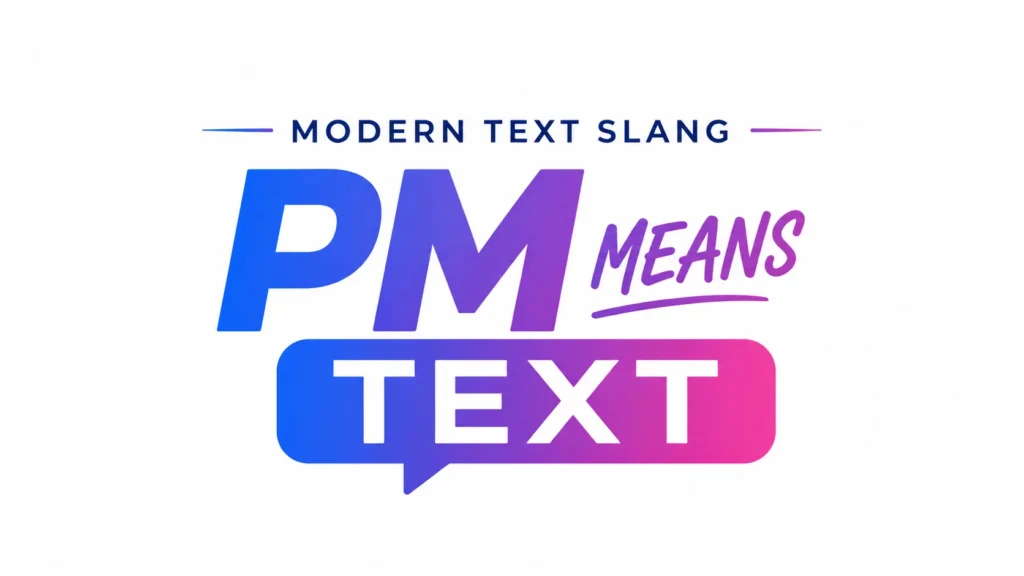
PM Meaning in Text – Quick Meaning
PM = Private Message
It’s used when someone wants to move a conversation away from public view into a direct, one-on-one chat.
Simple Breakdown:
- PM (verb): To send a private message
- PM (noun): The private message itself
- Often used across platforms like WhatsApp, Instagram, Facebook, and more
Quick Examples:
- “Hey, PM me your number.”
- “I’ll PM you the details.”
- “Can you PM me the address?”
Think of it as saying: “Let’s talk privately.”
Origin & Background
“PM” didn’t start with modern apps. It goes back to early internet forums and chatrooms in the late 1990s and early 2000s.
Back then, platforms had two types of communication:
- Public threads (visible to everyone)
- Private messaging systems (hidden conversations)
Users began shortening “private message” to PM for speed and convenience.
As social media evolved—Facebook, Twitter, Instagram—the term stuck. Even when platforms introduced terms like “DM” (Direct Message), “PM” remained widely understood.
Cultural Shift
Today, “PM” isn’t just functional—it reflects a social behavior:
- Keeping conversations discreet
- Avoiding public drama
- Sharing sensitive or personal details
It’s part of how we manage boundaries online.
READ MORE: What Does LFG Mean in Slang? How People Actually Use It
Real-Life Conversations
Here’s how “PM” shows up in real conversations across platforms:
1. WhatsApp
Person A: Do you have the assignment answers?
Person B: Yeah, I’ll PM you.
2. Instagram DMs (Comment Section)
Person A: This dress is so pretty! Where did you get it?
Person B: Thank you! I’ll PM you the link ��
3. TikTok Comments
Person A: How did you edit this video?
Person B: It’s a long process, I’ll PM you!
4. Text Messages
Person A: Can you share the address here?
Person B: I’ll PM it. Don’t want to post it publicly.
These examples show a pattern: PM is about privacy, convenience, and control
Emotional & Psychological Meaning
At first glance, “PM” seems purely practical. But it carries emotional undertones.
When someone says “PM me,” they might be:
- Seeking privacy
- Creating a closer connection
- Avoiding judgment or attention
- Protecting sensitive information
It’s subtle, but meaningful.
A Real-Life Scenario
Imagine you’re in a group chat, and someone says:
“Hey, can you PM me about that issue?”
They’re not just changing platforms—they’re changing the tone. The conversation becomes more personal, more focused, and sometimes more honest.
That shift matters. It shows trust.
Usage in Different Contexts
Social Media
“PM me” is everywhere in comments:
- Business inquiries
- Product links
- Personal questions
It keeps conversations clean and organized.
Friends & Relationships
Among friends, it’s casual and friendly:
- “PM me the pics!”
- “I’ll PM you what happened…”
In relationships, it can signal intimacy or privacy.
Work / Professional Settings
In professional spaces, “PM” is still used—but more carefully:
- “Please PM me the details.”
- “Let’s discuss this via PM.”
However, in formal environments, people may prefer:
- “Send me a direct message”
- “Email me the information”
Casual vs Serious Tone
- Casual: “PM me lol”
- Serious: “Please PM me the documents”
The tone depends on context, not the phrase itself.
When NOT to Use It
Even simple phrases can feel out of place sometimes.
Avoid using “PM” when:
- In formal emails → It feels too casual
- With unfamiliar audiences → Not everyone understands it
- In urgent situations → It may delay communication
- Where transparency matters → Public discussion may be better
Also, cultural awareness matters. Some people prefer direct, clear language over abbreviations.
Common Misunderstandings
1. PM = Time (Post Meridiem)
Some confuse “PM” with time (like 5 PM). Context matters.
2. PM vs DM
People think they’re different—but they’re mostly interchangeable.
3. Tone Confusion
“PM me” can feel:
- Friendly
- Secretive
- Professional
Depending on delivery.
4. Literal vs Intent
Sometimes, “PM me” isn’t about privacy—it’s about convenience.
Comparison Table
| Term | Meaning | Usage | Tone |
| PM | Private Message | General platforms | Neutral |
| DM | Direct Message | Social media (Instagram, Twitter) | Casual |
| Text me | Send SMS | Personal communication | Friendly |
| Email me | Formal communication | Work/professional | Formal |
| Call me | Voice conversation | Urgent/personal | Direct |
Key Insight
While “PM” and “DM” seem identical, “PM” feels slightly broader and more traditional, while “DM” feels modern and platform-specific.
Variations / Types
Here are common variations you’ll see:
- PM me – Asking someone to send a private message
- I’ll PM you – Offering to message privately
- Check your PM – Notification to look at messages
- Sent you a PM – Confirmation message sent
- PM for details – Often used in selling or promotions
- PM ASAP – Urgent private message request
- Slide into PMs – Playful variation (like DMs)
- PM later – Delayed private conversation
- PM only – Restricting communication to private chat
- No PMs please – Setting boundaries
Each variation subtly changes tone and intention.
How to Respond When Someone Uses It
Casual Replies
- “Sure, sending now!”
- “Okay, check your PM ��”
Funny Replies
- “Sliding into your PMs like a pro ��”
- “Incoming PM… brace yourself!”
Mature Replies
- “I’ll send you the details privately.”
- “Let’s continue this in PM.”
Respectful Replies
- “Of course, I’ll message you privately.”
- “Thanks, I’ll follow up via PM.”
Regional & Cultural Usage
Western Culture
“PM” is widely understood and used interchangeably with “DM.”
Asian Culture
Usage depends on platform. Younger users prefer “DM,” but “PM” is still recognized.
Middle Eastern Culture
Privacy is highly valued, so “PM” often signals respect and discretion.
Global Internet Usage
“PM” remains universal. Even when platforms differ, the meaning stays consistent.
Generational Differences
- Gen Z: Prefers “DM,” but understands “PM”
- Millennials: Use both comfortably
- Older Users: More likely to use “PM”
Is It Safe for Kids?
Yes—“PM” itself is harmless.
However, context matters. Parents should ensure:
- Kids understand online privacy
- They avoid sharing personal information
- They communicate with trusted people
It’s not the phrase—it’s how it’s used.
FAQs
1. What does PM mean in texting?
It means Private Message, used to start a one-on-one conversation.
2. Is PM the same as DM?
Yes, both mean private messaging. “DM” is more common on social media.
3. What does “PM me” mean?
It’s a request asking you to send a private message.
4. Is PM formal or informal?
It’s mostly informal but can be used in semi-professional contexts.
5. Why do people say PM instead of texting?
Because it applies across platforms, not just SMS.
6. Can PM mean something else?
Yes, it can also mean time (post meridiem), but context clarifies it.
Conclusion“PM” might look like just two letters, but it plays a big role in how we communicate online. It’s about more than messaging—it’s about privacy, intention, and connection.
Once you understand it, using it feels natural. You’ll know when to keep things public—and when to quietly shift the conversation.
So next time someone says, “PM me,” you won’t hesitate. You’ll know exactly what they mean—and how to respond with confidence.