If you have seen someone write “STFU” in a text, comment, meme, or group chat, you probably paused for a second and wondered, what is STFU mean, and why does it sound so intense?
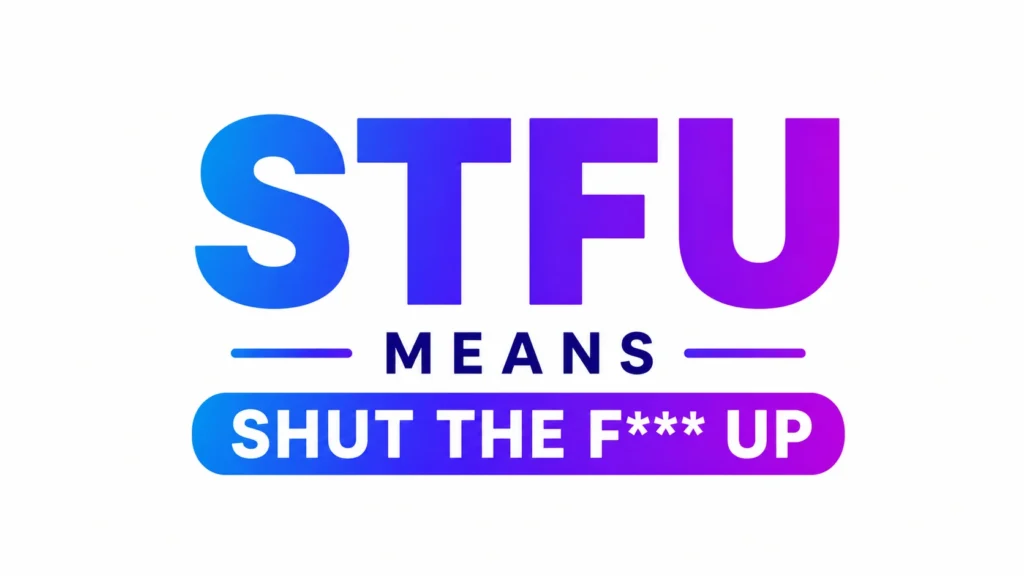
STFU is a slang abbreviation for “shut the f* up.”** It is rude, blunt, and emotionally strong. People use it when they feel shocked, annoyed, angry, playful, or completely overwhelmed by something someone said.
However, context matters a lot. Sometimes STFU is aggressive. Sometimes it is used jokingly between close friends. In other moments, it simply means “no way” or “I cannot believe that.”
Because online language moves fast, many people search this phrase to understand whether someone insulted them, joked with them, or reacted dramatically. This guide explains the meaning, tone, examples, cultural use, and safer alternatives so you can understand it confidently.
What Is STFU Mean – Quick Meaning
STFU means “shut the f* up.”** It is an informal slang expression used to tell someone to stop talking, usually in a rude or forceful way.
Simple Definition
STFU can mean:
- “Be quiet.”
- “Stop talking.”
- “I cannot believe that.”
- “That is shocking.”
- “You are annoying me.”
- “No way!”
The exact meaning depends on tone, relationship, and situation.
Short Examples
“She said she met Drake yesterday.”
“STFU, seriously?”
“You keep interrupting me.”
“STFU for one second.”
“I got the job!”
“STFU! I’m so proud of you!”
In the first and third examples, it sounds surprised or playful. In the second, it sounds rude and angry.
Origin & Background
STFU comes from the full phrase “shut the f*** up,” which existed long before texting and social media. As online communication became faster, people shortened common expressions into acronyms.
Where It Came From
The phrase became popular in internet chat rooms, forums, gaming spaces, and early messaging apps. People wanted quick ways to express strong emotions without typing the full sentence.
Because the full phrase contains profanity, the abbreviation made it easier to use in casual digital spaces.
Cultural Influence
STFU spread through gaming chats, meme culture, reaction posts, Twitter-style arguments, and comment sections. It became part of the internet’s emotional language.
Over time, people started using it not only as an insult but also as a dramatic reaction.
Social Media Impact
Platforms like TikTok, Instagram, X, Reddit, and YouTube helped soften and expand its meaning. For example, someone might comment “STFU this is so cute” under a pet video.
In that case, they are not telling anyone to be quiet. Instead, they are expressing emotional shock.
How the Meaning Evolved
Originally, STFU was mostly aggressive. Today, it can be rude, playful, sarcastic, shocked, affectionate, or humorous.
Still, because it contains a harsh phrase, you should use it carefully.
Real-Life Conversations
WhatsApp Conversation
Person A: I told my cousin your joke and now everyone keeps repeating it.
Person B: STFU, really?
And,
Person A: Yes, you’re accidentally famous in our family now.
Person B: That’s actually embarrassing but funny.
Here, STFU means surprise, not anger.
Instagram DMs
Person A: Guess who just liked my story? Or,
Person B: Who?
Person A: My old crush.
Person B: STFU. After all this time?
Person A: I know. I’m pretending to be calm.
In this conversation, STFU expresses disbelief and excitement.
TikTok Comments
Person A: I made this dress from old curtains. Morover,
Person B: STFU, this looks designer.
Person A: Thank you! I almost gave up halfway through.
Here, the word sounds like praise mixed with shock.
Text Messages
Person A: You always talk over me when I’m trying to explain myself. and,
Person B: I’m just saying what I think.
Person A: No, STFU for a minute and listen.
This one feels serious and hurtful. The speaker is frustrated, and the phrase may escalate the conflict.
Emotional & Psychological Meaning
STFU is not just a phrase. It carries emotional pressure. People use it when their feelings jump faster than their ability to explain them politely.
What Emotion It Expresses
Depending on the situation, STFU can express:
- Anger
- Shock
- Excitement
- Disbelief
- Playfulness
- Irritation
- Emotional overload
Because it is short and sharp, it feels immediate.
Why People Use It
People often use STFU when they want a strong reaction in very few words. It creates impact instantly.
In casual friendships, it can sound funny. In tense conversations, however, it can sound disrespectful.
What It Reveals About Modern Communication
Modern communication is fast, emotional, and context-heavy. A single acronym can carry several meanings at once.
For example, I have seen people use STFU in group chats during happy news, like someone announcing an engagement. Nobody felt insulted because the mood was joyful. Yet the same word during an argument would feel harsh.
Usage in Different Contexts
Social Media
On social media, STFU often appears as a reaction. People use it under shocking videos, celebrity news, dramatic reveals, or funny posts.
Example: “STFU, this transformation is insane.”
In this case, it means “I am shocked,” not “be quiet.”
Friends & Relationships
Between close friends, STFU may sound playful if both people understand each other’s humor.
However, in romantic relationships, it can feel disrespectful during serious conversations. Even if someone means it casually, the other person may hear it as dismissal.
Work / Professional Settings
Avoid STFU at work. It is not professional, even if you are joking.
In emails, meetings, workplace chats, or client messages, it can damage your image quickly. Instead, use respectful phrases like:
- “Let’s pause for a moment.”
- “Can we keep this constructive?”
- “I’d like to respond before we continue.”
Casual vs Serious Tone
Casual tone: “STFU, that’s hilarious.”
Serious tone: “STFU, nobody asked you.”
The first sounds playful. The second sounds insulting. Tone changes everything.
When NOT to Use It
Inappropriate Contexts
Do not use STFU with teachers, managers, clients, elders, strangers, or anyone you do not know well.
It can sound aggressive, immature, or disrespectful.
Cultural Sensitivity
Some cultures take direct profanity more seriously than others. In conservative families, formal workplaces, or respectful social settings, STFU may feel deeply offensive.
Even online, people from different backgrounds may interpret it differently.
Situations Where It May Cause Misunderstanding
Avoid it during arguments, emotional discussions, apologies, professional conversations, and serious family matters.
A joke can easily turn into conflict when the other person already feels hurt.
Common Misunderstandings
People Think It Always Means Anger
STFU can mean anger, but not always. Sometimes it means shock, excitement, or disbelief.
Still, because the original phrase is rude, you should not assume everyone will take it lightly.
Tone Confusion
Text removes facial expressions and voice tone. Because of that, “STFU” can look harsher than intended.
Adding context helps. For example, “STFU 😂” feels softer than “STFU.”
Literal vs Figurative Meaning
Literally, STFU tells someone to stop talking. Figuratively, it can mean “no way,” “I’m shocked,” or “that’s unbelievable.”
Context decides which meaning applies.
Comparison Table
| Expression | Meaning | Tone | Best Used In |
|---|---|---|---|
| STFU | Shut the f*** up | Harsh, shocked, playful, or angry | Close friends, memes, reactions |
| Shut up | Be quiet | Rude or playful | Casual speech |
| No way | I don’t believe it | Surprised | Friendly conversations |
| OMG | Oh my God | Shocked or excited | Texts, social media |
| Be quiet | Stop talking | Neutral or firm | General situations |
| Calm down | Relax | Firm, sometimes annoying | Arguments or tense moments |
| Speak up | Talk louder | Opposite meaning | Conversations, meetings |
| Keep talking | Continue | Opposite meaning | Friendly or supportive chats |
Key Insight
STFU is powerful because it can sound funny in one context and deeply rude in another. The safest way to understand it is to look at the relationship, mood, and message around it.
Variations / Types
STFU
The standard version. It usually means “shut the f*** up,” but tone depends on context.
stfu
The lowercase version feels slightly more casual. People often use it in memes, jokes, or quick reactions.
STFU 😂
This version usually sounds playful. The laughing emoji softens the harshness.
STFU OMG
This expresses shock or excitement. It often means “I cannot believe this.”
STFU respectfully
A humorous version. People use it when pretending to be polite while still sounding dramatic.
STFU rn
This means “shut the f*** up right now.” It can sound impatient, shocked, or playful.
STFU I’m crying
This usually means something is very funny or emotional. It does not always mean anger.
STFU that’s cute
This expresses emotional surprise. People use it when something feels adorable or wholesome.
STFU no way
This means strong disbelief. It is common when reacting to unexpected news.
Kindly STFU
This is sarcastic. It may sound funny among friends but rude in serious contexts.
How to Respond When Someone Uses It
Casual Replies
You can reply casually if the tone feels friendly:
- “I’m serious!”
- “Yes, really.”
- “I knew you’d react like that.”
- “I swear it happened.”
Funny Replies
If the mood is playful, try:
- “I will not, I have more tea.”
- “Too late, I already started.”
- “You asked for the update.”
- “No silence today.”
Mature Replies
If it feels rude, answer calmly:
- “Please don’t talk to me like that.”
- “I’ll listen, but not if you speak that way.”
- “Let’s restart this conversation.”
- “I understand you’re upset, but that felt disrespectful.”
Respectful Replies
If you want to avoid conflict, say:
- “I get that you’re surprised.”
- “I know it sounds unbelievable.”
- “Let me explain.”
- “I didn’t mean to upset you.”
Regional & Cultural Usage
Western Culture
In many Western online spaces, STFU is common in memes, gaming, social media, and casual chats. However, it still counts as profanity.
Friends may use it jokingly, but workplaces usually reject it.
Asian Culture
In many Asian cultures, direct rude language can feel more disrespectful, especially toward elders, teachers, or authority figures.
Younger people may understand it through global internet culture, but they may still avoid using it openly.
Middle Eastern Culture
In many Middle Eastern settings, public respect and family manners matter strongly. STFU can sound very harsh, especially in mixed-age conversations.
Online youth culture may use it more casually, but context remains important.
Global Internet Usage
Globally, STFU has become a reaction phrase. Many people understand it from memes, comments, gaming, and pop culture.
Even so, not everyone hears it the same way.
Generational Differences
Gen Z often uses STFU dramatically, especially in reaction to surprising or funny content. Millennials may use it too, but often understand its older, harsher meaning.
Older generations may read it more literally and find it offensive.
Is It Safe for Kids?
STFU is not ideal for kids because it includes profanity and can encourage rude communication.
Teenagers may see it online, so parents and teachers should explain the meaning calmly. Instead of only banning the word, it helps to teach context, tone, respect, and better alternatives.
FAQs
What is STFU mean in text?
STFU means “shut the f*** up.” In text, it can sound rude, playful, shocked, or excited depending on the conversation.
Is STFU a bad word?
Yes, STFU is considered offensive because it includes profanity. Even when used jokingly, it can sound disrespectful.
Can STFU mean surprise?
Yes. Many people use STFU to mean “no way” or “I can’t believe it,” especially on social media.
Is STFU okay to use with friends?
It can be okay with close friends who understand your tone. However, avoid it if the person may feel insulted.
What should I say instead of STFU?
You can say “no way,” “seriously?”, “be quiet,” “please stop,” or “let me speak,” depending on the situation.
Is STFU professional?
No, STFU is not professional. Avoid it in work chats, emails, meetings, and formal communication.
Why do people say STFU when they are happy?
People sometimes use STFU as an exaggerated emotional reaction. In happy contexts, it can mean shock, excitement, or disbelief.
Conclusion
STFU is a short slang term with a strong emotional punch. It usually means “shut the f*** up,” but modern internet culture has made it more flexible.
Sometimes it is rude. and, Sometimes it is playful. Sometimes it means “I’m shocked” more than “be quiet.”
The key is context. Before using it, think about who you are speaking to, what mood the conversation has, and whether the word might hurt someone. When you understand the tone behind STFU, you can read modern conversations more confidently and choose your own words with more care.