If you have seen someone write “STFU” in a text, comment, meme, or group chat, you may have wondered whether they were joking, angry, shocked, or being rude. That confusion is completely normal because this slang depends heavily on tone, relationship, and context.
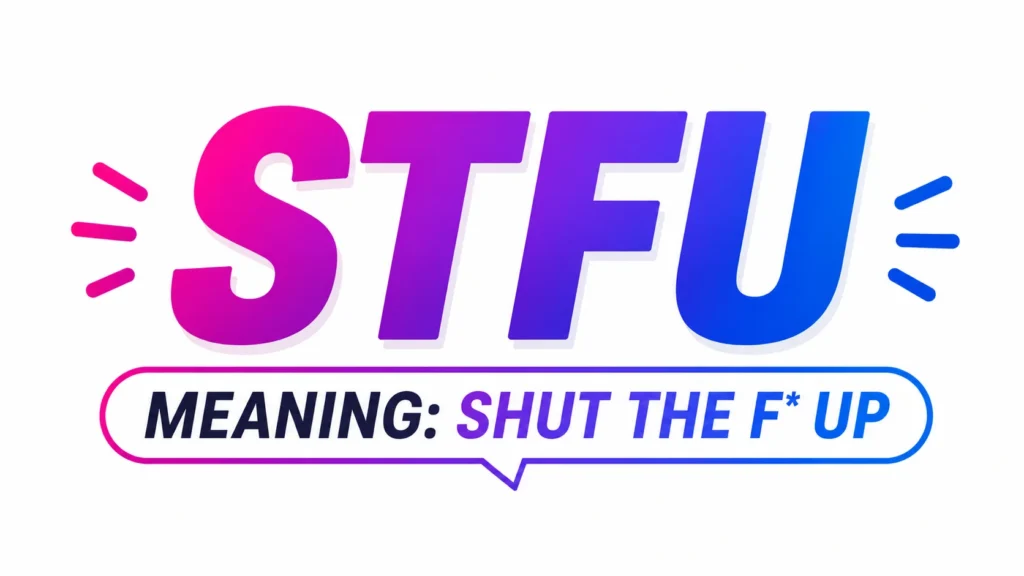
STFU mean “shut the f*** up.” It is a strong slang expression used when someone wants another person to stop talking, stop exaggerating, or stop saying something unbelievable.
However, people do not always use it literally. Sometimes it sounds aggressive. Other times, close friends use it playfully when they are surprised, excited, or laughing.
That is why understanding this phrase matters. One short acronym can feel funny in one chat and offensive in another. The real meaning lives not only in the letters, but also in the emotion behind them.
STFU Mean – Quick Meaning
STFU mean “shut the f*** up.” It is an informal, rude, and emotionally strong phrase.
People use it to express:
- Anger or irritation
- Shock or disbelief
- Playful teasing between close friends
- A desire for someone to stop talking
- Strong disagreement
In simple words, STFU means “be quiet,” but in a much harsher way.
Quick Examples
“STFU, are you serious?”
“Bro, STFU, that did not happen.”
“Can you STFU for one second? I’m trying to focus.”
The first two examples may sound playful. The third one sounds irritated. That difference is why context matters so much.
Origin & Background
STFU comes from the longer phrase “shut the f*** up,” which existed long before texting became popular. As online chatting grew, people shortened harsh phrases into acronyms to type faster and express emotion quickly.
Where It Came From
The phrase “shut up” has existed in English for a long time. Over time, people added stronger language to make it more intense. When internet culture grew through forums, gaming chats, instant messaging, and social media, STFU became a quick way to show strong reaction.
Cultural Influence
STFU became common in gaming communities, meme culture, reaction posts, and casual online arguments. It spread because it is short, dramatic, and emotionally direct.
In many online spaces, people use it as a reaction rather than a serious command. For example, someone may say “STFU” when they hear surprising gossip, not because they truly want silence.
Social Media Impact
Platforms like TikTok, Instagram, X, Reddit, and Snapchat made STFU even more common. Short comments need fast emotional expression, and STFU fits that style.
A TikTok comment like “STFU this is so funny” does not usually mean “be quiet.” Instead, it means “I’m shocked” or “I can’t handle this.”
How the Meaning Evolved
Originally, STFU sounded mostly rude and aggressive. Now, it has two main meanings.
It can still be insulting when used in anger. Yet among close friends, it can also mean “no way,” “you’re joking,” or “I’m shocked.”
Real-Life Conversations
WhatsApp Conversation
Person A: I accidentally sent the teacher the meme instead of my assignment.
Person B: STFU, please tell me you’re joking.
And,
Person A: I wish I was.
Person B: I would disappear from class forever.
Here, STFU shows shock, not hatred. Person B is surprised and emotionally reacting.
Instagram DM Conversation
Person A: Guess who liked my story after six months?
Person B: STFU. Not him again.
Person A: Yes, him.
Person B: He always comes back when you stop caring.
In this case, the phrase feels dramatic and familiar. It works because both people clearly understand each other’s tone.
TikTok Comment Conversation
Person A: I wore my shirt inside out for the whole first date.
Person B: STFU, this is exactly something I would do.
And,
Person A: The worst part is he noticed before I did.
Person B: I’m crying.
Here, STFU is playful. It means “that is unbelievable and funny.”
Text Message Conversation
Person A: You keep interrupting me every time I explain.
Person B: Okay, sorry.
And,
Person A: Seriously, just STFU for a minute and listen.
Person B: That was rude, but I get it.
This example feels more serious. The phrase expresses frustration and may hurt the other person.
Emotional & Psychological Meaning
STFU is not just a phrase. It is an emotional shortcut. People use it when their feelings are too strong for calm wording.
It can express anger, surprise, disbelief, embarrassment, excitement, or frustration.
What Emotion It Expresses
When used seriously, STFU often shows irritation. The speaker feels unheard, overwhelmed, or annoyed.
When used casually, it often shows shock. The speaker may be reacting to gossip, drama, humor, or unexpected news.
Why People Use It
People use STFU because it feels immediate. It has impact. It also matches the fast emotional rhythm of modern texting, where people often react before they explain.
Sometimes, the phrase works like a pressure release. Someone feels too surprised to say, “Wow, that is unexpected,” so they type, “STFU.”
What It Reveals About Modern Communication
Modern communication is shorter, faster, and more emotional. Slang like STFU shows how people compress tone into tiny phrases.
However, that speed can cause problems. A phrase meant as a joke may look rude without facial expression, voice, or timing.
Personal-Style Scenario
Imagine a friend tells you they got back with an ex who hurt them before. However, You may type, “STFU, are you serious?” because you are shocked and concerned.
You may not mean “stop talking.” You mean, “I need a second to process this.” Still, the other person may feel judged if the tone is unclear.
Usage in Different Contexts
STFU changes meaning depending on where and how it appears.
Social Media
On social media, STFU is often used as a reaction. People use it in memes, comment sections, captions, and viral posts.
Example: “STFU this trend is actually hilarious.”
Here, it means “I can’t believe how funny this is.”
Friends & Relationships
Among close friends, STFU can be playful. It may show surprise, teasing, or dramatic excitement.
Still, even in friendships, it can cross a line. Some people dislike harsh language, even as a joke.
In romantic relationships, it needs extra care. Saying STFU during conflict can sound disrespectful and controlling.
Work / Professional Settings
STFU is not appropriate in professional communication. Avoid it in emails, meetings, workplace chats, client messages, and academic discussions.
Even if you mean it jokingly, it can damage your image. A safer phrase would be “Let’s pause for a moment” or “I need to finish my point.”
Casual vs Serious Tone
Casual tone: “STFU, that outfit is amazing.”
Serious tone: “STFU and stop talking.”
The same acronym can feel completely different. Emojis, punctuation, relationship, and situation all affect meaning.
When NOT to Use It
STFU is strong slang, so it does not belong everywhere.
Inappropriate Contexts
Avoid using it with teachers, managers, clients, elders, strangers, or anyone you do not know well.
It is also risky during arguments because it can make the conversation more hostile.
Cultural Sensitivity
Some cultures value indirect, respectful speech. In those settings, STFU can feel extremely offensive.
Even in casual online spaces, people may react differently based on upbringing, language background, or personal boundaries.
Situations Where It May Cause Misunderstanding
Do not use STFU when someone is sharing feelings, discussing trauma, asking for help, or trying to explain themselves.
In emotional moments, harsh slang can feel dismissive. A better response would be, “I hear you,” “Give me a second,” or “Can we slow down?”
Common Misunderstandings
People Think It Always Means Anger
STFU does not always mean anger. Sometimes it means shock, laughter, or disbelief.
However, because the phrase is naturally harsh, it can still be received badly.
Tone Confusion
Text removes voice tone. Without facial expression or body language, the reader has to guess your intention.
That is why “STFU 😂” feels different from “STFU.” The emoji softens the message.
Literal vs Figurative Meaning
Literal meaning: “Stop talking.”
Figurative meaning: “No way,” “I’m shocked,” or “That is unbelievable.”
The figurative meaning is common among friends and online communities.
Comparison Table
| Expression | Meaning | Tone | Best Used In |
|---|---|---|---|
| STFU | Shut the f*** up | Harsh, shocked, or playful | Close friends, memes, informal chats |
| Shut up | Be quiet / no way | Mild to rude | Casual speech |
| Be quiet | Stop talking | Neutral | Schools, public spaces, polite requests |
| No way | I don’t believe it | Surprised | Friendly conversations |
| OMG | Oh my God | Shocked or excited | Texts, social media |
| Stop talking | End the conversation | Direct | Serious moments |
| Chill | Calm down | Casual | Friends, arguments |
| Speak up | Opposite of staying quiet | Encouraging | Discussions, meetings |
| Say less | I understand | Casual, modern | Friendly texts |
| Keep talking | Opposite of STFU | Interested | Supportive conversations |
Key Insight
STFU is powerful because it can sound playful or disrespectful depending on the relationship. Before using it, think about whether the other person will hear humor or hostility.
Variations / Types
STFU
Short meaning: Shut the f*** up.
It is the standard form and can be rude, funny, or shocked depending on tone.
STFU 😂
Short meaning: I’m shocked but laughing.
The emoji makes the phrase feel playful and less aggressive.
STFU!
Short meaning: Stop talking now.
The exclamation mark makes it sound stronger and more serious.
stfu
Short meaning: A softer casual version.
Lowercase often feels less intense, especially in friendly chats.
STFU respectfully
Short meaning: Funny disagreement.
People use this jokingly when they disagree but do not want to sound fully rude.
STFU no way
Short meaning: I cannot believe that.
This version expresses surprise more than anger.
Please STFU
Short meaning: I am irritated.
Adding “please” may sound sarcastic rather than polite.
STFU bro
Short meaning: Friendly disbelief or annoyance.
It depends on the relationship between the speakers.
STFU and listen
Short meaning: Stop interrupting me.
This sounds serious and can feel confrontational.
STFU I’m crying
Short meaning: This is extremely funny.
Online users often say this when something makes them laugh hard.
How to Respond When Someone Uses It
Your response should match the tone. First, ask yourself: are they joking, angry, shocked, or being disrespectful?
Casual Replies
“Relax, I’m just saying.”
“Okay, okay, I’ll stop.”
“Wait, let me explain.”
Funny Replies
“Never, I have more drama.”
“You asked for the update.”
“My mouth has no off button.”
Mature Replies
“I get that you’re upset, but don’t talk to me like that.”
“I’ll listen, but please say it respectfully.”
“Let’s pause before this turns into an argument.”
Respectful Replies
“I didn’t mean to annoy you.”
“I hear you. I’ll give you space.”
“Okay, let’s talk when we’re both calmer.”
Regional & Cultural Usage
Western Culture
In many Western online spaces, STFU is common in memes, gaming, reaction videos, and friend groups. Still, it remains rude in formal or serious contexts.
Asian Culture
In many Asian families and professional spaces, direct rude language can feel especially disrespectful. Younger people may use STFU online, but they may avoid it with elders, teachers, or authority figures.
Middle Eastern Culture
In Middle Eastern settings, respect in speech often carries strong social value. STFU may sound aggressive, especially in family or public conversations.
However, young internet users may understand it through global meme culture.
Global Internet Usage
Online, STFU has become a universal reaction phrase. Even non-native English speakers often understand it because of memes, gaming, and TikTok comments.
Still, understanding the meaning does not always mean accepting the tone.
Generational Differences
Gen Z often uses STFU as dramatic slang, especially when reacting to surprising or funny content.
Millennials may also use it, but they are more likely to read it as rude depending on the situation.
Older generations may take it more literally and find it offensive.
Is It Safe for Kids?
STFU is not considered kid-friendly because it contains a hidden swear word. Even though it appears as an acronym, the meaning is still vulgar.
Children and younger teens may see it online, but they should understand that it is not polite language. A safer alternative is “be quiet,” “stop,” “no way,” or “that’s unbelievable.”
Parents and educators can explain that some slang may look small but carry strong meaning.
FAQs
What does STFU mean in text?
STFU means “shut the f*** up.” It is a strong slang phrase used to show anger, shock, disbelief, or playful surprise.
Is STFU always rude?
STFU is usually rude, but close friends sometimes use it jokingly. The meaning depends on tone, relationship, and context.
What does STFU mean on TikTok?
On TikTok, STFU often means “no way” or “I’m shocked.” It is commonly used in comments when something is funny, dramatic, or unbelievable.
Can I use STFU with friends?
You can use it with close friends who understand your humor. However, avoid it if your friend dislikes harsh language or the conversation is serious.
What is a polite way to say STFU?
Polite alternatives include “please be quiet,” “let me finish,” “can we pause,” or “I need a moment.”
What should I reply if someone says STFU to me?
If they are joking, you can reply playfully. If they sound rude, say, “Please don’t talk to me like that.”
Does STFU mean the same as shut up?
STFU is stronger than “shut up.” It includes profanity, so it sounds more intense and offensive.
Conclusion
STFU mean “shut the f*** up,” but real communication is rarely that simple. In one conversation, it can sound playful and dramatic. In another, it can feel rude, harsh, and hurtful.
The safest way to understand it is to look at context. Who said it? How close are they to you? Was the mood funny, serious, angry, or emotional?
Used carefully, STFU can work as modern slang between close friends. Used carelessly, it can damage trust and create unnecessary conflict.
Good communication is not only about knowing slang. It is about knowing when a word fits the moment and when silence, kindness, or a softer phrase would say more.