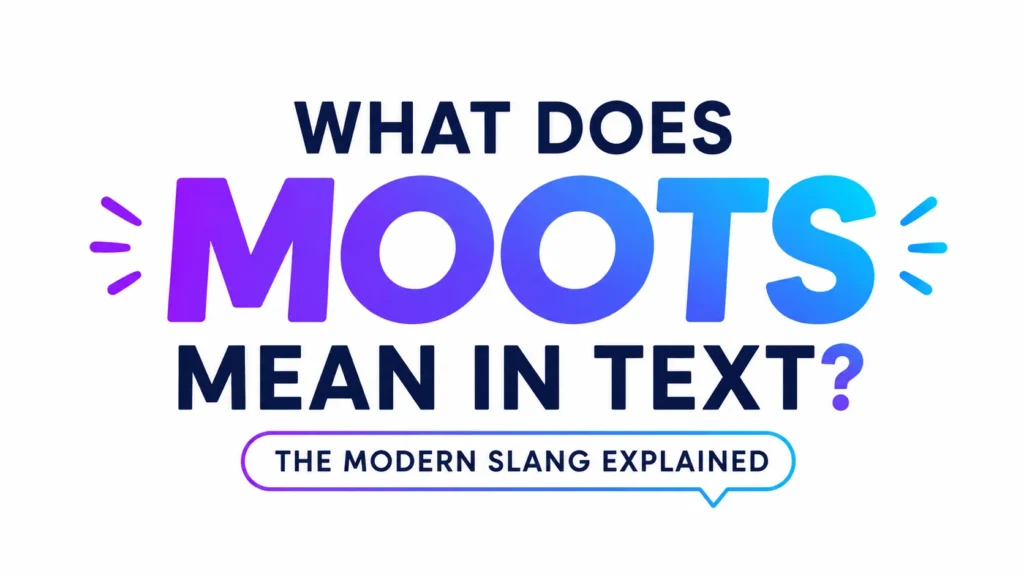
If you’ve spent time on TikTok, Instagram, X (formerly Twitter), or other social platforms, you’ve probably come across the word “moots” in comments, captions, or direct messages. At first glance, it can seem confusing because it doesn’t appear in traditional English dictionaries the way most words do.
Many people search for the phrase “moots meaning in text” because they want to understand what someone means when they say things like “Let’s be moots” or “Thanks to all my moots.” The term has become increasingly common in online communities, especially among younger users who spend a lot of time interacting through social media.
Understanding this expression helps you communicate more naturally online and avoid misunderstandings. Beyond being internet slang, “moots” reflects how digital relationships and friendships are evolving in modern communication.
Moots Meaning in Text – Quick Meaning
Simple Definition
“Moots” is short for “mutuals.”
In text messages and social media conversations, it refers to people who follow each other or interact regularly online.
A moot is someone with whom you share a mutual connection, usually on social media platforms.
Quick Breakdown
- Moots = mutual followers
- Common on Instagram, TikTok, X, and Threads
- Often indicates friendly online relationships
- Can refer to close online friends or casual mutual connections
Example Uses
“My moots always recommend the best music.”
“Looking for new moots who love photography.”
“Thanks to all my moots for supporting my post.”
In most situations, the word carries a friendly and positive tone.
Origin & Background
Where the Term Came From
The word “moots” developed as a shortened version of “mutuals.”
Social media users naturally began abbreviating common phrases to make online conversations faster and more casual. Over time, “mutuals” became “moots.”
Early Social Media Culture
The term gained popularity on platforms where following relationships mattered.
Users frequently referred to people who followed them back as mutual followers. As online communities expanded, these mutual connections became meaningful social relationships.
Social Media Influence
Twitter communities played a significant role in spreading the term.
Users would post messages such as:
- “Need more moots.”
- “Any moots online?”
- “Love my moots.”
Soon afterward, TikTok, Instagram, and fandom communities adopted the same language.
How the Meaning Evolved
Initially, “moots” simply described a mutual follow relationship.
Today, the term often implies:
- Trust
- Familiarity
- Community
- Shared interests
- Online friendship
Many users now view their moots as genuine friends despite never meeting in person.
Real-Life Conversations
WhatsApp Conversation
Person A:
Did you see my new profile picture?
Person B:
Yes! A bunch of your moots liked it already.
Person A:
They’re always supportive.
Instagram DM
Person A:
How did you find my page?
Person B:
One of our moots shared your post.
Person A:
Small world!
TikTok Comments
Person A:
Who else came here from Sarah’s video?
Person B:
Me! We’re moots with her.
Person A:
No way, same here!
Text Message
Person A:
You seem to know everyone online.
Person B:
Honestly, most of them are just moots from different communities.
Person A:
Some of those connections become real friendships.
Person B:
Exactly.
Emotional & Psychological Meaning
What Emotion Does It Express?
“Moots” often communicates belonging.
People use it when they want to acknowledge a group they feel connected to. The word creates a sense of inclusion and shared identity.
Why People Use It
Modern communication is increasingly digital.
As a result, people seek language that reflects online relationships. Traditional terms like “friend” may feel too strong, while “follower” can seem distant.
“Moots” sits comfortably between those extremes.
What It Reveals About Modern Communication
The popularity of the term highlights how online interactions have become emotionally meaningful.
People often:
- Celebrate achievements together
- Share personal experiences
- Offer emotional support
- Exchange advice
These interactions create bonds that feel authentic.
A Personal-Style Scenario
Imagine posting about a difficult day and receiving encouraging messages from several people you’ve only known online.
You may never have met them face-to-face, yet their support feels real.
In that moment, the term “moots” represents more than mutual followers—it represents community.
Usage in Different Contexts
Social Media
This is where the term appears most frequently.
Examples include:
- “Need more moots.”
- “My moots are hilarious.”
- “Moots, what do you think about this?”
Friends and Relationships
Some people use the word when referring to close online friendships.
Example:
“We started as moots and eventually became best friends.”
Work and Professional Settings
Using “moots” in professional communication is generally uncommon.
Business emails, client meetings, and workplace discussions usually require more formal language.
Instead, people might say:
- Connections
- Colleagues
- Contacts
- Network
Casual vs Serious Tone
Casual:
“My moots always have great recommendations.”
Serious:
“I’ve built valuable professional connections through social media.”
The context determines whether the slang feels appropriate.
When NOT to Use It
Formal Business Communication
Avoid using the term in:
- Job applications
- Corporate emails
- Academic reports
- Professional presentations
Cross-Generational Conversations
Not everyone understands internet slang.
Using “moots” with people unfamiliar with online culture may create confusion.
Sensitive Situations
When discussing serious topics, clear communication matters.
In emotional, legal, medical, or professional discussions, more precise language is usually better.
Cultural Awareness
Some audiences may not be familiar with social-media-specific expressions.
Consider your audience before using the term.
Common Misunderstandings
Thinking It Means Best Friend
Not all moots are close friends.
Many are simply mutual followers who share interests.
Assuming It Exists Only on One Platform
Some people believe the term belongs exclusively to TikTok or Twitter.
In reality, it appears across multiple platforms.
Confusing It With “Mute”
Because the words sound somewhat similar, new users occasionally misread “moots” as “mute.”
The meanings are completely different.
Taking It Too Literally
Being someone’s moot doesn’t automatically indicate a deep relationship.
The strength of the connection varies from person to person.
Comparison Table
| Expression | Meaning | Tone | Usage |
|---|---|---|---|
| Moots | Mutual followers | Friendly | Social media |
| Mutuals | Mutual followers | Neutral | Social media |
| Friends | Personal relationship | Stronger | Online and offline |
| Followers | One-way audience | Neutral | Social platforms |
| Connections | Professional contacts | Formal | Networking |
| Besties | Very close friends | Playful | Informal |
| Strangers | No relationship | Neutral | General use |
| Acquaintances | Limited familiarity | Formal | Everyday conversation |
Key Insight
The word “moots” fills a unique space between strangers and close friends. It acknowledges meaningful online connections without overstating the relationship.
Variations / Types
Moot
A single mutual follower.
Moots
Multiple mutual followers.
New Moot
Someone you’ve recently connected with online.
Close Moot
A mutual follower with whom you interact frequently.
Internet Moot
An online-only connection.
Fandom Moot
A mutual connection based on shared fandom interests.
Art Moot
Someone connected through creative communities.
Gaming Moot
A mutual follower who shares gaming interests.
TikTok Moot
A mutual follower on TikTok.
Instagram Moot
A mutual follower on Instagram.
Long-Time Moot
Someone you’ve known online for a long period.
How to Respond When Someone Uses It
Casual Replies
- “Absolutely!”
- “Glad we’re moots.”
- “Happy to connect.”
Funny Replies
- “Elite moot status unlocked.”
- “Certified moot reporting for duty.”
- “The moot squad grows stronger.”
Mature Replies
- “I appreciate the connection.”
- “It’s great meeting like-minded people.”
- “Always happy to stay connected.”
Respectful Replies
- “Thank you for reaching out.”
- “Nice to be mutuals.”
- “I value the support.”
Regional & Cultural Usage
Western Culture
The term is widely recognized among younger social media users.
It often carries a friendly and community-focused meaning.
Asian Culture
Usage varies by country and platform.
Younger internet users are generally more familiar with the term than older generations.
Middle Eastern Culture
The expression appears mainly among English-speaking online communities and social media enthusiasts.
Global Internet Usage
The internet has transformed “moots” into a globally understood piece of digital slang.
Many users recognize it regardless of location.
Generational Differences
Gen Z
Uses the term frequently and naturally.
Millennials
Often understand the term but may use it less often.
Older generations may require explanation before recognizing the meaning.
Is It Safe for Kids?
Understanding the Context
Yes, “moots” is generally safe for kids.
The term itself is harmless and usually refers to mutual followers or online friends.
However, parents should still encourage healthy online habits and teach children to be cautious when interacting with people they only know through the internet.
The word itself is not offensive, explicit, or inappropriate.
FAQs
What does moots mean in texting?
Moots means mutual followers or mutual online connections, especially on social media platforms.
Is moots a real word?
It is recognized as internet slang rather than a traditional dictionary word, though it is widely used online.
What does “let’s be moots” mean?
It means someone wants to become mutual followers and establish an online connection.
Is moots positive or negative?
The term is usually positive and friendly.
Can moots become real friends?
Yes. Many online friendships begin as mutual follower relationships and develop into meaningful friendships.
Is moots used on Instagram?
Yes. Instagram users frequently use the term when referring to mutual followers.
What is the difference between moots and followers?
Followers may only follow one person, while moots refers to a mutual follow relationship where both users follow each other.
Conclusion
Understanding the moots meaning in text helps you navigate modern online conversations with confidence. What began as a simple abbreviation for “mutuals” has evolved into a symbol of community, shared interests, and digital friendship.
Whether you encounter it on TikTok, Instagram, X, or in text messages, the term usually carries a welcoming and positive tone. It reflects how people build meaningful connections in today’s digital world.
Language constantly evolves alongside technology, and “moots” is a perfect example of how new expressions emerge to describe modern relationships. Once you understand its meaning, you’ll likely start noticing it everywhere—and perhaps even use it yourself when connecting with others online.