If you’ve spent any time on social media, messaging apps, or online forums, you’ve probably come across the abbreviation “FML.” It often appears after someone shares a frustrating experience, an embarrassing moment, or a day that simply didn’t go as planned.
Many people search for the meaning of FML in text because they see it used in conversations but aren’t sure whether it’s serious, humorous, rude, or something else entirely. The confusion is understandable because the phrase can express genuine frustration while also being used jokingly among friends.
Understanding what FML means helps you interpret online conversations more accurately and communicate more naturally in digital spaces. Its meaning has evolved over time, becoming a recognizable part of internet culture that reflects how people share everyday struggles with others.
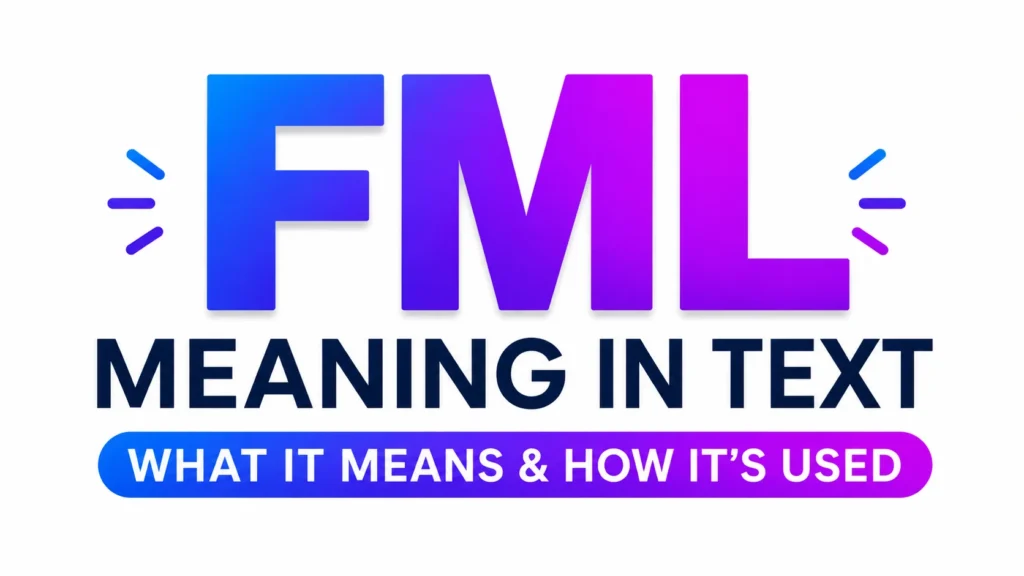
FML Meaning in Text – Quick Meaning
Definition
FML stands for:
“F* My Life.”**
It is a slang expression people use when something disappointing, annoying, embarrassing, or unfortunate happens.
Although the phrase sounds dramatic, most people use it humorously rather than literally.
Quick Breakdown
- Expresses frustration or disappointment
- Often used after a minor problem
- Common in texting and social media
- Usually intended as humor or exaggeration
- Rarely meant as a serious life statement
Examples
“I forgot my wallet at home and drove 30 minutes to work. FML.”
“Just spilled coffee on my white shirt before the interview. FML.”
“My phone battery died right before the concert started. FML.”
Origin & Background
Where Did FML Come From?
The expression originated from the full phrase “F*** My Life,” which became popular in casual speech before spreading online.
Its rise accelerated during the early internet era when people began sharing short stories about unfortunate situations. The phrase captured a feeling that many people could instantly relate to.
The Rise of FMyLife
A major turning point came when users started posting short anecdotes online describing embarrassing, unlucky, or frustrating moments. These stories often ended with “FML,” turning the phrase into a recognizable internet expression.
The format became popular because it allowed people to laugh at life’s small disasters together.
Social Media Influence
Platforms such as Twitter, Instagram, Snapchat, TikTok, and messaging apps helped the phrase spread globally.
Because character limits encouraged shorter communication, abbreviations like FML became practical and memorable.
How the Meaning Evolved
Initially, FML was often associated with serious frustration.
Over time, the tone became lighter.
Today, many people use it for minor inconveniences such as:
- Missing a bus
- Dropping food
- Losing Wi-Fi
- Forgetting a password
- Spilling a drink
The phrase now frequently carries a playful, self-deprecating tone.
Real-Life Conversations
WhatsApp Conversation
Person A:
I studied all night for the wrong chapter.
Person B:
Wait, seriously?
Person A:
Yeah, the test was on a completely different section. FML.
Person B:
That’s brutal.
Instagram DM Conversation
Person A:
Just realized I’ve been liking my own old posts by accident.
Person B:
No way 😂
Person A:
My friends already noticed. FML.
Person B:
Honestly, that’s hilarious.
TikTok Comment Section
Person A:
Dropped my phone in the sink while watching this video. FML.
Person B:
The timing couldn’t be worse.
Person A:
Exactly. That’s my luck.
Text Message Conversation
Person A:
I arrived at the airport and forgot my passport.
Person B:
Please tell me you’re joking.
Person A:
I wish I was. FML.
Person B:
That’s a nightmare.
Emotional & Psychological Meaning
What Emotion Does It Express?
FML commonly communicates:
- Frustration
- Embarrassment
- Disappointment
- Stress
- Self-irony
- Temporary helplessness
The phrase often acts as an emotional shortcut.
Instead of writing a long explanation, someone can simply type “FML” and immediately convey how they feel.
Why People Use It
Modern communication values speed.
People often want to share emotions quickly while still sounding relatable.
FML allows users to:
- Vent briefly
- Seek empathy
- Add humor to bad situations
- Connect through shared experiences
What It Reveals About Modern Communication
Many online conversations blend humor and vulnerability.
People frequently turn everyday setbacks into relatable stories.
Using FML can signal:
- Self-awareness
- Emotional honesty
- A desire for social connection
- A sense of humor about life’s imperfections
A Personal-Style Scenario
Imagine waking up late, spilling coffee on your clothes, missing your train, and realizing you’ve left an important document at home.
Most people wouldn’t literally think their life is ruined.
Still, posting “FML” captures the emotional feeling of that frustrating chain of events perfectly.
Usage in Different Contexts
Social Media
FML is extremely common on social platforms.
Users often pair it with:
- Memes
- Photos
- Short stories
- Videos
- Reaction posts
The phrase helps transform frustration into entertainment.
Friends and Relationships
Among friends, FML usually feels casual and harmless.
Example:
“I accidentally sent the screenshot to the person I was talking about. FML.”
Friends immediately understand the embarrassment.
Work and Professional Settings
Using FML at work is generally not recommended.
Because it contains profanity, even in abbreviated form, some workplaces may consider it inappropriate.
Professional alternatives include:
- “That was unfortunate.”
- “What a frustrating situation.”
- “Today has been challenging.”
Casual vs Serious Tone
The intended tone depends on context.
Casual:
“Forgot my charger again. FML.”
More Serious:
“My laptop crashed before the deadline. FML.”
Readers often rely on surrounding details to determine how serious the situation actually is.
When NOT to Use It
Professional Communication
Avoid using FML in:
- Business emails
- Client communications
- Workplace reports
- Academic writing
Professional environments usually require more formal language.
During Serious Crises
The phrase may appear insensitive when discussing:
- Major illness
- Loss of life
- Natural disasters
- Severe personal trauma
In these situations, direct and respectful communication is more appropriate.
Cultural Sensitivity
Not everyone is comfortable with profanity-based expressions.
Some audiences may view FML as offensive.
Understanding your audience is important.
Situations That May Cause Confusion
Older generations or people unfamiliar with internet slang may not recognize the abbreviation.
They could misunderstand its meaning or intention.
Common Misunderstandings
People Think It Is Always Serious
One of the biggest misconceptions is assuming the user is experiencing a major crisis.
Most of the time, the phrase refers to minor frustrations.
People Think It Means Depression
FML does not automatically indicate emotional distress or mental health concerns.
Context matters.
Often it is simply internet humor.
Tone Can Be Difficult to Read
Without facial expressions or voice cues, readers may struggle to determine whether someone is joking or genuinely upset.
Literal vs Figurative Meaning
Literally, the phrase sounds extreme.
Figuratively, it usually means:
“This situation is really annoying.”
The figurative meaning is far more common.
Comparison Table
| Expression | Meaning | Tone | Usage |
|---|---|---|---|
| FML | Frustration about a bad situation | Humorous or dramatic | Very common |
| SMH | Disapproval or disbelief | Mild frustration | Common |
| RIP Me | Something embarrassing happened | Playful | Popular online |
| My Luck | Complaining about bad fortune | Casual | Everyday use |
| OMG | Surprise or shock | Emotional | Extremely common |
| Lucky Me | Often sarcastic opposite | Humorous | Common |
| Best Day Ever | Positive opposite of FML | Happy | Positive situations |
| Win | Success or achievement | Positive | Internet slang |
Key Insight
FML stands out because it combines frustration, humor, and exaggeration in a way that instantly communicates emotion while encouraging social connection through shared experiences.
Variations / Types
FML
The standard version expressing frustration.
Major FML Moment
Used for an especially embarrassing situation.
Daily FML
Refers to recurring bad luck.
Monday FML
Associated with the challenges of starting a new week.
School FML
Used when discussing academic frustrations.
Work FML
Expresses workplace-related stress or mistakes.
Travel FML
Describes travel mishaps and delays.
Relationship FML
Used after awkward or disappointing relationship moments.
Tech FML
Refers to technology failures and digital problems.
Gym FML
Used when workouts go badly or motivation disappears.
How to Respond When Someone Uses It
Casual Replies
- “That sucks.”
- “I feel your pain.”
- “What bad luck.”
Funny Replies
- “The universe chose violence today.”
- “Achievement unlocked: Worst Timing Ever.”
- “That’s a plot twist.”
Mature Replies
- “I’m sorry that happened.”
- “Hopefully tomorrow goes better.”
- “That sounds really frustrating.”
Respectful Replies
- “Are you okay?”
- “Let me know if you need help.”
- “I can understand why you’re upset.”
Regional & Cultural Usage
Western Culture
In North America and much of Europe, FML is widely recognized and commonly used in casual online communication.
Its humorous tone is generally understood.
Asian Culture
Usage varies by country and language.
Many younger internet users recognize the abbreviation through global social media trends.
Middle Eastern Culture
The expression is understood among digitally connected younger audiences.
However, some users may avoid it because of the implied profanity.
Global Internet Usage
Online culture has made FML a nearly universal abbreviation.
Even people who speak English as a second language often recognize it.
Generational Differences
Gen Z
- Uses it casually
- Often combines it with memes
- Frequently employs irony
Millennials
- Familiar with its early internet origins
- Use it both seriously and humorously
Older generations may be less familiar with the abbreviation.
Is It Safe for Kids?
Understanding the Context
Parents should know that FML contains an implied profanity even though it appears as initials.
Many teenagers encounter it on social media and in texting.
The expression is generally used to describe frustration rather than harmful behavior.
Still, understanding the underlying language helps parents provide age-appropriate guidance about digital communication and audience awareness.
FAQs
What does FML mean in texting?
FML stands for “F*** My Life” and is used to express frustration, disappointment, or embarrassment.
Is FML offensive?
Some people consider it mildly offensive because it represents a profanity. Context and audience matter.
Do people use FML seriously?
Sometimes. However, it is most often used humorously for everyday problems.
Can I use FML at work?
It is usually better to avoid it in professional communication because of its connection to profanity.
Is FML popular on TikTok?
Yes. TikTok users frequently use it in captions, comments, and humorous storytelling posts.
What is the opposite of FML?
Positive expressions such as “Best Day Ever,” “Lucky Me,” or “Big Win” are often considered opposites.
Why do people say FML for small problems?
The exaggeration creates humor and makes minor frustrations feel more relatable to others.
Conclusion
Understanding the meaning of FML in text goes beyond knowing the words behind the abbreviation. It represents a modern way of sharing frustration, embarrassment, and everyday setbacks while keeping conversations light and relatable.
What makes the expression so popular is its ability to turn ordinary bad moments into shared experiences. A missed train, a broken phone, or an awkward social mistake suddenly becomes something people can laugh about together.
Like many internet expressions, context matters. Used among friends and in casual online conversations, FML can feel humorous and relatable. In professional or sensitive situations, however, a different choice of words is usually wiser.
Once you understand its tone and purpose, you’ll be able to recognize it instantly and use it confidently when the situation calls for a little humor in the face of life’s small frustrations.