
Introduction
Education is undergoing a significant transformation as digital technologies reshape how students learn and teachers deliver lessons. Traditional classrooms often follow standardized teaching methods, where students receive similar instruction regardless of their individual abilities, interests, or learning speeds.
However, every student has unique strengths, challenges, and educational needs. Personalized learning technologies are helping educational institutions address these differences by offering more flexible and customized learning experiences.
From artificial intelligence-powered tutoring systems to adaptive learning platforms, modern educational tools are making it possible to adjust lessons, assignments, and feedback according to individual student progress.
These innovations have the potential to make education more accessible, engaging, and effective.
What Are Personalized Learning Technologies?
Personalized learning technologies are digital tools designed to adapt educational content, teaching methods, and learning activities to individual students.
These technologies use information such as assessment results, learning progress, and student interactions to recommend appropriate educational resources.
Unlike traditional teaching approaches that frequently follow a fixed pace, personalized learning allows students to receive additional support when needed or explore advanced topics when they are ready.
Common examples include:
- Adaptive learning platforms
- Artificial intelligence-powered tutoring systems
- Personalized educational applications
- Learning management systems
- Interactive digital textbooks
- Automated assessment tools
- Educational recommendation systems
These technologies support teachers by providing additional ways to understand student needs and improve learning experiences.
1. Supporting Individual Learning Speeds
One of the greatest advantages of personalized learning technology is its ability to accommodate different learning speeds.
Some students understand new concepts quickly, while others require additional explanations, examples, or practice.
In traditional classrooms, maintaining a consistent teaching schedule can make it difficult to address every student’s needs.
Adaptive learning platforms help overcome this challenge by adjusting lesson difficulty according to student performance.
For example, students who struggle with mathematical concepts may receive additional exercises and explanations.
Meanwhile, students who demonstrate strong understanding can progress toward more advanced material.
This flexibility allows learners to build knowledge at a pace appropriate to their abilities.
2. Using Artificial Intelligence to Improve Learning
Artificial intelligence is becoming an important component of personalized educational technology.
AI-powered systems can analyze student responses, identify learning patterns, and recommend suitable educational activities.
For instance, an intelligent tutoring application might recognize that a student repeatedly makes mistakes when solving algebraic equations.
The system can then provide targeted explanations, practice questions, and feedback.
Some AI-based educational tools also offer conversational learning experiences, allowing students to ask questions and receive explanations.
However, AI-generated educational content can contain errors. Teachers and students should verify important information and use these tools as learning support rather than unquestioned sources of knowledge.
3. Making Learning More Engaging and Interactive
Student engagement plays an important role in educational success.
Personalized learning platforms often incorporate interactive activities, multimedia resources, and game-based learning elements.
These features can make difficult subjects more approachable and enjoyable.
For example, students learning science might explore interactive simulations that demonstrate chemical reactions or physical principles.
Language learners may practice vocabulary through personalized quizzes and pronunciation exercises.
Some educational platforms also adjust activities according to student performance, offering additional challenges or support.
By making lessons more interactive, personalized learning technologies can encourage active participation and sustained interest.
4. Providing Immediate Feedback and Assessment
Traditional assessment methods often require students to wait for teachers to evaluate assignments and examinations.
Digital learning platforms can provide immediate feedback on many types of exercises.
For example, an online mathematics application can identify incorrect answers and provide explanations shortly after a student submits a response.
This allows students to recognize misunderstandings and correct mistakes before moving forward.
Automated assessment tools can also help teachers identify common learning difficulties across a classroom.
However, complex assignments involving creativity, reasoning, and personal expression still benefit from thoughtful human evaluation.
5. Helping Teachers Make Better Educational Decisions
Personalized learning technologies are not intended to replace teachers. Instead, they can provide valuable information that supports instructional decisions.
Digital platforms may offer dashboards displaying student participation, assignment completion, assessment performance, and areas requiring additional attention.
Teachers can use this information to identify students who need support and adjust teaching strategies accordingly.
For example, if several students struggle with the same science concept, a teacher may organize an additional classroom discussion or practical activity.
This combination of technological insights and professional teaching experience can create a more responsive educational environment.
6. Improving Accessibility and Inclusive Education
Personalized learning technology can also support students with different accessibility requirements.
Digital educational platforms may include features such as:
- Text-to-speech functionality
- Adjustable font sizes
- Speech recognition tools
- Captions and transcripts
- Alternative learning formats
- Customizable reading speeds
These features can help students with certain visual, hearing, reading, or physical disabilities access educational materials more comfortably.
Personalized learning tools may also support multilingual students by providing translations, vocabulary explanations, or additional language practice.
Nevertheless, accessibility depends on thoughtful design, suitable devices, and the availability of appropriate educational resources.
7. Encouraging Independent Learning
Personalized learning technologies can help students develop responsibility for their educational progress.
Many platforms allow learners to set goals, monitor achievements, and review areas where improvement is needed.
Students can revisit difficult lessons, complete additional practice activities, or explore subjects beyond their classroom curriculum.
This flexibility encourages self-directed learning and helps students develop useful study habits.
However, younger learners and students who struggle with organization may still require guidance, encouragement, and structured support from teachers or parents.
8. Expanding Opportunities for Remote Education
Online education has made learning resources accessible beyond traditional classrooms.
Personalized learning technologies extend these opportunities by allowing remote learners to receive customized educational content.
Students living in remote communities may access digital courses, recorded lessons, and interactive exercises without traveling to educational institutions.
Working professionals can also use personalized platforms to develop new skills according to their schedules.
However, access to reliable internet connections, suitable devices, and digital literacy remains essential.
Reducing these barriers is important for ensuring that personalized education benefits a wider population.
9. Challenges of Personalized Learning Technologies
Despite their advantages, personalized learning technologies present several challenges.
Data Privacy: Educational platforms may collect sensitive student information, requiring responsible storage and protection.
Technology Costs: Schools may face expenses related to devices, software subscriptions, and technical support.
Digital Inequality: Students without reliable internet access or suitable devices may experience disadvantages.
Teacher Training: Educators need appropriate training to integrate technology effectively.
Algorithmic Limitations: Automated recommendations may not always accurately reflect a student’s abilities or needs.
Educational institutions should address these challenges carefully to create fair and effective learning environments.
The Future of Personalized Learning
The future of personalized education will likely involve closer integration of artificial intelligence, adaptive learning systems, and interactive educational resources.
As these technologies develop, schools may gain better tools for identifying learning difficulties, recommending educational activities, and supporting individual progress.
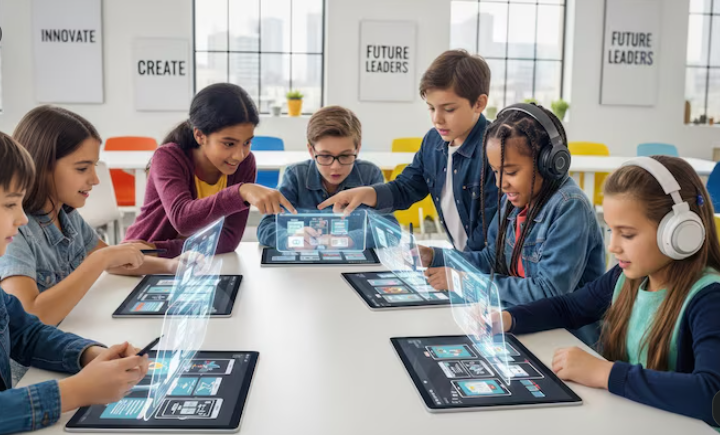
Virtual reality, augmented reality, and intelligent tutoring applications may also create new opportunities for immersive learning.
However, successful education will continue to depend on human relationships, critical thinking, collaboration, and effective teaching.
Technology should strengthen these essential educational elements rather than replace them.
Conclusion
Personalized learning technologies are changing modern education by making learning experiences more flexible, interactive, and responsive to individual student needs.
Through adaptive platforms, AI-powered tutoring, immediate feedback, and accessible digital resources, these technologies can help students learn more effectively while supporting teachers in their work.
Although challenges involving privacy, affordability, and digital accessibility remain, responsible implementation can unlock meaningful educational opportunities.
Ultimately, the future of education lies in combining technological innovation with human guidance to create inclusive, engaging, and student-centered learning environments.
Read More : The Benefits of Using Natural Ingredients in Everyday Beauty Care
Comments