
Introduction
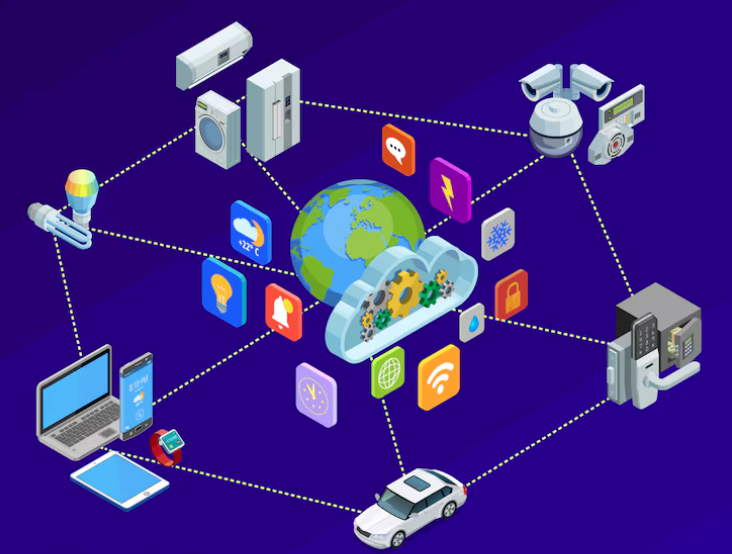
The rapid growth of connected devices is changing how people interact with technology in homes, businesses, industries, and public environments. Smart appliances, wearable devices, industrial sensors, connected vehicles, and automated systems continuously generate information that must be processed efficiently.
Traditionally, many connected devices have relied on centralized cloud servers to process data and deliver results. Although cloud computing remains essential, sending every piece of information to distant servers can create challenges involving network delays, bandwidth consumption, and connectivity.
Edge computing offers a different approach by processing information closer to where it is generated.
This technology is helping connected devices respond faster, operate more efficiently, and support increasingly sophisticated applications.
As digital infrastructure continues to evolve, edge computing is becoming an important component of modern connected systems.
What Is Edge Computing?
Edge computing is a computing approach that processes data near its source rather than transferring all information to centralized cloud infrastructure.
The processing may occur directly on a connected device, through a nearby gateway, or at a local computing facility.
For example, a smart security camera equipped with edge processing capabilities can analyze video footage locally and identify certain movements without continuously uploading every recording to a cloud server.
Edge computing is commonly associated with the Internet of Things (IoT), which connects physical devices through communication networks.
Key components of edge computing include:
- Connected sensors and devices.
- Local processing hardware.
- Edge gateways.
- Communication networks.
- Cloud integration.
- Data management software.
- Security and monitoring systems.
Together, these technologies allow connected environments to process information more efficiently.
1. Reducing Latency for Faster Responses
Latency refers to the time required for information to travel between systems and produce a response.
For many connected applications, minimizing delays is essential.
When data must travel to a distant cloud server, network communication can introduce additional processing time.
Edge computing reduces this dependence by analyzing certain information locally.
For example, an industrial monitoring system may detect abnormal equipment vibrations and trigger an immediate warning.
Similarly, smart traffic infrastructure can process nearby sensor information to support timely traffic management decisions.
Lower latency makes edge computing particularly useful for applications requiring rapid responses.
2. Improving Smart Home Technology
Smart homes contain an increasing number of connected devices, including security cameras, lighting systems, thermostats, and household appliances.
Edge computing can help these systems operate more efficiently by enabling local automation.
For example, a smart home controller may process information from motion sensors and activate lighting without relying on continuous communication with external servers.
Similarly, compatible security systems can analyze certain events locally.
These capabilities may improve response times and reduce dependence on internet connectivity.
However, functionality varies according to the devices, software, and network architecture involved.
3. Supporting Industrial Automation
Industrial environments depend on sensors, machines, and monitoring systems to maintain productivity.
Connected manufacturing equipment can generate large amounts of operational data.
Edge computing allows facilities to analyze selected information near production machinery.
For example, sensors may monitor temperature, vibration, and equipment performance.
Local processing systems can identify unusual patterns and notify maintenance teams when potential problems arise.
This supports predictive maintenance strategies and may help reduce unexpected equipment downtime.
Edge computing can also assist automated quality inspection systems that analyze images or sensor measurements during production.
4. Enhancing Connected Vehicle Technology
Modern vehicles use numerous sensors and electronic systems to support navigation, safety, and vehicle performance.
Many driving-related functions require rapid processing and cannot depend on constant access to remote servers.
Onboard edge computing allows vehicles to process information from cameras, radar, and other sensors locally.
For example, driver assistance systems may use onboard computing to identify certain obstacles and support timely responses.
Connected vehicles can also communicate selected information with nearby infrastructure or cloud services.
This combination of local and remote processing supports increasingly advanced automotive technologies.
However, vehicle safety depends on extensive testing, reliable hardware, and appropriate system design.
5. Reducing Bandwidth Consumption
Connected devices can generate substantial quantities of information.
Continuously transferring all this data to cloud servers may increase network congestion and operational expenses.
Edge computing helps reduce unnecessary transmission by processing information locally.
For example, an industrial camera might analyze video footage and send only relevant alerts or summarized findings to a central platform.
This reduces the amount of data transferred across the network.
Businesses can therefore use communication resources more efficiently while maintaining access to important information.
6. Strengthening Data Privacy and Security
Data privacy is an important consideration for connected devices.
Edge computing can support certain privacy goals by allowing sensitive information to remain within local systems.
For example, a connected camera may process video information locally rather than continuously transferring recordings to external infrastructure.
This can reduce some risks associated with unnecessary data transmission.
However, edge computing does not automatically guarantee security.
Connected devices still require authentication, encryption, secure software updates, and appropriate access controls.
Because edge systems are often distributed across multiple locations, organizations must also protect devices against physical tampering and unauthorized access.
7. Enabling Smarter Healthcare Devices
Connected healthcare technologies can benefit from local data processing.
Wearable sensors and medical monitoring devices may collect information such as movement patterns, heart rate, or other physiological measurements.
Edge computing can help analyze selected information locally and provide timely notifications.
For example, a wearable device may identify certain activity patterns without continuously transmitting raw sensor data.
However, medical applications require carefully validated systems, strong privacy safeguards, and appropriate clinical oversight.
Edge processing can support healthcare technology, but it does not replace professional medical evaluation.
8. Supporting Smart Cities and Infrastructure
Smart cities use connected sensors and communication systems to monitor public infrastructure and improve selected services.
Edge computing can support applications involving traffic management, environmental monitoring, public transportation, and energy distribution.
For example, local processing units may analyze traffic sensor data to assist signal-control systems.
Environmental sensors can also process information about air quality, temperature, or other local conditions.
By reducing the need to transfer all information to centralized systems, edge computing can support more responsive infrastructure.
Successful deployment still requires reliable connectivity, maintenance, cybersecurity, and responsible data governance.
9. Combining Edge Computing with Artificial Intelligence
Artificial intelligence is expanding the possibilities of edge computing.
Edge AI involves running machine learning models directly on devices or nearby computing infrastructure.
This allows connected systems to perform tasks such as object recognition, sound classification, and pattern detection locally.
For example, an agricultural monitoring system might analyze camera images to identify potential crop problems.
Similarly, smart manufacturing equipment may use AI models to detect unusual operating conditions.
Running AI at the edge can reduce communication delays and unnecessary data transfers.
However, device processing power, memory, energy consumption, and model accuracy remain important considerations.
10. Challenges of Edge Computing
Despite its advantages, edge computing introduces technical and operational challenges.
Distributed computing environments can be more complicated to manage than centralized infrastructure.
Organizations may need to maintain numerous devices across different locations.
Common challenges include:
- Limited processing capabilities on smaller devices.
- Hardware installation and maintenance costs.
- Security management across distributed systems.
- Software updates and compatibility.
- Data synchronization.
- Power consumption.
- Network reliability.
Careful planning is essential to determine which workloads should run locally and which should remain in the cloud.
The Future of Edge Computing
Edge computing is expected to play an increasingly important role as connected systems become more sophisticated.
Advances in processors, artificial intelligence, communication networks, and energy-efficient hardware may improve the capabilities of local computing devices.
Future applications could include more responsive industrial automation, intelligent transportation systems, advanced robotics, and personalized digital experiences.
Edge computing will likely operate alongside cloud infrastructure rather than replace it entirely.
Hybrid architectures can combine local responsiveness with centralized storage, large-scale analytics, and coordinated management.
Conclusion
Edge computing is transforming the future of connected devices by enabling faster processing, reducing network dependence, and supporting more responsive digital systems.
From smart homes and industrial equipment to connected vehicles and urban infrastructure, local data processing offers practical advantages for numerous applications.
Although challenges involving security, maintenance, and hardware limitations remain, ongoing technological development is expanding its potential.
Ultimately, edge computing represents an important step toward creating connected environments that are faster, more efficient, and better equipped to respond to real-world conditions.
Read More : 200+ Esports Guild Names: Cool, Unique & Powerful Ideas