If you spend even a little time texting, scrolling through social media, or chatting online, chances are you’ve seen someone type “HBU?” at the end of a conversation. For many people, especially those unfamiliar with internet slang, it can feel confusing at first.
Does it mean a greeting? A hidden joke? Something rude?
Actually, it’s one of the most common and friendly texting abbreviations used in digital communication today.
People search for “what does hbu mean in texting” because they want quick clarity. Maybe a friend sent it unexpectedly. Maybe it appeared in a TikTok comment or Instagram DM. Or maybe someone wants to understand modern texting culture without feeling out of touch.
The good news is that HBU is simple, casual, and easy to use once you understand the tone behind it.
In this guide, you’ll learn the exact meaning of HBU, where it came from, how people use it emotionally, when not to use it, and how it fits into modern online communication.
What Does HBU Mean in Texting? – Quick Meaning
Simple Definition
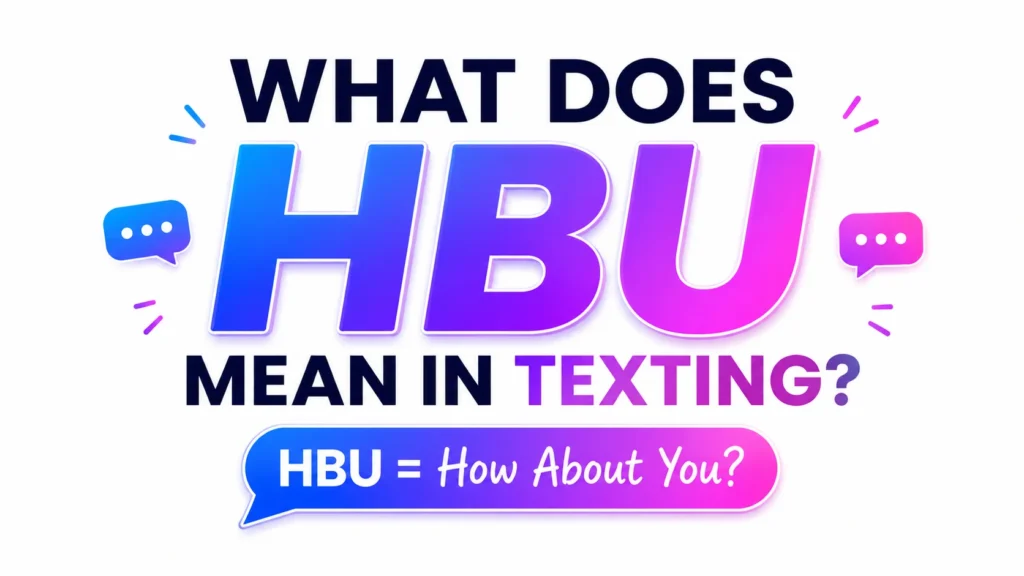
HBU stands for:
- How About You?
It’s commonly used in texting and online chats to turn the conversation back to the other person.
Why People Use It
Instead of typing the full phrase, people shorten it to save time and keep conversations flowing naturally.
For example:
“I’m doing pretty well today, hbu?”
“I love that movie lol, hbu?”
“Just got home from work. HBU?”
In each example, the speaker is asking the other person to share their thoughts, feelings, or situation.
Tone of HBU
HBU is usually:
- Friendly
- Casual
- Conversational
- Relaxed
- Interested and engaging
It helps conversations feel mutual instead of one-sided.
Origin & Background
Where HBU Came From
HBU became popular during the early days of internet messaging and mobile texting. Back when SMS messages had character limits, people naturally shortened phrases to communicate faster.
Expressions like:
- LOL
- BRB
- IDK
- TBH
- HBU
all grew from that same texting culture.
The Rise of Fast Communication
As smartphones and messaging apps evolved, abbreviations became part of digital identity. Young people especially started using shorthand language to communicate emotions quickly.
Typing “How about you?” every single time felt slower than simply typing “HBU.”
Over time, it became socially normal.
Social Media Influence
Apps like Instagram, Snapchat, TikTok, and WhatsApp helped HBU spread globally.
People now use it in:
- DMs
- Comment sections
- Gaming chats
- Group conversations
- Online friendships
- Dating apps
Its popularity increased because it sounds conversational without requiring much effort.
How the Meaning Evolved
Originally, HBU was mainly practical shorthand.
Today, it also carries emotional meaning.
When someone says “HBU,” they’re often signaling:
- “I care about your opinion.”
- “I want to continue talking.”
- “I’m including you in the conversation.”
That small phrase creates social connection.
Real-Life Conversations
WhatsApp Conversation
Person A:
Hey, how was your exam?
And,
Person B:
Honestly better than expected 😭 hbu?
Person A:
Mine was stressful but I survived lol.
Instagram DM
Person A:
Your vacation pictures look amazing.
Person B:
Thank you! It was such a peaceful trip. HBU, traveled anywhere recently?
Person A:
Not yet, but now I seriously want to.
TikTok Comments
Person A:
This song is stuck in my head all day.
And,
Person B:
Sameeee 😭 HBU listening to it on repeat too?
Person A:
Literally nonstop.
Late-Night Text Message
Person A:
Can’t sleep tonight.
Person B:
Same here honestly. HBU stressed about life too?
Person A:
Yeah… a little more than usual lately.
These examples show how HBU keeps conversations emotionally balanced and interactive.
Emotional & Psychological Meaning
What Emotion Does HBU Express?
Even though it’s short, HBU often expresses:
- Interest
- Curiosity
- Warmth
- Inclusion
- Emotional availability
It subtly tells the other person:
“I shared something about myself, and now I want to hear from you too.”
Why People Use It So Often
Modern conversations move quickly.
People want communication that feels easy but still emotionally connected. HBU works perfectly because it keeps dialogue open without sounding overly formal.
It’s small, but socially powerful.
What It Reveals About Modern Communication
Digital communication today values:
- Speed
- Convenience
- Emotional efficiency
- Informal connection
HBU reflects all of these trends.
Instead of long structured conversations, people now communicate in short emotional exchanges.
A Real-Life Style Scenario
Imagine someone texting after a difficult day:
“Work was exhausting today. HBU?”
Even though the message is brief, it invites emotional reciprocity. It says:
“I’ve opened up a little. Now I want to hear your side too.”
That’s why simple slang often carries deeper emotional meaning than people realize.
Usage in Different Contexts
Social Media
On platforms like TikTok, Instagram, and Snapchat, HBU is extremely common.
People use it to:
- Continue conversations
- Respond casually
- Build engagement
- Avoid awkward silence
Example:
“I’m obsessed with this trend lol hbu?”
Friends & Relationships
Among friends, HBU creates natural conversational rhythm.
In relationships, it can feel caring and attentive.
For example:
“I miss you today. HBU?”
That tiny phrase encourages emotional participation.
Work or Professional Settings
In professional communication, HBU is usually too informal.
Instead, people prefer:
- “How about you?”
- “What are your thoughts?”
- “And yourself?”
Using HBU in serious business emails may appear unprofessional.
Casual vs Serious Tone
HBU works best in relaxed conversations.
It may feel inappropriate during:
- Formal interviews
- Academic communication
- Sensitive professional discussions
- Serious emotional conflicts
Tone always matters.
When NOT to Use It
Formal Situations
Avoid HBU in:
- Job applications
- Client emails
- Official reports
- Academic submissions
It can reduce professionalism.
Sensitive Conversations
If someone shares deeply emotional news, responding casually with “hbu?” may sound emotionally disconnected.
Example:
“My grandfather passed away today.”
Replying:
“Oh no. HBU doing okay?”
can sound awkward or insensitive.
Cross-Cultural Communication
Not everyone understands internet slang equally.
Older generations or non-native English speakers may misunderstand abbreviations.
Situations That May Cause Confusion
Sometimes HBU can feel too vague.
Without context, people may wonder:
- “About what exactly?”
- “What are they asking me?”
- “Is this serious or casual?”
Clarity matters in important conversations.
Common Misunderstandings
People Think It Has a Hidden Meaning
Some users assume HBU is secret slang or coded language.
It’s not.
It simply means “How about you?”
Tone Confusion
Because texting lacks facial expressions and voice tone, HBU can sometimes appear:
- Dry
- Lazy
- Uninterested
especially if used repeatedly without emotional detail.
Literal vs Conversational Meaning
HBU isn’t always asking a deep question.
Sometimes it’s just conversational politeness.
Example:
“I’m fine, hbu?”
The speaker may simply be keeping the conversation moving naturally.
Comparison Table
| Expression | Meaning | Tone | Common Usage |
|---|---|---|---|
| HBU | How about you? | Casual | Texting & social media |
| WBU | What about you? | Casual | Similar to HBU |
| HYD | How you doing? | Friendly | Check-in conversations |
| WYD | What are you doing? | Informal | Active conversations |
| IDK | I don’t know | Neutral | Everyday texting |
| TBH | To be honest | Honest/confessional | Social media & chats |
| IMO | In my opinion | Opinion-sharing | Discussions |
| NVM | Never mind | Dismissive/light | Casual texting |
Key Insight
HBU stands out because it creates conversational balance. Instead of focusing only on the speaker, it invites the other person into the interaction, which is why it remains popular across almost every social platform.
Variations / Types
HBU?
The most common version. Quick and direct.
hbu
Lowercase version often used in fast texting.
Hbuuu
Adds extra letters for friendliness or playful emotion.
WBU
Means “What about you?” Similar usage but slightly more conversational.
HBY
Means “How about you?” Another variation seen online.
And you?
The full non-slang alternative.
You?
Ultra-short version commonly used in casual chats.
How bout u
A more phonetic internet-style variation.
HBYT
Means “How about you though?” Less common but expressive.
WBY
Short for “What about you?” Popular in younger texting culture.
How to Respond When Someone Uses It
Casual Replies
- “Pretty good honestly.”
- “Just relaxing at home.”
- “Doing okay today.”
- “Same here lol.”
Funny Replies
- “Mentally on vacation.”
- “Running purely on caffeine.”
- “Trying to survive adulthood 😭”
Mature Replies
- “It’s been a busy week, but I’m managing.”
- “Feeling much better today actually.”
Respectful Replies
- “I appreciate you asking.”
- “Doing alright, thank you.”
- “Things are improving slowly.”
The best response depends on tone, closeness, and context.
Regional & Cultural Usage
Western Culture
In the US, UK, and Canada, HBU is extremely common in casual digital communication.
It’s viewed as friendly and normal.
Asian Culture
In many Asian countries, younger generations use HBU frequently online, especially in English-speaking digital spaces.
However, formal communication still tends to avoid slang abbreviations.
Middle Eastern Culture
HBU appears commonly among bilingual younger users on social media.
Still, tone and respect remain culturally important, especially in professional settings.
Global Internet Usage
The internet has created a universal texting language.
Even people whose first language isn’t English often recognize abbreviations like HBU because of social media exposure.
Generational Differences
Gen Z
Gen Z uses HBU naturally and casually in rapid conversations.
Millennials
Millennials also understand it well but may use full phrases more often depending on context.
Older Generations
Some older users may find texting abbreviations confusing or overly informal.
Is It Safe for Kids?
Understanding the Context
Yes, HBU is generally safe for kids.
It does not contain:
- Offensive language
- Sexual meaning
- Harmful implications
- Dangerous hidden slang
It’s simply a conversational abbreviation.
Why Parents Still Should Understand It
Even harmless slang reflects how children communicate online.
Understanding phrases like HBU helps parents stay connected to modern digital culture without overreacting to harmless trends.
FAQs
###+ What does HBU stand for in texting?
HBU stands for “How about you?” It’s used to ask another person about their thoughts, feelings, or situation during a conversation.
Is HBU rude?
No, HBU is usually friendly and casual. However, using it in serious or formal situations may feel too informal.
What is the difference between HBU and WBU?
HBU means “How about you?” while WBU means “What about you?” Both are very similar and often interchangeable.
Can I use HBU in professional emails?
It’s better not to. Professional communication usually prefers full phrases like “How about you?” or “What are your thoughts?”
Why do people use HBU instead of typing the full sentence?
People use HBU for speed, convenience, and conversational flow in texting and social media chats.
Is HBU mainly used by Gen Z?
Gen Z uses it heavily, but Millennials and many online users across age groups also understand and use it.
Does HBU have romantic meaning?
Not directly. However, depending on the conversation, it can feel caring, attentive, or emotionally engaging.
Conclusion
Understanding what HBU means in texting is more than learning internet slang. It’s about understanding how modern communication works emotionally.
At its core, HBU simply means “How about you?” But socially, it represents connection, curiosity, and shared conversation.
People use it because it feels natural, fast, and emotionally inclusive.
Whether you see it in a WhatsApp chat, Instagram DM, TikTok comment, or late-night text conversation, HBU is one of those small digital expressions that quietly keeps conversations alive.
Once you understand the tone behind it, using it becomes effortless.
And honestly? The next time someone texts “hbu,” you probably won’t even think twice before replying naturally.