In modern texting and social media conversations, abbreviations have become a natural part of communication. One of those short but expressive slang terms is “idek”.
People often search “idek mean” when they see it in chats, comments, or replies and feel confused about its tone or intention. At first glance, it looks random. But in reality, it carries a very clear emotional expression used mostly by Gen Z and active internet users.
The confusion usually comes from how casually it appears in conversations. Sometimes it shows frustration, sometimes surprise, and sometimes complete uncertainty. Understanding it helps you read between the lines in digital communication where tone is not always obvious.
This article breaks down everything about “idek,” from meaning to real-life usage, emotional depth, and cultural context so you can confidently use and understand it.
IDEK Mean – Quick Meaning
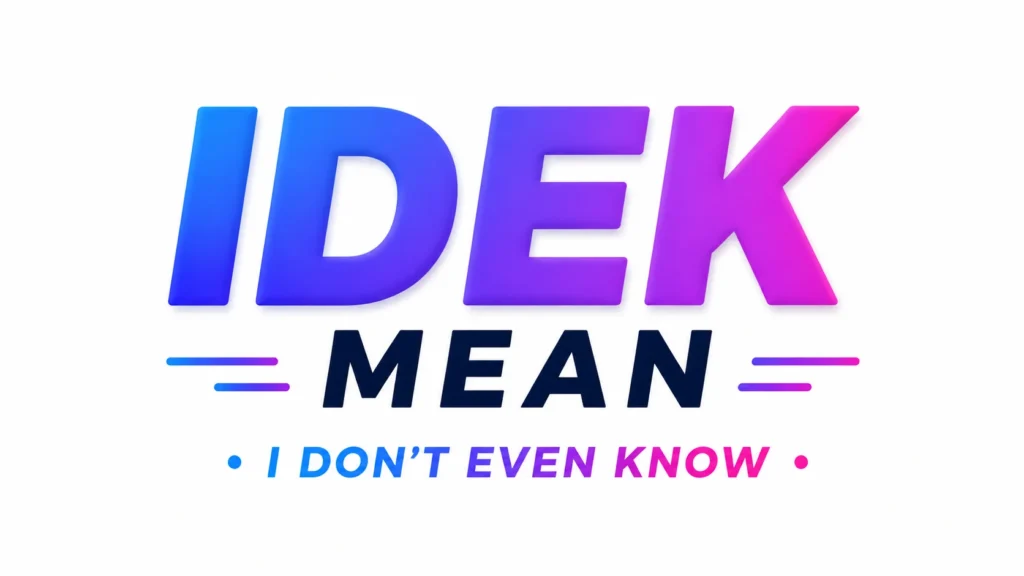
What does IDEK stand for?
“IDEK” is an abbreviation for:
- I Don’t Even Know
It is used when someone feels confused, overwhelmed, surprised, or unsure about something.
Simple meaning breakdown:
- Expresses confusion or lack of understanding
- Shows emotional reaction (frustration, shock, or disbelief)
- Often used casually in texting or social media posts
Example usage:
- “Idek what happened in class today.”
- “Idek why he said that.”
- “Idek anymore, everything is confusing.”
In all cases, it reflects a moment where the speaker cannot fully explain or process something.
Origin & Background
Where “idek” came from
“IDEK” originated from early internet chat culture, especially during the rise of SMS texting and online messaging platforms like MSN, Facebook chat, and later Twitter.
Short forms became necessary because:
- People wanted faster typing
- Character limits encouraged abbreviations
- Online communication favored speed over grammar
Cultural influence
As internet slang evolved, “idek” became popular among teenagers and young adults. It was widely adopted in:
- Meme culture
- Reaction tweets
- TikTok captions
- Instagram comments
Social media impact
Platforms like TikTok and Snapchat played a major role in making “idek” mainstream. Instead of writing long emotional explanations, users preferred short expressions like “idek” to show confusion or emotional exhaustion.
How its meaning evolved
Originally, it simply meant lack of knowledge. Over time, it gained emotional weight and now often signals:
- Mental overwhelm
- Sarcasm
- Emotional frustration
- Lighthearted confusion
Real-Life Conversations (MANDATORY)
WhatsApp Chat Example
Person A: Did you finish the assignment?
Person B: Idek what the teacher even wanted honestly 😭
Instagram DM Example
Person A: Why did he unfollow you?
Person B: Idek, I thought everything was fine…
TikTok Comment Section
User A: This trend makes no sense
User B: Idek why people are obsessed with it lol
Text Message Example
Person A: Where are you?
Person B: Idek, I got lost and now I’m just walking around
These examples show how “idek” adapts naturally to emotional and casual conversations.
Emotional & Psychological Meaning
“IDEK” is more than just slang—it reflects a mental and emotional state.
What emotion it expresses
- Confusion
- Frustration
- Emotional exhaustion
- Surprise or disbelief
Why people use it
People use “idek” because:
- It saves emotional explanation time
- It expresses feelings quickly
- It feels relatable in stressful moments
- It softens confusion in conversations
What it reveals about modern communication
Digital communication today is fast, emotional, and often indirect. Instead of explaining feelings in detail, users rely on short emotional markers like “idek.”
Personal-style scenario
Imagine a student who just finished an exam they didn’t understand. Instead of writing a long paragraph about confusion, they simply text:
“Idek what I just wrote in that paper.”
That single phrase captures stress, uncertainty, and emotional overload in one short expression.
Usage in Different Contexts
Social Media
On platforms like TikTok, Instagram, or X (Twitter), “idek” is used for:
- Funny reactions
- Confused replies
- Meme captions
Example: “Idek what this trend is but I’m here for it.”
Friends & Relationships
In casual chats, it expresses honesty and confusion:
- “Idek why I’m mad right now”
- “Idek what you mean but okay”
Work / Professional Settings
It is generally avoided in formal communication, but may appear in informal team chats:
- “Idek how this bug happened” (developer chat)
Still, it’s not suitable for emails or client communication.
Casual vs Serious Tone
- Casual: Normal and widely accepted
- Serious: Can sound careless or unprofessional
When NOT to Use It
Inappropriate contexts
Avoid using “idek” in:
- Formal emails
- Academic writing
- Job interviews
- Professional reports
Cultural sensitivity
In serious conversations about emotional or sensitive topics, “idek” may seem dismissive.
Situations of misunderstanding
If someone is seeking clarity or emotional support, responding with “idek” might feel uninterested or cold.
Common Misunderstandings
What people get wrong
Some think “idek” means:
- “I don’t care” → Incorrect
- “I have no opinion” → Not always true
Tone confusion
Depending on context, “idek” can sound:
- Funny
- Frustrated
- Emotional
- Neutral
Literal vs figurative meaning
Literally, it means lack of knowledge.
Figuratively, it expresses emotional confusion or overwhelm.
Comparison Table
| Expression | Meaning | Tone | Usage |
|---|---|---|---|
| IDEK | I don’t even know | Confused / emotional | Casual texting |
| IDK | I don’t know | Neutral | General use |
| IDC | I don’t care | Dismissive | Strong opinion |
| SMH | Shaking my head | Disapproval | Reaction |
| NVM | Never mind | Correction | Chat cleanup |
Key Insight
“IDEK” is more emotionally expressive than “IDK.” It reflects not just lack of knowledge but a deeper sense of confusion or emotional reaction.
Variations / Types
1. IDK
I don’t know – simple lack of knowledge
2. IDEC
I don’t even care – emotional disinterest
3. IDTS
I don’t think so – mild disagreement
4. IDKTBH
I don’t know, to be honest – honest confusion
5. IDEKW
I don’t even know why – emotional confusion
6. IDKK
I truly don’t know – stronger emphasis
7. IDEKLOL
Confused but amused – playful tone
8. IDKMAN
Casual frustration – informal speech
9. IDEKWHY
Strong confusion about reason
10. IDKFR
I don’t know for real – emphasis on honesty
How to Respond When Someone Uses It
Casual replies
- “Same, honestly”
- “No worries”
- “We’ll figure it out”
Funny replies
- “We’re both confused then 😂”
- “Welcome to the club”
- “That makes two of us”
Mature replies
- “Let’s try to understand it together”
- “We can check it step by step”
- “It’s okay, take your time”
Respectful replies
- “I understand, it’s confusing”
- “No pressure, we’ll sort it out”
Regional & Cultural Usage
Western culture
Widely used in the US and UK among Gen Z for casual digital communication.
Asian culture
Popular in urban youth communities, especially in India, Pakistan, and Philippines through social media influence.
Middle Eastern culture
Used mostly among English-speaking youth online, not common in formal settings.
Global internet usage
“IDEK” is now globally recognized due to TikTok, Instagram, and meme culture.
Generational differences
- Gen Z: Very common, emotionally expressive
- Millennials: Understand but use less frequently
Is It Safe for Kids?
Yes, “idek” is generally safe for kids because:
- It contains no offensive language
- It is commonly used in casual conversations
- It is part of modern internet slang
However, children should be taught:
- When it is appropriate to use
- How tone can change meaning
FAQs
What does IDEK mean in texting?
It means “I don’t even know” and expresses confusion or uncertainty.
Is IDEK rude?
Not usually, but tone matters. It can sound dismissive in serious conversations.
Is IDEK the same as IDK?
No. IDK is neutral, while IDEK shows stronger emotional reaction.
Where is IDEK commonly used?
Mostly on social media, texting apps, and casual online chats.
Can I use IDEK in formal writing?
No, it is not appropriate for professional or academic communication.
Why do people say IDEK instead of IDK?
Because it adds emotional expression and sounds more natural in casual speech.
Is IDEK still popular in 2026?
Yes, it remains widely used in digital conversations, especially among younger users.
Conclusion
“IDEK” may look like a small internet abbreviation, but it carries real emotional depth in modern communication. It expresses confusion, overwhelm, or honest uncertainty in a quick and relatable way.
Understanding slang like “idek” helps you interpret digital conversations more accurately and connect better with online culture. As communication continues evolving, these short expressions are becoming a natural part of how people share feelings in fast-moving conversations.
Using it correctly is not about memorizing meaning—it’s about understanding the emotion behind it.