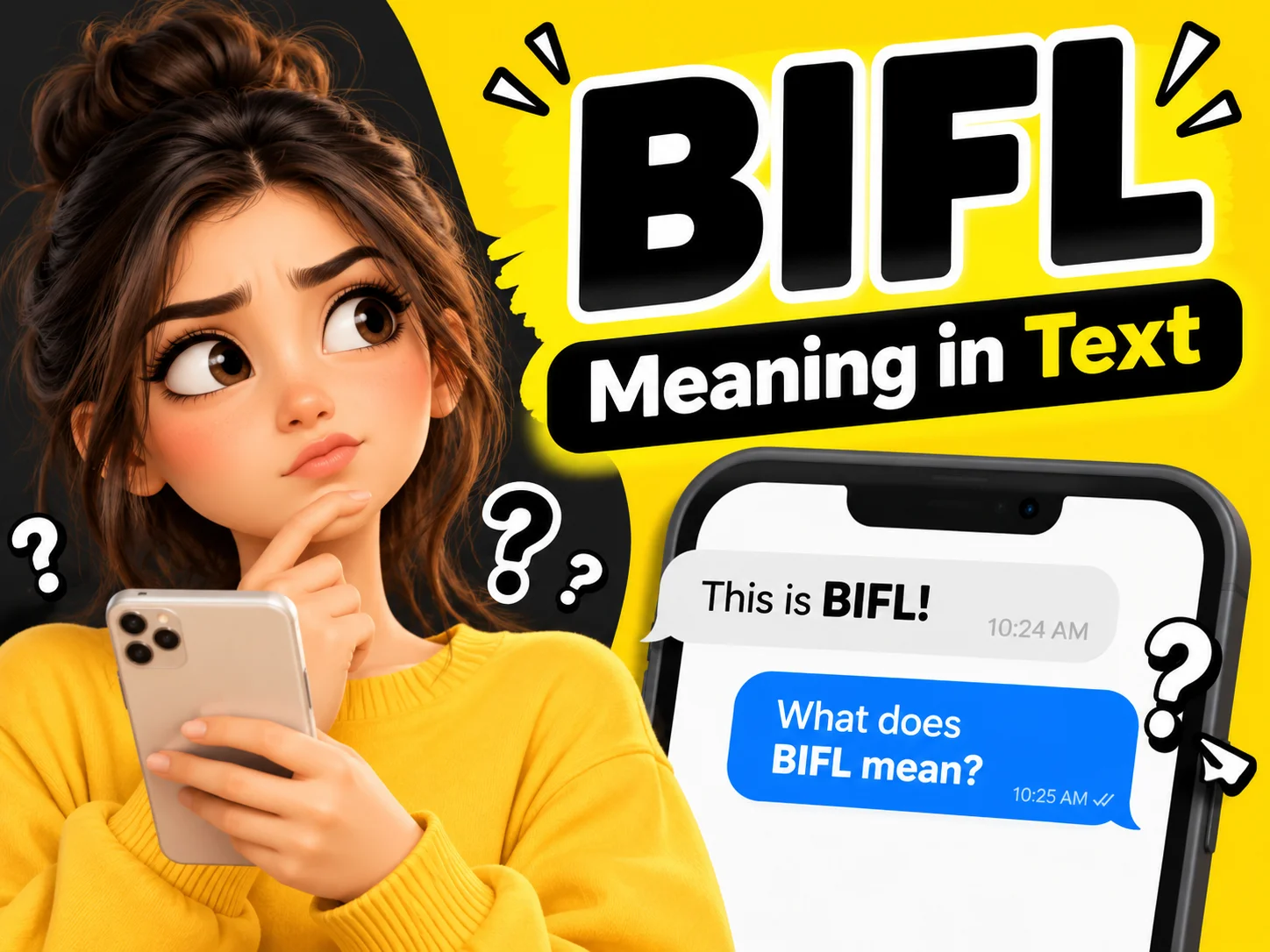

BIFL stands for “Buy It for Life.” It describes the idea of choosing durable, well-made products that can last for many years instead of repeatedly buying cheap replacements. If you see BIFL in an online discussion, the person is usually talking about product quality, long-term value, or items worth keeping for a long time.
What Does BIFL Mean?
BIFL is an initialism for “Buy It for Life.” Unlike everyday texting shortcuts such as LOL or BRB, it is especially associated with discussions about shopping, product recommendations, and durability.
The idea is simple: buy something well-made that will serve you for years rather than replacing a cheaper version again and again.
For example:
Alex: I need a new backpack. Mine breaks every year.
Sam: Look for a BIFL backpack with strong stitching and repairable parts.
Alex: I’d rather pay more once than replace it every year.
Here, BIFL describes a preference for long-lasting quality.
The phrase does not guarantee that a product will literally last forever. It expresses a goal of durability, repairability, and long-term usefulness.
READ MORE: ICL Meaning Slang: What Does ICL Mean in Text?
Is BIFL an Acronym or an Abbreviation?
BIFL is an initialism formed from the first letters of “Buy It for Life.” People generally read the letters individually, although some online communities pronounce it as a word.
Common forms include:
- BIFL: Buy It for Life.
- BIFL product: An item selected for long-term durability.
- BIFL recommendation: A suggestion for a product expected to last.
- BIFL quality: A casual description of something built to withstand years of use.
How People Use BIFL Online
BIFL appears particularly in online communities where people exchange recommendations about products that have lasted for years. Reddit’s Buy It for Life community is one notable example.
1. Recommending Durable Products
A: My old frying pan is falling apart.
B: Look for a BIFL option made from durable materials.
A: I want something I can use for years.
2. Discussing Product Quality
A: Is this jacket worth the price?
B: Check the stitching, material, and repair options first.
A: Good point. I’m looking for something BIFL.
3. Comparing Long-Term Costs
A: These shoes are expensive.
B: If they last longer and can be repaired, they might be worth it.
A: That’s the BIFL approach, right?
B: Exactly.
4. Sharing Personal Recommendations
A: Any suggestions for a durable water bottle?
B: I’ve used the same stainless-steel bottle for years.
A: Sounds like a BIFL find.
B: It has definitely held up well.
BIFL Meaning in Different Situations
The meaning stays largely consistent, but the context changes how people use it.
Funny Conversation
A: Why are you researching a spoon for three hours?
B: I’m searching for a BIFL spoon.
A: It’s a spoon, not a house.
B: A great spoon deserves a lifetime commitment 😂
Sarcastic Conversation
A: This cheap charger stopped working again.
B: Truly a lifetime purchase.
A: The lifetime of a fruit fly, maybe.
B: Next time, let’s check quality before buying.
Playful Conversation
A: I found a jacket I love.
B: Is it BIFL quality?
A: It looks strong enough to survive my wardrobe.
B: That’s the real test!
Serious Conversation
A: We need new equipment for the office.
B: Let’s compare durability and repair costs.
A: Agreed. We should consider long-term value.
B: That fits the BIFL principle.
10 Realistic BIFL Conversation Examples
Example 1: Buying Shoes
A: I’m tired of replacing my shoes every few months.
B: Try researching BIFL footwear.
A: I’ll compare the materials and construction.
B: Good idea. Check whether the soles can be repaired.
Example 2: Kitchen Equipment
A: Which pan should I buy?
B: How often will you use it?
A: Almost every day.
B: Then durability should be a priority.
Example 3: A Laptop Purchase
A: Should I buy the cheapest laptop available?
B: Consider how long you need it to last.
A: Probably five years or more.
B: Then look at reliability, repairability, and support.
Example 4: A Gift for a Parent
A: I want to buy Dad something useful.
B: Maybe a well-made tool he’ll use for years.
A: Something with BIFL potential?
B: Exactly.
Example 5: Shopping for a Backpack
A: This backpack costs twice as much as the other one.
B: Compare the zippers, stitching, and warranty.
A: The more expensive one looks sturdier.
B: It may offer better long-term value.
Example 6: Talking About Cookware
A: My grandmother still uses her old cast-iron pan.
B: That’s a great example of long-lasting cookware.
A: She says it works as well as ever.
B: Definitely the kind of item BIFL fans appreciate.
Example 7: Choosing Furniture
A: Should we buy the cheapest sofa?
B: Let’s check the frame and fabric quality first.
A: I’d prefer one that lasts.
B: Then long-term durability matters more than the initial price alone.
Example 8: Replacing a Phone
A: My phone still works, but the battery is weak.
B: Can you replace the battery?
A: Yes, apparently.
B: Repairing it could be better than replacing the whole phone.
Example 9: Asking an Online Community
A: What’s a good BIFL gift for someone who loves cooking?
B: Consider tools that are durable and easy to maintain.
A: Any particular type?
B: Start with their needs and read long-term owner reviews.
Example 10: Learning the Term
A: I keep seeing BIFL in product discussions.
B: It means Buy It for Life.
A: So it means something that lasts?
B: Yes, or something chosen because it is expected to last a long time.
How to Use BIFL in a Sentence
BIFL is most natural when discussing purchases, product reviews, and recommendations.
Examples:
- “I’m looking for a BIFL backpack.”
- “This cookware has lasted for decades.”
- “Can anyone recommend a BIFL office chair?”
- “I’d rather repair this than replace it.”
- “The product looks durable, but I want to check its long-term reliability.”
BIFL is informal and community-oriented. In a formal report, it may be clearer to write “durable, long-lasting products” instead.
Where Is BIFL Used?
BIFL is especially associated with Reddit discussions about long-lasting consumer goods. It can also appear in product reviews, shopping forums, and social media conversations about quality and value.
It is not primarily a conventional SMS abbreviation. If someone sends you BIFL in a private text, the intended meaning will usually depend on whether you are discussing shopping, an item, or a recommendation.
There is no need to assume that BIFL has a different definition on every platform.
Who Uses BIFL?
People interested in durable goods, repairability, saving money over time, and avoiding frequent replacements may use BIFL. It is not limited to a particular age group.
For example, a student might seek a backpack that lasts throughout university, while a homeowner might look for reliable tools or appliances.
The common thread is not age; it is the desire to make purchases that remain useful for a long time.
The Origin of BIFL
BIFL comes from the phrase “Buy It for Life.” Its online use is closely associated with consumer discussions about durable products and the Reddit community devoted to the concept.
There is not enough reliable evidence to assign the phrase’s creation to one person or a precise year. It is best to describe BIFL as a consumer-oriented expression that became recognizable through online product discussions rather than claim that it originated on a specific social media platform.
Its central idea is straightforward: consider how long an item will remain useful, not just what it costs today.
Is BIFL Rude or Offensive?
No. BIFL is not inherently rude, insulting, or profane. It is generally a practical term used when discussing purchases and product quality.
However, calling something “BIFL” does not prove that it will last a lifetime. Check independent reviews, repair options, warranty terms, and the product’s construction before relying on such a claim.
The phrase describes an aspiration or purchasing philosophy, not a guarantee.
BIFL vs. Similar Terms
| Term | Meaning | Usage context | Tone | Popularity | Confusion risk |
|---|---|---|---|---|---|
| BIFL | Buy It for Life | Long-lasting purchases | Practical | Recognized in product-focused online communities | Low |
| DIY | Do It Yourself | Making or repairing things | Informal | Widely used online | Low |
| TIL | Today I Learned | Sharing something newly learned | Casual | Common online | Low |
| FOMO | Fear of Missing Out | Worry about missing an experience | Casual | Widely recognized | Low |
| YOLO | You Only Live Once | Justifying an experience or choice | Casual | Widely recognized | Low |
| Buy once, cry once | Pay more initially for lasting quality | Purchase advice | Informal | Used in consumer discussions | Medium |
The closest concept is “buy once, cry once,” which expresses the idea that paying more upfront can be worthwhile if it avoids repeated purchases. However, neither phrase means that every expensive product is automatically durable.
Frequently Asked Questions About BIFL
1. What does BIFL stand for?
BIFL stands for “Buy It for Life.” It describes choosing products that are expected to last a long time. People often use it when discussing durable clothing, cookware, furniture, tools, and other everyday items.
2. What does BIFL mean in text messages?
In a conversation about shopping or products, BIFL usually means “Buy It for Life.” The sender may be recommending a durable product or describing a preference for long-lasting quality. Unlike abbreviations such as BRB, it is not mainly about the progress of a conversation.
3. Is BIFL a slang word or an acronym?
BIFL is an initialism used in informal online communication. It comes from the first letters of “Buy It for Life.” Although people may casually call it slang, it is more accurately described as an abbreviation associated with a particular consumer philosophy.
4. Does BIFL mean a product will literally last forever?
No. BIFL describes the goal of buying something durable enough to provide long-term use. Even well-made products can wear out, break, or become unsuitable for changing needs. Materials, maintenance, repairability, and the conditions of use all affect lifespan.
5. Is BIFL used on Reddit?
Yes. BIFL is strongly associated with Reddit’s Buy It for Life community, where people discuss and recommend products known for lasting a long time. Discussions may include cookware, bags, clothing, tools, and other consumer goods.
6. Is it rude to call a product BIFL?
No. The term is generally positive or descriptive because it suggests durability and long-term value. However, it is better to support the claim with evidence, such as years of use, repair options, or reliable product reviews.
7. What’s the difference between BIFL and buying an expensive product?
Price alone does not establish BIFL quality. A high-priced item can still break quickly, while a reasonably priced product may last for years. The BIFL approach considers durability, maintenance, repairability, and overall value over time.
8. Can I use BIFL when talking about relationships?
The established meaning discussed here concerns buying products for long-term use. People may use the letters jokingly in other contexts, but that is not the standard meaning. If you encounter BIFL in a personal message, consider the context before interpreting it.
Conclusion: Remember What BIFL Means
BIFL means “Buy It for Life.” It is an online abbreviation associated with choosing products for durability, repairability, and long-term usefulness.
Usage tips:
- Use BIFL when discussing products expected to last for years.
- Check durability and repair options rather than judging by price alone.
- Use the complete phrase if your audience does not know the abbreviation.
- Treat BIFL as a goal, not a promise that something will last forever.
Common mistakes to avoid:
- Do not confuse BIFL with everyday texting shortcuts.
- Do not assume an expensive product is automatically BIFL.
- Do not treat the term as a lifetime guarantee.
- Do not assume every use outside a shopping discussion has the same meaning.
When you see BIFL in an online conversation, the most likely interpretation is a preference for buying something durable enough to keep for many years.