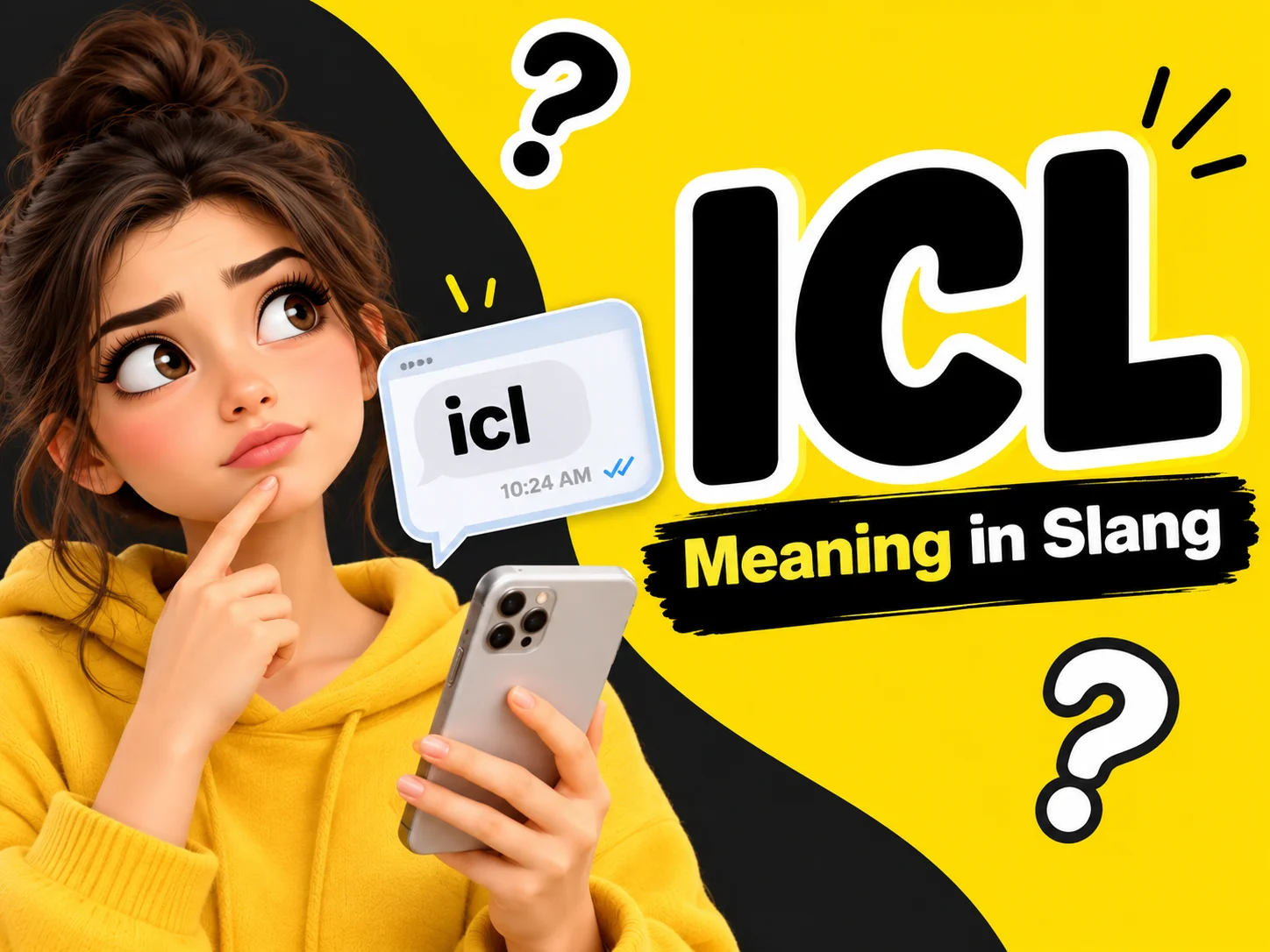

ICL is texting slang for “I can’t lie.” When someone sends ICL in a text, DM, or group chat, they’re usually introducing an honest opinion, confession, or reaction—similar to saying “honestly” or “not gonna lie.”
What Does ICL Mean in Slang?
ICL means “I can’t lie.” It’s an informal abbreviation used in digital conversations when someone wants to emphasize that what follows is their genuine opinion or reaction.
For example:
“ICL, that movie was actually good.”
This means:
“I can’t lie, that movie was actually good.”
The interesting part of ICL is that it often introduces a statement the writer thinks might be unexpected, blunt, embarrassing, or worth emphasizing.
You might see it at the beginning of a message:
“ICL I was nervous.”
Or occasionally near the end:
“That was awkward icl.”
Unlike an abbreviation such as LOL, ICL doesn’t describe laughter or an emotion by itself. It signals honesty or frankness.
Is ICL an Acronym or Abbreviation?
ICL is an initialism/abbreviation formed from the first letters of:
I = I
C = Can’t
L = Lie
So:
ICL → I Can’t Lie
People generally type it as icl in casual messages, although ICL is also common.
It works similarly to phrases such as “not gonna lie” (NGL) and “to be honest” (TBH).
What Does ICL Mean When Someone Texts You?
When someone texts you ICL, they’re usually saying:
“I’m being honest with you.”
The phrase that follows tells you what they’re being honest about.
For example:
“ICL, I don’t like that idea.”
The person is essentially saying:
“I can’t lie—I don’t like that idea.”
It can introduce praise just as easily as criticism:
“ICL, you did really well.”
It can also introduce a confession:
“ICL, I forgot about the meeting.”
That flexibility is one reason the abbreviation works so naturally in everyday texting.
How ICL Is Used on Different Platforms
SMS, iMessage, and WhatsApp
ICL can appear in ordinary text conversations, especially when someone wants to make their opinion sound candid.
“icl I didn’t expect you to come.”
Instagram and Snapchat DMs
The abbreviation works naturally in private messages and casual conversations.
“ICL that picture is fire.”
Discord
ICL can also appear in casual Discord conversations where users are chatting rather than posting formal information.
The meaning doesn’t fundamentally change between these platforms. ICL remains “I can’t lie.”
READ MORE: TIFU Meaning in Text — What It Really Means
ICL vs. NGL vs. TBH
These abbreviations overlap, but they’re not always interchangeable.
| Term | Meaning | Usage Context | Tone | Popularity | Confusion Risk |
|---|---|---|---|---|---|
| ICL | I Can’t Lie | Honest reaction/confession | Casual | High | Low |
| NGL | Not Gonna Lie | Honest opinion | Casual | High | Low |
| TBH | To Be Honest | Frank opinion | Casual | High | Low |
| FR | For Real | Agreement/emphasis | Casual | High | Medium |
| IMO | In My Opinion | Personal viewpoint | Neutral/casual | High | Low |
| JK | Just Kidding | Opposite/reversal of seriousness | Playful | High | Low |
The closest comparison is NGL.
ICL: “ICL, I really like it.”
NGL: “NGL, I really like it.”
Both communicate honesty, although the wording comes from different phrases.
ICL Tone Variations
The abbreviation itself is neutral. The rest of the message creates the tone.
Funny ICL
A: “ICL, I thought you were going to fail that test.”
B: “Wow, thanks for believing in me 😂”
A: “I was wrong though.”
B: “Exactly. Respect the comeback.”
Here, ICL introduces a blunt but humorous admission.
Sarcastic ICL
A: “ICL, waiting three hours for your reply was amazing.”
B: “I was busy 😭”
A: “Clearly.”
B: “Okay, okay. My bad.”
The sarcasm comes from the context, not from ICL itself.
Playful ICL
A: “ICL, you looked way too happy when I said yes.”
B: “Maybe I was.”
A: “I knew it.”
B: “Don’t expose me 😂”
Serious ICL
A: “ICL, I don’t think this is working.”
B: “Are you serious?”
A: “Yeah. I’ve been thinking about it for a while.”
B: “Okay. Let’s talk.”
Here, ICL makes the statement sound deliberately honest rather than playful.
10 Real Text Examples of ICL
1. Between friends
A: “Did you like the restaurant?”
B: “ICL, the food was better than I expected.”
A: “Same.”
B: “We should go again.”
2. About a movie
A: “Did you enjoy the new movie?”
B: “ICL, I almost fell asleep.”
A: “😂 Same here.”
B: “The ending was decent though.”
3. Between siblings
A: “Who ate the last cookie?”
B: “ICL, it was me.”
A: “I knew it.”
B: “I’ll buy more.”
4. With a partner
A: “Be honest. Did you miss me?”
B: “ICL, yeah.”
A: “Only yeah?”
B: “Okay, a lot.”
5. Coworker conversation
A: “How was the presentation?”
B: “ICL, I was nervous at first.”
A: “You didn’t look nervous.”
B: “Good. That was the goal.”
6. Group chat
A: “Who’s joining tonight?”
B: “ICL, I’m probably staying home.”
A: “Fair.”
B: “Next time though.”
7. Asking for an opinion
A: “ICL, what do you think of this outfit?”
B: “Honestly? The first one looked better.”
A: “Okay, that’s fair.”
B: “You asked for honesty 😂”
8. Admitting a mistake
A: “Did you send the email?”
B: “ICL, I completely forgot.”
A: “Can you send it now?”
B: “Yep, doing it.”
9. Talking to a parent
A: “How was your day?”
B: “ICL, it was exhausting.”
A: “Get some rest.”
B: “I will.”
10. A casual DM
A: “Have you listened to their new song?”
B: “ICL, it’s actually really good.”
A: “Right?!”
B: “It’s been stuck in my head all day.”
ICL Grammar and Language Role
ICL functions as an informal discourse marker in digital communication. It doesn’t behave like a conventional noun, verb, or adjective.
It most often appears at the beginning of a sentence:
“ICL, I wasn’t expecting that.”
But it can also appear later:
“That was funny icl.”
It can even stand at the beginning of a short response:
“ICL, same.”
Can ICL stand alone?
Usually, ICL works best with a statement following it, but people can use it as a short reaction when the context is obvious.
For example:
A: “You actually liked it?”
B: “ICL, yeah.”
Lowercase vs. uppercase
icl usually feels casual and relaxed.
ICL can look slightly more emphatic or simply reflect someone’s normal typing style.
Capitalization generally doesn’t change the meaning.
How to Reply When Someone Says ICL
There’s no special response required. Reply to the actual statement that follows.
Funny reply
“Finally, some honesty 😂”
Serious reply
“I appreciate you being honest with me.”
Flirty reply
“ICL, I was hoping you’d say that 😉”
Neutral reply
“Fair enough.”
If their message contains criticism, you can acknowledge it rather than reacting defensively:
“I get what you mean.”
What Does ICL Mean From a Girl?
If a girl texts ICL, it normally means exactly the same thing:
“I can’t lie.”
For example:
“ICL, you looked good today.”
That’s an honest compliment, but ICL itself doesn’t prove romantic interest. The surrounding conversation matters.
If she says:
“ICL, I missed talking to you.”
that gives you more emotional information, but the abbreviation still simply means “I can’t lie.”
What Does ICL Mean From a Guy?
The same applies when a guy uses it.
“ICL, that was my favorite part.”
He’s emphasizing that he’s giving you his genuine opinion.
There’s no separate male-specific meaning.
Who Uses ICL?
ICL is primarily an informal internet and texting abbreviation. It’s particularly natural in casual conversations where people use short forms and conversational English.
It’s not limited to one age group, although younger internet users may encounter and use abbreviations such as ICL frequently.
Gen Z vs. Millennials
Younger texters may combine ICL with other short forms:
“icl fr”
or:
“icl idk”
Millennials may understand ICL perfectly well but may use the full phrase “I can’t lie” or alternatives such as NGL and TBH more often.
These are broad tendencies, not rules. You can’t reliably determine someone’s age simply from seeing ICL.
Where Did ICL Come From?
ICL is a straightforward shortening of the English phrase “I can’t lie.” Its development fits the broader pattern of online communication turning frequently used phrases into compact initialisms.
Unlike slang that comes from a particular meme or viral video, ICL doesn’t require a specific meme-origin story to explain its meaning. The phrase itself is ordinary English, and the abbreviation makes it faster to type.
Its meaning has remained remarkably stable:
I can’t lie → ICL
That’s also why it can fit so many different situations, from compliments and confessions to jokes and criticism.
Is ICL Rude or Offensive?
No. ICL isn’t inherently rude, offensive, or profane.
It can introduce a positive or negative opinion.
Compare:
“ICL, you’re really good at this.”
with:
“ICL, that was a terrible idea.”
The second message may sound harsh, but the criticism comes from the words after ICL.
School and workplace use
ICL is best suited to casual texting and informal DMs.
In a formal email to a professor, manager, client, or employer, writing “I can’t lie” may already sound conversational, while ICL can look even more informal.
For professional communication, simply state your point clearly.
Why ICL Is Interesting in Texting
One distinctive feature of ICL is how often it introduces a statement that slightly contradicts expectations.
Someone might say:
“I hated the trailer.”
Then:
“ICL, the actual movie was great.”
The abbreviation acts almost like a small signal that says, “Forget what you might expect me to say—here’s my honest take.”
That makes ICL useful in fast conversations where people want to sound candid without writing a full phrase such as “To be completely honest with you.”
Frequently Asked Questions
What does ICL mean in slang?
ICL means “I can’t lie.” It’s informal texting slang used to introduce an honest opinion, confession, or reaction. It is similar to NGL (“not gonna lie”) and TBH (“to be honest”).
Is ICL the same as NGL?
They have very similar meanings, but they come from different phrases. ICL means “I can’t lie,” while NGL means “not gonna lie.” Both are commonly used to emphasize that the writer is about to give an honest opinion.
Is ICL rude in a text?
No, ICL isn’t automatically rude. It simply signals that someone is being candid. The statement following ICL determines whether the overall message sounds kind, blunt, sarcastic, or critical.
Is it rude to reply with just ICL in a text?
It can be confusing if you send only “ICL” without any context. Since ICL usually introduces an opinion or admission, adding the actual statement makes your meaning much clearer. For example, “ICL, I agree” is more useful than simply “ICL.”
What’s the difference between texting ICL and saying “I can’t lie” out loud?
The meaning is essentially identical. ICL is simply a shortened written form of “I can’t lie.” In spoken conversation, people normally say the complete phrase rather than pronounce the letters I-C-L.
Does ICL mean the same thing in a group chat?
Yes. ICL keeps the same meaning in a group chat: “I can’t lie.” The only difference is that the opinion or confession is being shared with multiple people rather than one person.
Does ICL mean “I can’t lie” on Instagram?
Yes, when used as slang in an Instagram DM, ICL generally means “I can’t lie.” It may introduce an opinion, compliment, criticism, or admission.
What does ICL mean from a girl or guy?
Both generally mean the same thing: “I can’t lie.” Don’t assume ICL itself indicates flirting or romantic interest. The rest of the conversation provides the context.
Conclusion
ICL means “I can’t lie” in texting slang. People use it to signal that they’re about to give an honest opinion, confession, reaction, or admission.
Quick usage tips
- Use ICL in casual texts and DMs.
- Put it before an honest opinion or admission.
- Use icl for a relaxed texting style.
- Remember that NGL and TBH have similar functions.
Common mistakes
- Assuming ICL has a romantic meaning.
- Thinking it automatically means criticism.
- Confusing ICL with NGL as though they’re exactly the same abbreviation.
- Using it in highly formal professional writing.
Use ICL: with friends, partners, siblings, and casual online contacts.
Avoid ICL: in formal reports, academic assignments, and professional messages where standard wording is more appropriate.