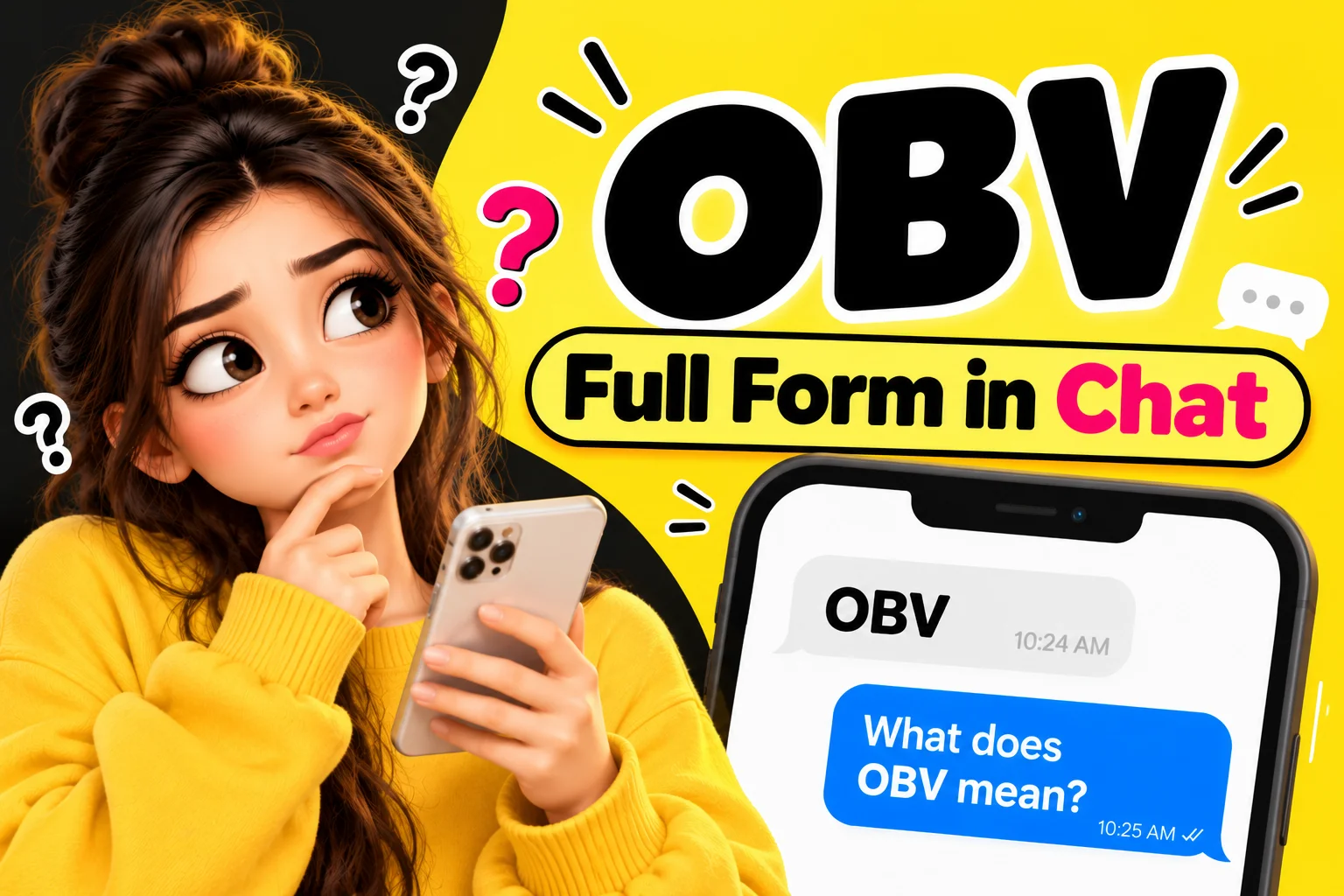

OBV stands for “Obviously” in chat and text messages. People use it when something seems clear, easy to understand, or already known. If someone texts you “obv,” they usually mean “obviously” without typing the whole word. Depending on the conversation, it can sound casual, playful, confident, or sarcastic.
What Does OBV Mean in Chat?
OBV is a shortened form of “obviously.” It is an informal texting abbreviation used in everyday conversations, online chats, and direct messages.
For example:
A: Are you coming to the party tonight?
B: Obv! I wouldn’t miss it.
A: Haha, just checking.
B: See you there!
Here, OBV means “obviously” and shows that the answer should be clear.
People often use OBV when replying to a question with an answer they consider predictable. However, the tone can change depending on the words and emojis around it.
READ MORE: BBG Meaning From a Girl: What Does It Mean?
Is OBV an Acronym or an Abbreviation?
OBV is an abbreviation of “obviously.” It is not a traditional acronym because the letters shorten a single word rather than represent a phrase.
Common forms include:
- obv — casual lowercase texting.
- OBV — uppercase form that may add emphasis.
- Obv — capitalized at the beginning of a sentence.
- Obviously — the full word.
These forms generally carry the same meaning.
How People Use OBV in Text Messages
1. To Give an Obvious Answer
A: Do you like pizza?
B: Obv 😂
A: Knew it!
B: Pizza is always a good idea.
2. To Show Agreement
A: We should study before the exam.
B: Obv, we can’t leave everything until the last minute.
A: Finally, someone agrees with me.
B: Let’s start tonight.
3. To Sound Playful
A: Did you miss me?
B: Obv 🙄
A: That sounded convincing.
B: Don’t make me say it twice 😂
4. To Express Sarcasm
A: You forgot your umbrella again?
B: Obv, because I enjoy getting wet.
A: Very logical.
B: I know, right?
In this example, the exaggerated response makes OBV sound sarcastic.
OBV Meaning Based on Tone
The abbreviation does not always communicate the same emotion. The surrounding conversation helps you understand the sender’s intention.
Funny OBV Conversation
A: Are you hungry again?
B: Obv.
A: You ate an hour ago!
B: That was a different lifetime 😂
Sarcastic OBV Conversation
A: You stayed up until 3 AM?
B: Obv, sleep is overrated.
A: And now you’re tired?
B: What a shocking discovery.
Playful OBV Conversation
A: Am I your favorite person?
B: Obv 😉
A: I knew it!
B: Don’t get too confident.
Serious OBV Conversation
A: Should we double-check the figures before submitting the report?
B: Obv. We need to make sure everything is accurate.
A: I’ll review the calculations again.
B: Great, then we can submit it.
10 Realistic OBV Text Conversations
Example 1: Between Friends
A: Are you watching the match tonight?
B: Obv, I’ve been waiting all week.
A: Who do you think will win?
B: My team, hopefully!
Example 2: Between Partners
A: Do you still love me?
B: Obv ❤️
A: Just making sure.
B: You don’t need to ask every day.
Example 3: Between Siblings
A: Did you eat the last piece of cake?
B: Obv not.
A: There are crumbs on your shirt.
B: I have no further comments 😂
Example 4: Between Classmates
A: Are you preparing for tomorrow’s test?
B: Obv, I don’t want to fail.
A: Let’s revise together.
B: Sure, call me after dinner.
Example 5: At Work
A: Should we check the presentation before the meeting?
B: Obviously, let’s review the final slides.
A: I’ll check the numbers.
B: I’ll proofread the text.
Example 6: Planning a Day Out
A: Want to go shopping this weekend?
B: Obv!
A: I’ll send you the time.
B: Perfect, I’m in.
Example 7: Talking About Food
A: Should we order dessert?
B: Obv, we deserve it.
A: Chocolate cake?
B: Now you’re talking!
Example 8: A Casual DM
A: You saw my message, didn’t you?
B: Obv, I just got busy.
A: Okay, no worries.
B: Sorry, replying now.
Example 9: Discussing a Movie
A: Was the ending predictable?
B: Obv. I guessed it halfway through.
A: Same!
B: Still a good movie, though.
Example 10: Making Plans
A: Are you bringing your camera?
B: Obv, how else will we get pictures?
A: Good point.
B: Don’t forget yours, too.
How to Reply to OBV in Chat
Your reply depends on whether the person is being friendly, playful, or sarcastic.
| Situation | Example reply |
|---|---|
| Friendly | “Haha, true!” |
| Funny | “Okay, genius 😂” |
| Playful | “I just wanted to hear you say it 😉” |
| Sarcastic | “Thanks for stating the obvious.” |
| Neutral | “Got it.” |
| Serious | “Agreed. Let’s double-check.” |
If OBV sounds rude, do not assume the sender intended to offend you. Read the full conversation before deciding how to respond.
Grammar and Language Role of OBV
OBV is an informal abbreviation for the adverb “obviously.” It often appears at the beginning or end of a short reply.
Examples include:
- “Obv I’m coming.”
- “That’s obv not true.”
- “You knew that obv.”
- “Obv 😂”
In casual chats, OBV can stand alone as a complete response when the context makes the meaning clear. In formal writing, use “obviously” or a more precise phrase.
Where Is OBV Used?
OBV may appear in SMS, iMessage, WhatsApp, and direct messages on Instagram, Snapchat, and Discord. It is useful when people want to respond quickly without typing the complete word.
Its meaning generally remains the same across these platforms. Capitalization and emojis may influence the tone, but they do not usually change the definition.
Who Uses OBV?
OBV is used by people who prefer informal digital communication. It is not exclusive to Gen Z, and people of different ages may use it in casual conversations.
Some texters prefer abbreviations such as OBV, while others write “obviously” in full. There is no reliable basis for assigning the abbreviation to one specific age group or country.
Origin of OBV
OBV is a shortened spelling of “obviously.” It follows a common pattern in digital communication: removing letters from a familiar word to make messages quicker to type.
There is no sufficiently established evidence to attribute its creation to one person, social media platform, or exact year. It is better understood as informal written shorthand rather than a term invented by a particular online trend.
Is OBV Rude or Offensive?
No. OBV is not inherently rude, offensive, or profane.
However, it can sound dismissive if someone uses it to suggest that a question is foolish or that the answer should already be known.
For example, “Obv, how do you not know that?” sounds more judgmental than “Obv 😂 I thought everyone knew!”
In professional messages, spelling out “obviously” or writing a direct answer is usually clearer and more polite.
OBV vs. Similar Texting Abbreviations
| Term | Meaning | Usage context | Tone | Popularity | Confusion risk |
|---|---|---|---|---|---|
| OBV | Obviously | Emphasizing a clear answer | Casual | Common informal shorthand | Low |
| OFC | Of Course | Agreeing or confirming | Friendly or neutral | Common in chats | Medium |
| IMO | In My Opinion | Sharing a personal view | Casual | Common online | Low |
| TBH | To Be Honest | Giving an honest opinion | Casual | Common in chats | Low |
| IDK | I Don’t Know | Expressing uncertainty | Casual | Common in chats | Low |
| NGL | Not Gonna Lie | Introducing a candid statement | Casual | Common online | Low |
OBV and OFC are related because both can appear in affirmative replies. However, OBV emphasizes that something is obvious, while OFC more directly means “of course.”
Frequently Asked Questions About OBV
1. What is the full form of OBV in chat?
OBV stands for “Obviously.” People use it to express that something is clear, expected, or easy to understand. For example, “Obv I’m coming” means “Obviously, I’m coming.”
2. What does OBV mean when someone texts it to you?
The sender usually means “obviously.” They may be agreeing with you, giving an expected answer, or joking about something that seems clear. The tone depends on the conversation.
3. Is OBV the same as OFC?
No. OBV means “obviously,” while OFC means “of course.” Both can express agreement, but OBV emphasizes that the answer should be apparent, whereas OFC expresses confirmation or willingness more directly.
4. Is it rude to reply with just OBV in a text?
Not always. Among friends, OBV may be a normal, playful reply. In a serious conversation, however, it can sound dismissive if the other person feels their question was reasonable.
5. What does OBV mean from a girl or a boy?
The definition stays the same regardless of who sends it. A girl or boy might use OBV to agree, tease, or respond to an obvious question. The abbreviation alone does not indicate romantic interest.
6. Can OBV be used in professional messages?
It is understandable in casual workplace chats, but it may sound too informal in client emails or formal reports. Writing “obviously,” “of course,” or a direct answer is generally more appropriate when professionalism matters.
7. Does OBV mean the same thing on WhatsApp and Instagram?
Generally, yes. OBV means “obviously” in both WhatsApp messages and Instagram direct messages. The surrounding words, punctuation, and emojis help show whether the sender is being serious, playful, or sarcastic.
8. What is the difference between OBV and saying “obviously”?
The meaning is essentially the same. OBV is a shorter written form used mainly in informal communication, while “obviously” is the complete word and works in both casual and formal contexts. Use the full word when clarity or a professional tone is important.
Conclusion: Remember What OBV Means in Chat
OBV means “Obviously.” It is a casual abbreviation used to agree, emphasize a clear answer, or respond playfully to a question.
Usage tips:
- Use OBV in informal chats with people who understand texting shorthand.
- Read the surrounding messages to identify the tone.
- Use OFC when you simply mean “of course.”
- Write “obviously” in formal communication.
Common mistakes to avoid:
- Do not assume OBV always sounds friendly.
- Do not confuse OBV with OFC.
- Do not interpret uppercase letters as anger without other clues.
- Avoid using OBV to make someone feel foolish for asking a question.
When someone texts you OBV, the simplest interpretation is “obviously,” but the context tells you whether they mean it sincerely, jokingly, or sarcastically.