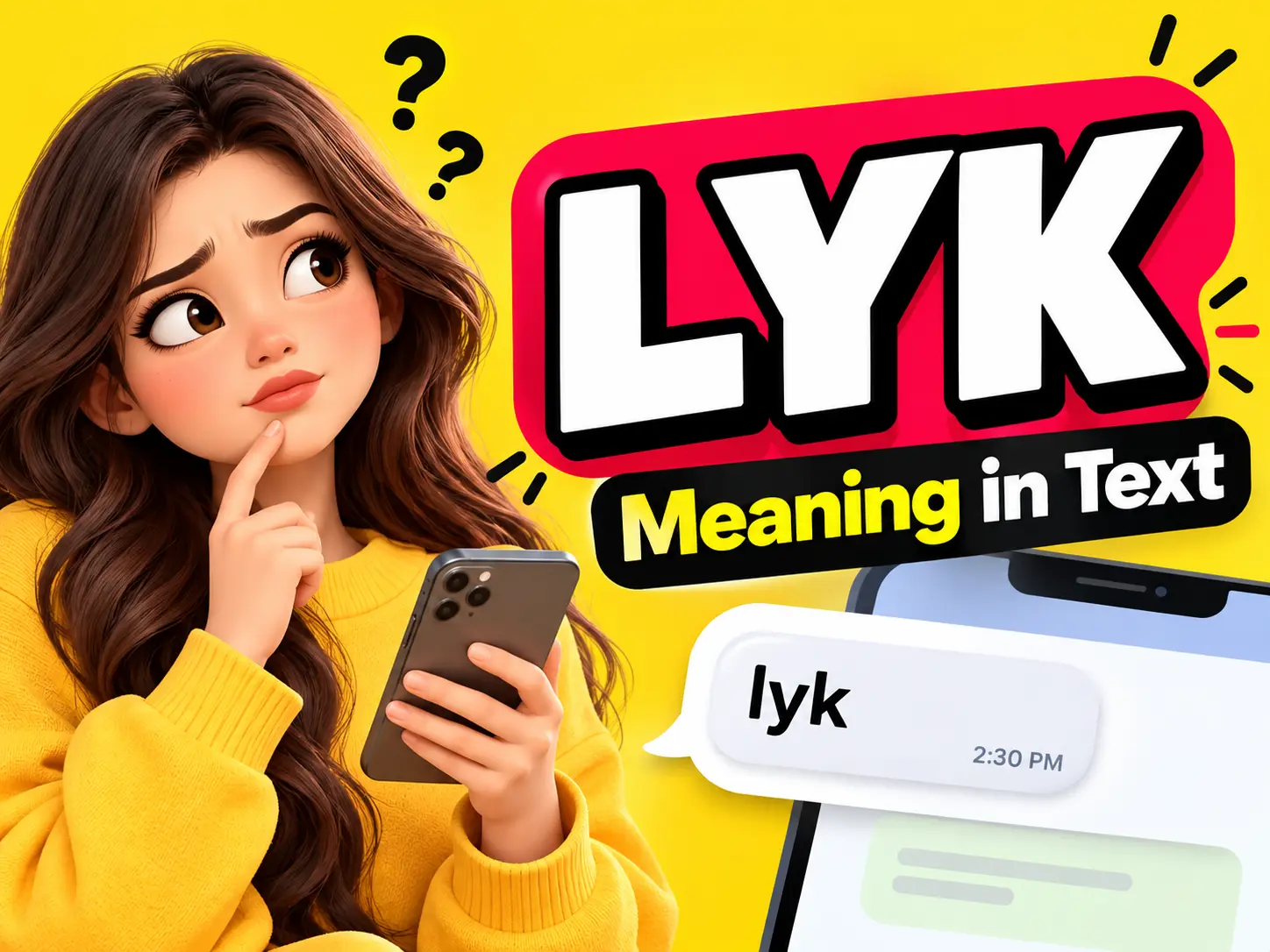

LYK means “Let You Know” in text messages. People use this abbreviation when they want to tell someone they will share information, provide an update, or confirm something later. If someone texts you, “I’ll lyk when I get home,” they mean they will let you know when they arrive.
LYK is common in casual conversations with friends, family members, and people you communicate with online. Understanding it helps you follow conversations without confusing it with similar abbreviations such as LMK or IDK.
Last updated: October 16, 2026
Reviewed for current usage as of October 16, 2026.
What Does LYK Stand For?
LYK stands for “Let You Know.” It is an abbreviation used in informal digital communication. Rather than typing the complete phrase, people shorten it to three letters to make their messages quicker and easier to send.
For example:
- Full phrase: I will let you know when I finish work.
- Text version: I’ll lyk when I finish work.
Both sentences communicate the same idea. The person is saying they will provide an update when they have more information.
LYK is not usually a separate slang word with a different definition. Instead, it represents an everyday English phrase shortened for convenience.
READ MORE: OBV Full Form in Chat: What Does OBV Mean?
What Does LYK Mean When Someone Texts It to You?
When someone sends you LYK, the exact meaning depends on the sentence.
If a friend says, “I’ll lyk if I can come,” they have not confirmed their plans yet. They will tell you later whether they can attend.
If someone says, “I’ll lyk when I arrive,” they are promising to send you an update after reaching their destination.
The abbreviation does not automatically mean that the person agrees with you or will definitely do what you requested. It simply indicates that they intend to communicate more information later.
How People Use LYK in Text Messages
LYK works in several everyday situations, especially when people are making plans or waiting for information.
1. Making Plans
People often use LYK when they cannot immediately confirm whether they are available.
Example:
A: Are we meeting after school?
B: I’m not sure yet.
A: Okay, just lyk when you decide.
B: Sure, I will.
In this conversation, LYK means “let me know” only if the speaker uses LMK. Here, the final intention is to ask for an update. Remember the difference: LYK means “let you know,” while LMK means “let me know.”
2. Sharing Updates
LYK can help someone explain that they will provide information later.
Example:
A: Did the manager approve your request?
B: Not yet.
A: Okay, lyk when you hear back.
B: I will message you.
The abbreviation keeps the conversation short while making the request clear.
3. Everyday Conversations
Friends and family members may use LYK to discuss shopping, travel, appointments, or other arrangements.
For example, “I’ll lyk when we leave” means the sender will tell the recipient when they are leaving.
LYK Examples in Real Text Conversations
Here are ten realistic examples showing how LYK may appear in different conversations.
Example 1: Friends
A: Are you coming over today?
B: Maybe, I have some work to finish.
A: Okay, lyk later.
B: Sure!
Example 2: Family
A: What time will you reach home?
B: I’m still on the road.
A: Lyk when you get close.
B: Okay, I will.
Example 3: Making Weekend Plans
A: Do you want to watch a movie Saturday?
B: Let me check my schedule.
A: No problem, lyk tomorrow.
B: Sounds good.
Example 4: School or College
A: Did you find out the assignment deadline?
B: Not yet. I’ll ask the teacher.
A: Please lyk when you know.
B: Of course.
Example 5: Work
A: Can you confirm whether the meeting is happening?
B: I’m waiting for the final schedule.
A: Okay, lyk when it’s confirmed.
B: Will do.
Example 6: Shopping
A: Should I buy your headphones too?
B: Let me check which model I want.
A: Sure, lyk before I pay.
B: Okay!
Example 7: Travel
A: Have you booked your ticket?
B: Not yet, I’m comparing prices.
A: Lyk when you decide.
B: I’ll message you.
Example 8: A Parent and Child
A: Have you finished your homework?
B: Almost, just one question left.
A: Lyk when you finish.
B: Okay, Mum.
Example 9: Online Conversation
A: Can you send me the details?
B: I need to find the message first.
A: Alright, lyk when you find it.
B: Sure.
Example 10: Casual Plans
A: Are you free this evening?
B: I might be. I have to check something first.
A: Okay, I’ll wait.
B: I’ll lyk soon.
These examples show that LYK is useful whenever a person expects to share an update after checking something or making a decision.
What Is the Difference Between LYK and LMK?
LYK and LMK look similar, but they have different meanings.
| Term | Full Form | How It Is Used |
|---|---|---|
| LYK | Let You Know | Promising to give someone an update |
| LMK | Let Me Know | Asking someone to give you an update |
| IDK | I Don’t Know | Expressing uncertainty |
| FYI | For Your Information | Sharing information |
| BRB | Be Right Back | Saying you will return shortly |
The most important distinction is between LYK and LMK.
For example, “I’ll lyk tomorrow” means you will provide information tomorrow. However, “LMK tomorrow” means you want the other person to provide information tomorrow.
Is LYK Formal or Informal?
LYK is informal and is best suited to everyday digital conversations. You can use it when texting friends, siblings, classmates, or people with whom you have a relaxed relationship.
It is generally understandable in SMS messages, iMessage, WhatsApp chats, and direct messages on platforms such as Instagram, Snapchat, and Discord.
However, in a formal email to a manager, teacher, client, or employer, it is better to write the complete phrase.
Instead of writing, “I’ll lyk when the report is ready,” write, “I will let you know when the report is ready.”
The full phrase looks more professional and avoids unnecessary abbreviations.
Does Capitalization Change the Meaning of LYK?
Usually, no. LYK, lyk, and Lyk can all represent “Let You Know.”
Lowercase lyk often fits naturally into casual texting. Uppercase LYK may appear when someone prefers capital letters or uses them for emphasis.
Capitalization alone does not create a different definition. The surrounding words and the conversation provide the important clues.
LYK is also commonly placed within a sentence, such as “I’ll lyk later,” rather than being used as a complete standalone response. Although someone might send only “LYK” in a particular context, the message may be unclear without additional words.
How Should You Reply to LYK?
Your response depends on what the other person is discussing.
Casual reply:
“Okay, sounds good!”
Friendly reply:
“Sure, just message me when you know.”
Funny reply:
“Alright, I’ll try not to wait forever 😂”
Neutral reply:
“Okay, thanks for the update.”
When you need an answer soon:
“Sure, but please let me know before 5 PM.”
If someone says, “I’ll lyk if I can make it,” you do not need to send a long response. A simple “Okay, no problem” is usually enough.
Is LYK Rude or Disrespectful?
No. LYK is not inherently rude, offensive, or inappropriate. It is simply an informal abbreviation.
However, the way someone uses it can affect how their message sounds. For example, “I’ll lyk later” may sound neutral, while repeatedly promising to update someone and never following through could cause frustration.
In professional situations, abbreviations can also appear too casual. When communicating with someone who expects formal language, writing the complete phrase is the safer choice.
Frequently Asked Questions About LYK
1. What does LYK mean from a girl?
LYK means “Let You Know” when a girl uses it in a text. It does not automatically indicate romantic interest or a particular emotion. For example, “I’ll lyk later” simply means she will provide an update later.
2. What does LYK mean from a guy?
The meaning is the same when a guy uses LYK. He is usually saying that he will share information or confirm something later. The context determines what information he intends to provide.
3. Does LYK mean the same thing on WhatsApp and Instagram?
Yes. LYK generally means “Let You Know” in both WhatsApp messages and Instagram direct messages. The platform does not usually change the abbreviation’s meaning.
4. Is LYK the same as LMK?
No. LYK means “Let You Know,” whereas LMK means “Let Me Know.” LYK is generally used when you promise to update another person, while LMK asks the other person to update you.
5. Is it rude to reply with just LYK?
LYK is not inherently rude, but using it alone may confuse the recipient. A complete message such as “I’ll lyk tomorrow” communicates your intention more clearly. In formal conversations, use the full phrase.
6. Can I use LYK in professional messages?
You can use it in informal workplace chats if abbreviations are accepted in your team. However, formal emails, client communications, and messages to teachers are better written with the full phrase “let you know.”
7. What does “I’ll lyk” mean?
“I’ll lyk” means “I will let you know.” It tells someone that you intend to give them information or an update in the future.
8. Can LYK have another meaning?
In ordinary texting, LYK most commonly stands for “Let You Know.” Acronyms can have specialized meanings in particular communities, but the surrounding sentence usually makes the intended meaning clear.
Conclusion: Remember What LYK Means
LYK means “Let You Know.” It is a short, informal abbreviation used in text messages and online chats when someone plans to provide an update later.
Keep these tips in mind:
- Use LYK when promising to share information later.
- Remember that LMK means “Let Me Know.”
- Read the entire message before interpreting the abbreviation.
- Use the complete phrase in formal emails and professional communication.
Once you understand the difference between LYK and LMK, you can recognize both abbreviations easily and respond naturally in everyday conversations.