If you spend time texting, working remotely, using social media, or chatting online, you’ve probably seen someone say, “Can we hop on a call?” or “Let’s hop on a quick call.”
At first glance, the phrase sounds simple. Yet many people still search for the meaning because the tone can feel unclear. Is it casual? Serious? Friendly? Urgent? Romantic? Professional?
That confusion is exactly why this phrase has become so interesting in modern communication.
The expression “hop on a call” has evolved beyond its literal meaning. Today, it often reflects emotion, urgency, trust, efficiency, or even emotional connection. In some situations, it means someone wants clarity. In others, it signals deeper conversation, conflict resolution, collaboration, or genuine human connection.
Understanding how and when people use it can help you communicate more confidently in texting, work culture, friendships, dating, and online interactions.
Hop on a Call Meaning – Quick Meaning
Simple Definition
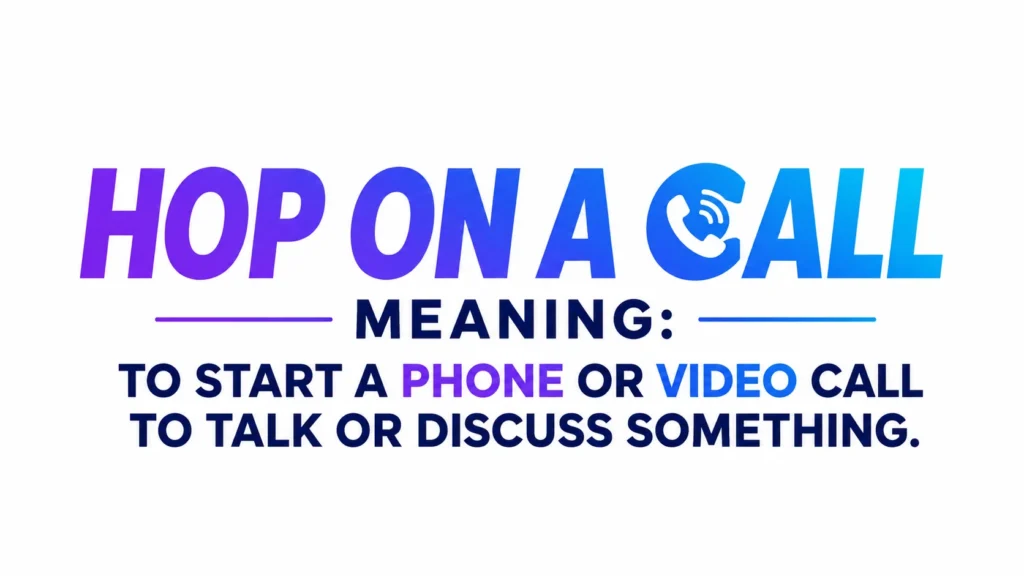
“Hop on a call” means:
To quickly join a phone call, voice call, or video call with someone.
The phrase usually sounds casual, informal, and friendly.
People use it when texting becomes too long, confusing, emotional, or inefficient.
What It Usually Implies
- A quick conversation
- Real-time communication
- Informal tone
- Faster explanation
- More personal interaction
Short Example Quotes
“This is easier to explain if we hop on a call.”
“Do you have five minutes to hop on a call?”
“Let’s hop on a quick call tonight.”
Why People Use It Instead of “Call Me”
The phrase feels softer and more modern.
“Call me” can sound direct or commanding. Meanwhile, “hop on a call” sounds collaborative and relaxed.
That small wording difference matters in today’s communication culture.
Origin & Background
Where the Phrase Came From
The word “hop” originally means to jump lightly or move quickly.
Over time, English speakers started using “hop on” for activities people joined casually or quickly, such as:
- Hop on a train
- Hop on a bus
- Hop online
Eventually, digital culture transformed it into:
- Hop on Zoom
- Hop on Discord
- Hop on FaceTime
- Hop on a call
The Rise of Remote Communication
The phrase became extremely popular during the remote work boom of the early 2020s.
As people shifted toward:
- Zoom meetings
- Remote jobs
- Online classes
- Long-distance relationships
- Digital collaboration
…voice and video calls became everyday communication tools.
“Hop on a call” naturally fit this faster, more casual digital lifestyle.
Social Media Influence
Platforms like TikTok, Instagram, Discord, and WhatsApp normalized informal communication styles.
Younger users especially preferred phrases that sounded:
- Less formal
- Less emotionally intense
- More conversational
That’s why “hop on a call” replaced older phrases like:
- “Telephone me”
- “Give me a ring”
- “Call me immediately”
How the Meaning Evolved
Originally, it simply meant joining a phone conversation.
Now, depending on context, it can also imply:
- Emotional seriousness
- Business urgency
- Romantic interest
- Problem-solving
- Desire for human connection
Real-Life Conversations
WhatsApp Conversation
Person A:
“Typing all this is exhausting honestly.”
And,
Person B:
“Yeah, let’s just hop on a call for 10 minutes.”
Person A:
“Perfect. That’ll be easier.”
Instagram DM Conversation
Person A:
“You seem different lately.”
Person B:
“It’s hard to explain over text.”
Or,
Person A:
“Want to hop on a call later?”
Person B:
“Honestly, I’d like that.”
TikTok Comment Exchange
Person A:
“This story has WAY too much drama 😭”
Moreover,
Person B:
“No seriously… we need to hop on a call because there’s more.”
Person A:
“Now I’m invested.”
Text Message Conversation
Person A:
“I think there’s been a misunderstanding.”
Person B:
“I agree.”
And,
Person A:
“Can we hop on a quick call tonight?”
Person B:
“Sure. I’d rather talk directly.”
Emotional & Psychological Meaning
Why the Phrase Feels Personal
Texting is convenient, but it also removes tone, emotion, pauses, and facial expression.
When someone asks to “hop on a call,” they often want:
- Better understanding
- Emotional clarity
- Faster communication
- Human connection
Voice communication feels more real.
That’s why the phrase can carry emotional weight even when it sounds casual.
What Emotion It Expresses
Depending on the situation, it may express:
- Urgency
- Care
- Frustration
- Curiosity
- Comfort
- Trust
- Seriousness
What It Reveals About Modern Communication
Modern communication is fast but emotionally complicated.
People text constantly, yet many still crave real conversation when emotions become important.
“Hop on a call” reflects that balance between convenience and connection.
A Realistic Personal-Style Scenario
Imagine arguing with someone through text for hours.
Every message feels colder than intended. Misunderstandings keep growing.
Then one person says:
“Can we just hop on a call?”
Suddenly the emotional atmosphere changes.
The phrase becomes less about technology and more about resolving distance between two people.
Usage in Different Contexts
Social Media
On social platforms, the phrase often means:
- Sharing gossip
- Explaining drama
- Collaborating on content
- Talking privately
Example:
“Girl, hop on a call right now because I have tea.”
Friends & Relationships
Among friends, it usually feels warm and casual.
In relationships, though, the phrase can sometimes signal:
- Emotional discussion
- Reassurance
- Conflict resolution
- Deep conversation
Example:
“I miss hearing your voice. Want to hop on a call?”
Work & Professional Settings
In professional environments, it means:
- Discussing details faster
- Clarifying confusion
- Solving problems efficiently
Example:
“Let’s hop on a quick call to finalize the project.”
Casual vs Serious Tone
The tone depends entirely on context.
Casual:
“Hop on a call when you’re free.”
Serious:
“We need to hop on a call tonight.”
The same phrase can feel completely different emotionally.
When NOT to Use It
During Formal Business Communication
In highly formal settings, the phrase may sound too casual.
Instead of:
“Hop on a call”
You might say:
“Would you be available for a brief discussion?”
During Emotional Conflict Without Context
Sometimes asking to call immediately can create anxiety.
For example:
“We need to talk. Hop on a call.”
That wording may sound alarming.
Cultural Sensitivity
Not everyone feels comfortable with spontaneous voice calls.
Some cultures and personalities prefer:
- Scheduled conversations
- Written communication
- More privacy
Situations That May Cause Misunderstanding
The phrase can accidentally imply urgency even when none exists.
Someone may think:
- They’re in trouble
- The issue is serious
- Bad news is coming
Tone matters heavily.
Common Misunderstandings
People Think It Always Means Something Serious
Not true.
Sometimes it simply means:
“Typing is annoying.”
Confusing It With Flirting
In dating culture, asking for a call can feel intimate.
But not every request is romantic.
Sometimes it’s purely practical.
Literal vs Figurative Meaning
Nobody is physically “hopping.”
The phrase is figurative and casual.
Tone Confusion
Text lacks vocal tone.
That’s why:
“Hop on a call?”
can feel friendly to one person and stressful to another.
Comparison Table
| Expression | Meaning | Tone | Common Context |
|---|---|---|---|
| Hop on a call | Join a quick call | Casual | Friends, work, social media |
| Call me | Contact me directly | More direct | Personal or urgent |
| Let’s talk | Serious discussion | Emotional | Relationships/conflict |
| Jump on a call | Same meaning | Modern/professional | Remote work |
| FaceTime me | Video call specifically | Personal | Friends/relationships |
| Text me instead | Prefer messaging | Reserved | Busy or introverted communication |
| Ping me | Send a message | Corporate slang | Workplace chats |
| Leave me a voicemail | Recorded message | Formal/traditional | Professional or older communication styles |
Key Insight
“Hop on a call” succeeds because it feels softer and more collaborative than older communication phrases. It balances efficiency with emotional warmth, which fits modern digital culture perfectly.
Variations / Types
Hop on a quick call
A short conversation with minimal formality.
Jump on a call
A professional variation often used in workplaces.
Get on a call
More neutral and direct.
Hop on FaceTime
Specifically refers to a video call.
Jump on Zoom
Usually connected to meetings or work.
Quick call?
A shortened texting version.
Voice chat?
Common among gamers and online communities.
Can we talk?
More emotional and serious.
Let’s connect briefly
A polished professional variation.
Call when free
More respectful and less immediate.
How to Respond When Someone Uses It
Casual Replies
- “Sure, give me five minutes.”
- “Yeah, I’m free now.”
- “Sounds good.”
Funny Replies
- “Only if snacks are included.”
- “Do I need emotional preparation first?”
- “Uh oh… should I be worried? 😂”
Mature Replies
- “Absolutely. I think that’ll help.”
- “Sure, let’s clear things up properly.”
Respectful Replies
- “I’m unavailable right now, but I can call later.”
- “Can we schedule a time?”
Regional & Cultural Usage
Western Culture
In Western countries, especially the United States and Canada, the phrase sounds normal and highly casual.
People use it daily in:
- Work chats
- Dating apps
- Friend groups
Asian Culture
In many Asian cultures, younger generations use it comfortably online.
However, older generations may still prefer more formal communication wording.
Middle Eastern Culture
In Middle Eastern communication culture, voice calls often carry stronger emotional warmth and personal connection.
The phrase may feel more intentional than casual.
Global Internet Usage
Globally, internet culture has standardized the phrase across:
- Gaming
- Social media
- Remote work
- Online friendships
Even non-native English speakers now use it naturally.
Generational Differences
Gen Z
Uses it constantly and casually.
Example:
“Hop on call rn.”
Millennials
Use it comfortably for both work and friendships.
Older Generations
May still prefer:
- “Give me a call”
- “Telephone me”
- “Call when convenient”
Is It Safe for Kids?
General Safety Context
Yes, the phrase itself is harmless.
It simply means joining a phone or voice conversation.
However, parents should still teach children:
- Online privacy awareness
- Stranger safety
- Safe communication boundaries
Context Matters
A harmless friend call is very different from pressure to join unknown online conversations.
Teaching digital awareness is more important than the phrase itself.
FAQs
What does “hop on a call” mean in texting?
It means joining a phone or voice call, usually quickly and casually.
Is “hop on a call” professional?
Yes, in modern workplaces it’s widely accepted, especially in remote work environments.
Does “hop on a call” sound serious?
Sometimes. The emotional tone depends on the context and wording.
Is it rude to say “hop on a call”?
No. It usually sounds friendly and collaborative.
What’s the difference between “call me” and “hop on a call”?
“Call me” sounds more direct, while “hop on a call” feels softer and more conversational.
Is “hop on a call” romantic?
Not necessarily. However, in dating conversations, voice calls can feel more personal and intimate.
Why do people prefer calls over texting sometimes?
Calls reduce misunderstanding and allow people to hear emotion, tone, and intention more clearly.
Conclusion
The phrase “hop on a call” may sound simple, but it reflects something much deeper about modern communication.
People today move constantly between texting, social media, work chats, and voice conversations. In that fast digital world, this phrase has become a bridge between convenience and genuine human connection.
Sometimes it means efficiency.
Sometimes it means emotional honesty.
And sometimes it simply means:
“I’d rather hear your voice than keep typing.”
Understanding the tone behind it helps you communicate more naturally, avoid misunderstandings, and feel more confident in both personal and professional conversations.
Once you understand the emotional context behind the phrase, it becomes much easier to know when to use it — and how to respond when someone says it to you.