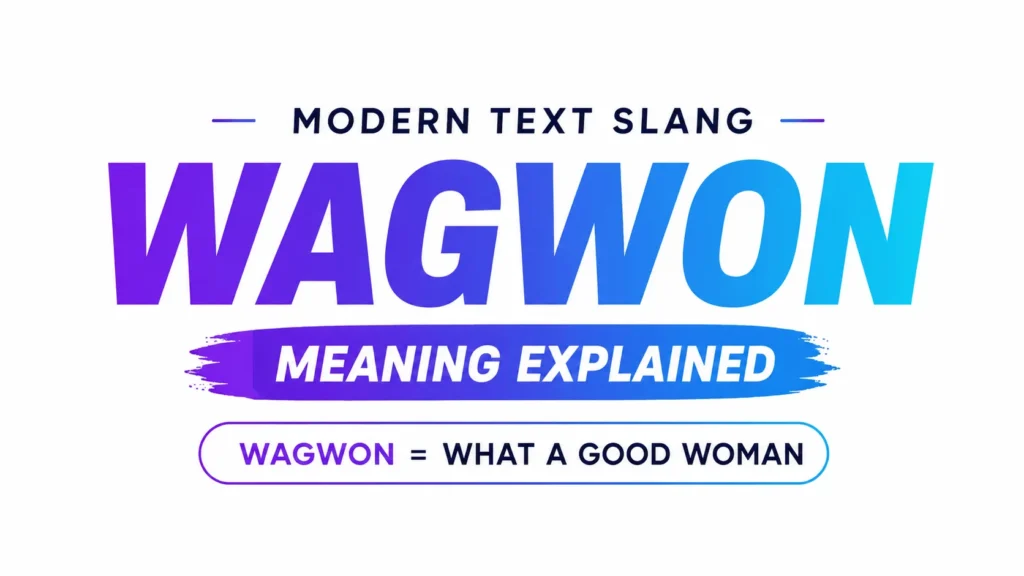
The wagwon meaning is simple once you understand where the word comes from. “Wagwon” is a casual slang greeting that means “What’s going on?” or “What’s up?”
People often search for this term because they see it in chats, Instagram comments, TikTok captions, or messages from friends and are not sure whether it is friendly, rude, funny, or cultural.
In most cases, “wagwon” is used to start a conversation in a relaxed way. It carries a casual, street-style, friendly tone. However, because it comes from Caribbean and Jamaican-influenced speech, it should be used with awareness and respect.
Wagwon Meaning – Quick Meaning
Wagwon means “What’s going on?”
It is commonly used as a greeting, similar to:
- What’s up?
- How are you?
- What’s happening?
- How’s everything?
Simple Definition
“Wagwon” is a slang way to ask someone what is happening in their life or what they are doing.
Examples:
“Wagwon, bro?”
“Wagwon with you today?”
“Yo, wagwon? You good?”
It is usually friendly, informal, and conversational.
Origin & Background
Where Wagwon Came From
“Wagwon” is strongly connected to Jamaican Patois, where the phrase “wah gwaan” means “what’s going on?”
Over time, people online began spelling it in different ways, including “wagwan,” “wagwaan,” and “wagwon.”
Cultural Influence
The phrase became popular through Jamaican music, dancehall culture, reggae, UK street slang, Caribbean communities, and social media.
Because language travels through music, memes, and online friendships, “wagwon” moved beyond its original cultural setting and became part of global internet slang.
Social Media Impact
On platforms like TikTok, Instagram, Snapchat, and WhatsApp, people use “wagwon” to sound casual, playful, or confident.
However, spelling matters less than tone. Whether someone writes “wagwon” or “wagwan,” the meaning is usually the same.
Real-Life Conversations
WhatsApp Conversation
Person A:
Wagwon bro, you coming tonight?
Person B:
Yeah, I’ll be there after 8. Been a long day.
Person A:
Say less. We’ll wait for you.
Instagram DM Conversation
Person A:
Wagwon, I saw your story. You okay?
Person B:
Yeah, just tired honestly.
Person A:
I felt that. Message me if you need to talk.
TikTok Comments
Person A:
Wagwon with this outfit? It’s actually fire.
Person B:
Finally someone gets the vision.
Person A:
Nah seriously, the whole look works.
Text Message Conversation
Person A:
Wagwon? You’ve been quiet today.
Person B:
Just dealing with some stuff.
Person A:
No pressure. I’m here if you need me.
Emotional & Psychological Meaning
“Wagwon” may look like a simple greeting, but it often carries emotional warmth. It feels more personal than a plain “hello.”
People use it because it sounds relaxed, familiar, and socially close. It can make a conversation feel less formal and more human.
What Emotion It Expresses
Depending on tone, “wagwon” can express:
- Friendliness
- Curiosity
- Concern
- Playfulness
- Social confidence
For example, if a friend texts “wagwon, you good?” after you have been quiet all day, they are not just asking what is happening. They may be checking on your mood.
Personal-style scenario:
Imagine someone you trust messages you after noticing you have not replied all day. A simple “wagwon?” can feel like a soft check-in. It is casual, but the care behind it can still feel real.
Usage in Different Contexts
Social Media
On social media, “wagwon” is often used in comments, captions, and DMs.
Example:
“Wagwon with everyone today?”
It can sound funny, confident, or friendly depending on the post.
Friends & Relationships
Among friends, it is usually safe and casual.
Example:
“Wagwon, you still mad at me?”
In relationships, it can feel playful. Still, tone matters. If someone is upset, a more direct and caring message may work better.
Work / Professional Settings
Avoid using “wagwon” in professional emails, formal meetings, job applications, or academic writing.
Instead, use:
“Hello, how are you?”
“I hope you are well.”
“Can we discuss what is happening with the project?”
Casual vs Serious Tone
“Wagwon” works best in casual chats. In serious situations, it may sound too relaxed.
For example, do not say “wagwon” when discussing grief, conflict, complaints, or workplace problems unless you know the person very well.
When NOT to Use It
Inappropriate Contexts
Avoid “wagwon” in:
- Formal emails
- Interviews
- Academic writing
- Customer service messages
- Serious apologies
- Sensitive cultural conversations
Cultural Sensitivity
Since “wagwon” comes from Jamaican-influenced speech, use it respectfully. Do not mock the accent or exaggerate it as a joke.
Language can be fun, but cultural slang should never become a costume.
When It May Cause Misunderstanding
Some people may not know the word. Others may think you are trying too hard to sound cool.
So, use it only when the relationship and setting feel natural.
Common Misunderstandings
People Think It Means Something Rude
“Wagwon” is not rude by itself. It is usually a greeting.
However, if used aggressively, it can sound confrontational.
Example:
“Wagwon with you?”
This may sound like “What’s your problem?” depending on tone.
Tone Confusion
Text messages do not show facial expressions. Because of that, “wagwon” can be misunderstood if the other person does not know your style.
Adding context helps.
Better:
“Wagwon, you okay? Haven’t heard from you.”
Literal vs Figurative Meaning
Literally, it means “what’s going on?” Figuratively, it often means “how are you?” or “what’s happening in your life?”
Comparison Table
| Expression | Meaning | Tone | Best Use |
|---|---|---|---|
| Wagwon | What’s going on? | Casual, friendly | Friends, social media |
| Wagwan | Same as wagwon | Casual, cultural | Informal chats |
| What’s up? | How are you? | Neutral casual | Everyday conversation |
| Sup? | Short for what’s up | Very casual | Close friends |
| How’s it going? | How are things? | Friendly | Casual or semi-formal |
| What’s happening? | What is going on? | Curious | Casual conversation |
| You good? | Are you okay? | Caring, direct | Checking on someone |
| Nothing much | Opposite-style reply | Relaxed | Response to greeting |
Key Insight
“Wagwon” is closest to “what’s up,” but it carries stronger cultural flavor and a more street-casual feeling.
Variations / Types
Wagwan
Meaning: What’s going on?
This is one of the most common spellings and is strongly linked to Jamaican Patois influence.
Wah Gwaan
Meaning: What’s going on?
This spelling is closer to the original Jamaican Patois form.
Wagwaan
Meaning: What’s happening?
This version stretches the sound and often feels more expressive.
Wagwon
Meaning: What’s up?
This spelling is common online, although “wagwan” is more widely recognized.
Wag1
Meaning: What’s going on?
This is a shortened internet-style version, often seen in UK slang.
Yo Wagwon
Meaning: Hey, what’s up?
The “yo” makes it sound more casual and energetic.
Wagwon Bro
Meaning: What’s up, brother/friend?
Used between close male friends or casual social circles.
Wagwon Fam
Meaning: What’s up, everyone?
“Fam” adds warmth and group familiarity.
Wagwon My G
Meaning: What’s up, my friend?
This sounds very informal and is best used with close friends.
Wagwon With You?
Meaning: What is going on with you?
This can sound caring, confused, or confrontational depending on tone.
How to Respond When Someone Uses It
Casual Replies
- “Nothing much, you?”
- “I’m good, how about you?”
- “Chilling, what about you?”
- “All good here.”
Funny Replies
- “Wagwon with my sleep schedule, honestly.”
- “Surviving on snacks and hope.”
- “Nothing but stress and Wi-Fi.”
- “Trying to act productive.”
Mature Replies
- “I’m doing okay, thanks for checking.”
- “A lot has been happening, but I’m managing.”
- “I’ve been quiet, but I’m good.”
- “Thanks for asking. I appreciate it.”
Respectful Replies
- “I’m well, thank you.”
- “Everything is fine on my side.”
- “Good to hear from you.”
- “Hope you’re doing well too.”
Regional & Cultural Usage
Western Culture
However, In the UK, Canada, and parts of the United States, “wagwon” is often understood through Caribbean communities, music, and youth slang.
In casual spaces, it can sound normal. In formal spaces, it may feel out of place.
Asian Culture
In many Asian countries, people may understand “wagwon” through TikTok, music, or international friends.
However, it is not always familiar. A person may ask what it means if they have not seen it before.
Middle Eastern Culture
In Middle Eastern online spaces, “wagwon” may appear through global internet slang, football culture, music, or influencer content.
Still, it is usually used by younger people who follow Western or Caribbean-influenced slang.
Global Internet Usage
Online, slang spreads quickly. Many users adopt words because they sound expressive or trendy.
Even so, global use does not erase cultural roots. Respect makes slang feel natural instead of forced.
Gen Z vs Millennials
Gen Z may use “wagwon” more casually in comments, memes, and DMs.
Millennials may recognize it through music, UK slang, or Caribbean culture, but they may use it less often in daily texting.
Is It Safe for Kids?
Yes, “wagwon” is generally safe for kids because it simply means “what’s going on?” or “what’s up?”
Still, parents should look at the full conversation. The word itself is not offensive, but slang can appear in mature conversations depending on context.
FAQs
What does wagwon mean in text?
Wagwon means “what’s going on?” or “what’s up?” It is a casual greeting used in texts and online chats.
Is wagwon rude?
No, wagwon is not rude by itself. It becomes rude only if used with an aggressive tone or in the wrong situation.
Is wagwon the same as wagwan?
Yes, wagwon and wagwan usually mean the same thing. “Wagwan” is the more common spelling.
Where did wagwon come from?
Wagwon comes from Jamaican-influenced speech, especially the phrase “wah gwaan,” meaning “what’s going on?”
Can I use wagwon at work?
It is better not to use wagwon in professional settings. Use polite greetings like “Hello” or “How are you?” instead.
How do I reply to wagwon?
You can reply with “Nothing much,” “I’m good,” “Chilling,” or “All good, you?” depending on your mood.
Why do people say wagwon online?
People say wagwon online because it sounds casual, friendly, and expressive. It helps start conversations in a relaxed way.
Conclusion
The wagwon meaning is easy to remember: it means “what’s going on?” or “what’s up?”
It is friendly, casual, and full of cultural personality. Still, the best use of the word depends on context, relationship, and tone.
Use it with friends, in relaxed chats, or on social media when it feels natural. Avoid it in formal or sensitive situations.
When used respectfully, “wagwon” is more than just slang. It is a warm, modern way to check in, start a conversation, and sound connected.