If you spend time texting, scrolling through TikTok, chatting on Snapchat, or replying in Instagram DMs, chances are you’ve seen someone type “ALR” and wondered what it actually means.
At first glance, it looks confusing. Some people assume it’s a typo. Others think it stands for a complicated phrase. In reality, the meaning is surprisingly simple, but the tone behind it can completely change depending on the conversation.
That’s why so many people search for “what does ALR mean in text.” They want to know not only the definition, but also how it feels emotionally, when to use it, and whether it sounds friendly, annoyed, sarcastic, or casual.
Modern texting culture moves fast. Shortened words save time, create emotional tone, and help conversations feel more natural online. “ALR” is one of those expressions that became popular because it sounds relaxed, effortless, and conversational.
In this guide, you’ll learn the true meaning of ALR, where it came from, how people use it in real conversations, and when you should avoid using it altogether.
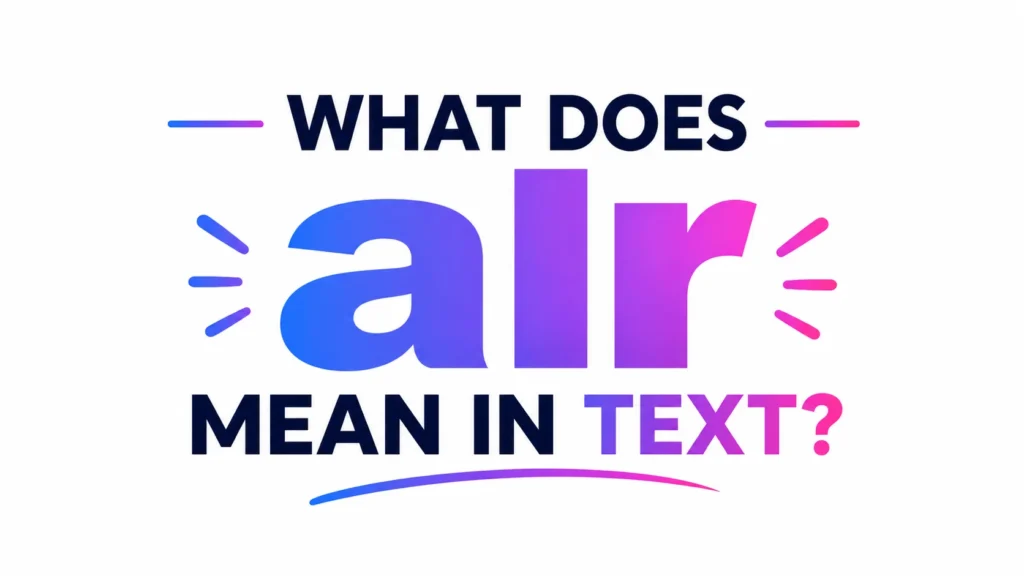
What Does ALR Mean in Text?
Quick Definition
“ALR” usually means:
- “Alright”
- “All right”
It’s a shortened slang version commonly used in texting and social media conversations.
People use it to:
- Agree with something
- Acknowledge a message
- Show casual acceptance
- End a conversation naturally
- Respond quickly without sounding too formal
Simple Examples
“ALR, I’ll be there in 10.”
“That’s fine alr.”
“ALR chill 😭”
In most situations, it carries a relaxed and informal tone.
Why People Use It
Typing habits have changed dramatically over the years. Instead of writing complete words, people now shorten expressions to match the speed of digital communication.
“ALR” feels:
- Faster
- Cooler
- Less formal
- More emotionally natural online
It’s especially common among Gen Z users who prefer quick, conversational texting styles.
Origin & Background
Where Did ALR Come From?
“ALR” evolved from the word “alright,” which has been part of spoken English for generations. As texting culture expanded, people began removing vowels and shortening common phrases.
Just like:
- “bc” = because
- “idk” = I don’t know
- “fr” = for real
“Alright” naturally became “ALR.”
The Influence of Internet Culture
Short-form communication exploded through platforms like:
- Snapchat
- Twitter/X
- TikTok
- Discord
People wanted conversations to feel instant and emotionally expressive. Slang terms like ALR fit perfectly into that environment.
Typing “alright” feels slightly more formal.
Typing “ALR” feels conversational and relaxed.
That tiny difference matters online.
Social Media’s Role
TikTok especially helped normalize shortened slang. Creators often use captions with minimal wording to sound authentic and fast-paced.
Examples include:
- “ALR but why is this accurate?”
- “ALR y’all need to stop 😭”
- “ALR I’m obsessed with this song.”
Over time, the slang became part of everyday internet language.
How the Meaning Evolved
Originally, ALR simply replaced “alright.”
Now, depending on tone and context, it can also express:
- Mild annoyance
- Acceptance
- Sarcasm
- Excitement
- Emotional resignation
That emotional flexibility is why it remains so popular.
Real-Life Conversations
WhatsApp Conversation
Person A:
Are you still coming tonight?
Or,
Person B:
ALR give me like 20 mins 😭
Person A:
You always late.
More,
Person B:
I knowwww.
Instagram DM
Person A:
That outfit actually looked so good on you.
Person B:
ALR stop before I blush.
TikTok Comments
Person A:
This song healed something in me.
Person B:
ALR same because I’ve replayed it 40 times already.
Text Message Between Friends
Person A:
You mad at me?
Person B:
Nah alr. I just needed space earlier.
Person A:
Okay, I get it.
These examples show how ALR changes emotionally depending on the situation.
Emotional & Psychological Meaning
What Emotion Does ALR Express?
One reason ALR became popular is because it feels emotionally soft.
Unlike full formal replies, it creates emotional distance without sounding cold.
For example:
- “Alright.” can sound serious.
- “ALR” feels lighter and more relaxed.
That subtle emotional difference matters in digital communication.
Why People Prefer It
People often use ALR because they want to:
- Avoid sounding aggressive
- Keep conversations casual
- Respond quickly
- Maintain emotional comfort
Texting has become deeply connected to emotional tone. Even tiny wording choices affect how messages are interpreted.
What It Reveals About Modern Communication
Modern online conversations prioritize:
- Speed
- Emotional subtlety
- Informality
- Identity expression
Slang helps people sound more human online.
ALR reflects a communication style where people want efficiency without losing emotional personality.
Personal-Style Scenario
Imagine a friend apologizes after an argument.
If you reply:
“Alright.”
It may feel tense.
But replying:
“alr, it’s okay.”
Feels softer, calmer, and emotionally safer.
That’s the psychological power of internet slang. Tiny wording choices shape emotional interpretation.
Usage in Different Contexts
Social Media
On TikTok, Instagram, and Snapchat, ALR is extremely common.
People use it in:
- Captions
- Comments
- Memes
- Story replies
Examples:
“ALR this trend is actually funny.”
“ALR but hear me out…”
It helps content feel relatable and conversational.
Friends & Relationships
Among friends, ALR often signals comfort and familiarity.
In relationships, tone matters more.
For example:
“alr babe”
Feels affectionate.
But:
“alr.”
With a period can feel irritated or emotionally distant.
Punctuation changes everything.
Work & Professional Settings
Using ALR in professional communication is risky.
Avoid it in:
- Job emails
- Academic writing
- Formal client chats
- Workplace reports
Instead, use:
- “Alright”
- “Understood”
- “Sounds good”
Professional communication requires clarity and maturity.
Casual vs Serious Tone
ALR works best in casual conversations.
It can feel dismissive during serious emotional discussions.
For example:
Person A:
My grandfather passed away.
Bad response:
“alr”
That would seem emotionally insensitive.
Context matters deeply.
When NOT to Use It
Formal Communication
Avoid ALR in:
- University assignments
- Business presentations
- Professional networking
- Customer service replies
It may appear lazy or immature.
Sensitive Conversations
During emotional situations, shorthand slang can seem cold.
Avoid using ALR when discussing:
- Loss
- Mental health
- Serious conflict
- Important life decisions
People usually expect warmth and emotional presence in those moments.
Cross-Generational Conversations
Older generations may not understand the slang.
This can create confusion or make communication feel disrespectful.
Situations That Need Clarity
If the conversation already feels tense, shortening words can sometimes increase misunderstandings.
A complete sentence often communicates better emotionally.
Common Misunderstandings
People Think It Means Something Complex
Some assume ALR is an acronym with hidden meaning.
Usually, it simply means “alright.”
Tone Confusion
Tone changes depending on:
- Capitalization
- Emojis
- Punctuation
- Context
Compare these:
“ALR 😂”
Friendly.
“alr.”
Possibly annoyed.
Literal vs Emotional Meaning
Literally, ALR means agreement or acknowledgment.
Emotionally, it can suggest:
- Acceptance
- Frustration
- Calmness
- Sarcasm
- Resignation
That’s why context matters more than the word itself.
Comparison Table
| Expression | Meaning | Tone | Usage Style |
| ALR | Alright | Casual | Texting & social media |
| OK | Okay | Neutral | Universal |
| Bet | Agreed / confirmed | Confident | Gen Z slang |
| Sure | Agreement | Sometimes hesitant | Mixed |
| K | Okay | Often cold | Short replies |
| Fine | Acceptance | Can sound irritated | Emotional conversations |
| Got it | Understood | Professional | Work & school |
| Cool | Positive agreement | Relaxed | Casual conversations |
Key Insight
ALR stands out because it feels emotionally lighter than formal agreement words while still sounding natural and modern.
Variations / Types
ALRRR
Extra letters show excitement or dramatic emotion.
Example:
“ALRRR let’s gooo.”
Alr Bet
Means agreement plus enthusiasm.
Example:
“Movie tonight?”
“Alr bet.”
Alr Then
Can sound dismissive or final.
Alr Cool
Signals relaxed acceptance.
Alr Bye
Used casually to end conversations.
Alr Chill
Tells someone to calm down playfully.
Alr Fine
Suggests reluctant agreement.
Alr Whatever
Often sarcastic or emotionally distant.
Alr I Guess
Shows uncertainty or hesitation.
Alr Bro
Very casual and common among friends.
How to Respond When Someone Uses It
Casual Replies
- “Cool.”
- “Sounds good.”
- “Bet.”
- “Okayyy.”
Funny Replies
- “Why you typing like a TikTok comment section 😭”
- “ALR celebrity.”
- “Okay dramatic.”
Mature Replies
- “Thanks for understanding.”
- “I appreciate it.”
- “Glad we’re on the same page.”
Respectful Replies
- “Understood.”
- “That makes sense.”
- “I hear you.”
Your response should always match the emotional tone of the conversation.
Regional & Cultural Usage
Western Culture
In the US, UK, and Canada, ALR is common among younger internet users.
It usually sounds casual and socially relaxed.
Asian Culture
In many Asian online communities, English slang mixes with local language texting styles.
ALR often appears in gaming chats, fandom spaces, and social media replies.
Middle Eastern Culture
Among bilingual users, ALR is often combined with Arabic slang and emojis.
It’s popular in informal chats but less common in professional communication.
Global Internet Usage
Because internet culture is global now, ALR has spread far beyond native English-speaking countries.
People use it even when English isn’t their first language.
Generational Differences
Gen Z tends to use ALR naturally in daily texting.
Millennials understand it but may still prefer writing “alright.”
Older generations may not recognize the term at all.
Is It Safe for Kids?
Context Matters
Yes, ALR is generally safe for kids because it’s not offensive or inappropriate.
It’s simply a shortened version of “alright.”
However, parents should still understand that internet slang evolves quickly. Tone and context always matter more than the word itself.
Teaching kids healthy digital communication is more important than banning harmless slang.
FAQs
What does ALR mean in texting?
ALR usually means “alright” or “all right.” It’s a casual slang term used in texting and social media.
Is ALR rude?
Not usually. However, tone and punctuation can make it sound annoyed or dismissive in some conversations.
What does ALR mean on TikTok?
On TikTok, ALR is commonly used to react casually, agree with something, or start humorous commentary.
Is ALR the same as OK?
Not exactly. “OK” feels more neutral, while ALR sounds more relaxed and conversational.
Can adults use ALR?
Yes. Although it’s more common among younger users, adults also use it casually online.
Why do people shorten words like ALR?
People shorten words to text faster, sound more casual, and match modern internet communication styles.
Does ALR always mean alright?
Most of the time, yes. Context may slightly change the emotional tone, but the core meaning remains similar.
Conclusion
Language online keeps evolving, and slang like ALR shows how digital communication has become faster, softer, and more emotionally expressive.
At its core, ALR simply means “alright,” but the way people use it reveals much more about modern texting culture. It can sound playful, comforting, sarcastic, relaxed, or emotionally distant depending on context.
That’s why understanding internet slang isn’t just about vocabulary anymore. It’s about reading emotional tone, social habits, and communication style.
Used naturally, ALR helps conversations feel human and effortless. The key is knowing when casual language fits the moment and when clearer communication matters more.
Once you understand the emotional rhythm behind it, seeing “ALR” in texts suddenly makes perfect sense.