If you spend even a little time texting, scrolling through social media, or chatting in online games, you’ve probably seen someone type “GTG” before suddenly disappearing from the conversation.
At first glance, it can feel confusing. Is it rude? Is it serious? Does it mean the person is angry, busy, or simply leaving?
That uncertainty is exactly why so many people search for what does GTG mean in text. Modern communication moves fast, and abbreviations often carry emotional meaning beyond the words themselves.
In reality, “GTG” is one of the most common and harmless internet slang expressions used in texting culture. Still, the tone behind it can change depending on context, relationship, and timing.
Understanding how people actually use it helps conversations feel more natural and less awkward.
What Does GTG Mean in Text?
Quick Definition
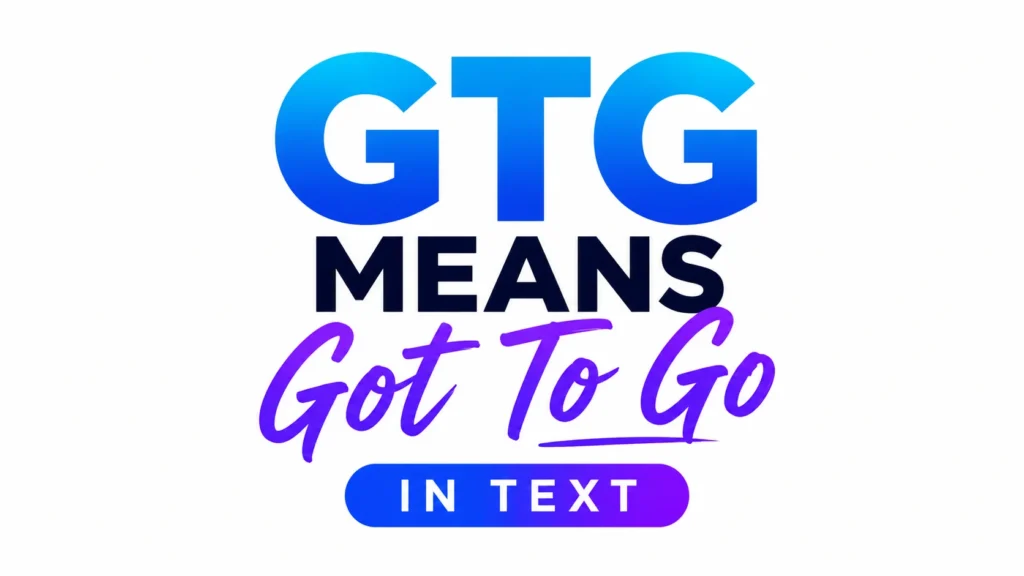
GTG usually means:
- “Got To Go”
- Sometimes “Good To Go” depending on context
Most of the time, when people use GTG in chats or texts, they mean they need to leave the conversation quickly.
Simple Meaning
It’s basically a short and casual way of saying:
- “I have to leave now.”
- “I need to go.”
- “Talk later.”
- “I’m heading out.”
Short Examples
“Sorry, GTG. My class is starting.”
“GTG, my mom’s calling me.”
“That movie sounds fun. Anyway, GTG for now.”
The Two Main Meanings
| Abbreviation | Meaning | Context |
|---|---|---|
| GTG | Got To Go | Leaving a chat or conversation |
| GTG | Good To Go | Ready or approved |
Most people automatically assume “Got To Go” unless the conversation clearly suggests otherwise.
For example:
“The files are uploaded and GTG.”
Here, it means “Good To Go.”
Meanwhile:
“I’m so tired tonight, GTG.”
This means the person is leaving.
Origin & Background
Where GTG Came From
GTG became popular during the early internet chatroom era in the late 1990s and early 2000s.
Back then, people used platforms like:
- AOL Instant Messenger
- MSN Messenger
- Yahoo Chat
- Online gaming chats
- Internet forums
Typing quickly mattered because conversations happened in real time. Shortcuts like “BRB,” “LOL,” and “GTG” helped people communicate faster.
Why It Became So Popular
People naturally shorten language when communication becomes frequent and informal.
Text slang developed because users wanted to:
- Save time
- Type faster
- Sound casual
- Match internet culture
- Express emotions efficiently
GTG survived for decades because it’s practical, polite, and emotionally neutral.
Social Media Influence
Social media platforms pushed GTG into mainstream culture.
Now you’ll see it on:
- TikTok comments
- Snapchat chats
- Discord servers
- Instagram DMs
- WhatsApp groups
- Gaming streams
Unlike older slang that disappeared, GTG remained relevant because leaving conversations is something everyone does daily.
How The Meaning Evolved
Originally, GTG only meant “Got To Go.”
Over time, workplaces and online gaming communities also started using it as “Good To Go.”
Today, context determines the meaning.
That flexibility makes it one of the most adaptable abbreviations online.
Real-Life Conversations
WhatsApp Conversation
Person A:
Are you still coming tonight?
Or,
Person B:
Yeah probably around 8.
Person A:
Perfect.
More,
Person B:
GTG rn though, driving home.
This version feels casual and natural. The person is politely ending the chat without sounding cold.
Instagram DM Conversation
Person A:
Your vacation pictures look unreal.
And,
Person B:
Thank you 😭 honestly needed that trip.
Person A:
You seem happier lately.
More,
Person B:
Trying to be. GTG now but we should catch up soon.
Here, GTG softens the ending emotionally. It signals care while still leaving.
TikTok Comment Section
Person A:
Part 2 PLEASE.
Creator:
Uploading tonight 😂 GTG to edit first.
In this case, it creates a relaxed and playful tone.
Text Message Between Friends
Person A:
Bro did you finish the assignment?
And,
Person B:
Not even close.
Person A:
Same honestly.
More,
Person B:
GTG before I panic more 💀
This example shows how GTG is often combined with humor to reduce stress or awkwardness.
Emotional & Psychological Meaning
What Emotion Does GTG Express?
Most of the time, GTG communicates:
- Urgency
- Politeness
- Casual friendliness
- Temporary distance
- Social efficiency
It usually doesn’t sound emotional by itself. However, the tone around it changes everything.
For example:
“GTG bye.”
Feels neutral.
Meanwhile:
“Aww I wish we could talk longer, GTG though ❤️”
Feels warm and emotionally connected.
Why People Use It
People use GTG because modern communication is nonstop.
Sometimes you genuinely need to leave quickly, but you also don’t want to ignore someone or disappear suddenly.
GTG acts like a social bridge between conversation and exit.
It says:
“I’m leaving, but I acknowledge you.”
What It Reveals About Modern Communication
Internet culture values speed, convenience, and emotional efficiency.
Instead of writing long explanations, people compress meaning into short expressions.
GTG reflects how digital conversations became lighter, faster, and more fluid.
Personal-Style Scenario
Imagine talking to a close friend late at night.
You’re halfway through a deep conversation when your alarm reminds you there’s an early meeting tomorrow.
Typing “GTG, but we’ll continue this tomorrow” feels easier and gentler than suddenly disappearing.
That small phrase protects the emotional rhythm of the conversation.
Usage in Different Contexts
Social Media
On social media, GTG is extremely casual.
People use it to:
- Leave livestream chats
- Exit comment discussions
- End DMs quickly
- Pause conversations
Tone matters heavily here because social media communication moves fast.
Friends & Relationships
Among friends, GTG feels relaxed and friendly.
In relationships, though, tone becomes more sensitive.
For example:
“GTG ttyl ❤️”
Feels affectionate.
Meanwhile:
“GTG.”
Can sometimes feel distant if the conversation was emotional.
Work & Professional Settings
GTG can appear in workplace chats, especially informal team environments.
Still, professional communication usually benefits from slightly clearer wording.
Instead of:
“GTG”
Many professionals prefer:
- “I need to jump into another meeting.”
- “I have to head out now.”
- “Talk later.”
Casual vs Serious Tone
GTG works best in casual conversations.
It may feel too informal during:
- Serious arguments
- Sensitive discussions
- Formal business communication
- Academic settings
Context always matters more than the slang itself.
When NOT to Use It
Formal Professional Emails
Avoid GTG in:
- Job applications
- Academic papers
- Client emails
- Official business communication
It can appear overly casual or immature.
Emotional Conversations
If someone is discussing grief, anxiety, or personal pain, abruptly saying “GTG” may feel dismissive.
In sensitive moments, a fuller response sounds more caring.
For example:
Instead of:
“GTG”
You could say:
“I need to leave right now, but I care about what you said.”
Cultural Sensitivity
Not everyone understands internet slang equally.
Older generations or non-native English speakers may misunderstand the abbreviation completely.
Situations Where It May Cause Confusion
Because GTG also means “Good To Go,” unclear wording can confuse readers.
Example:
“Everything GTG.”
Does that mean leaving or ready?
The surrounding conversation usually clarifies it.
Common Misunderstandings
Confusing It With “Good To Go”
This is the biggest misunderstanding.
In texting culture:
- GTG = usually “Got To Go”
- In work or gaming culture = often “Good To Go”
Assuming It’s Rude
Some people think short replies automatically sound cold.
In reality, GTG is usually considered polite because it gives notice before leaving.
Tone Confusion
Without emojis or extra wording, GTG can sound:
- Friendly
- Rushed
- Distant
- Neutral
That’s why many people add context.
For example:
- “GTG 😂”
- “GTG ttyl”
- “GTG love you”
- “GTG sorry”
Literal vs Figurative Meaning
Sometimes people say GTG even when they aren’t physically leaving.
They may simply mean:
- Ending the conversation
- Logging off
- Mentally checking out
- Leaving social interaction
Comparison Table
| Expression | Meaning | Tone | Common Usage |
|---|---|---|---|
| GTG | Got to go | Casual | Leaving conversation |
| BRB | Be right back | Temporary | Short absence |
| TTYL | Talk to you later | Friendly | Ending chat politely |
| AFK | Away from keyboard | Gaming/internet | Temporarily inactive |
| G2G | Same as GTG | Informal | Text slang |
| Peace out | Goodbye casually | Playful | Friends/social media |
| I’m out | Leaving | Direct | Casual conversation |
| Good to go | Ready/approved | Professional/casual | Work or gaming |
Key Insight
GTG stands out because it balances speed and politeness. It lets people leave quickly without completely disconnecting emotionally from the conversation.
Variations / Types
G2G
A number-based version of GTG.
GTGN
Means “Got To Go Now.”
Adds urgency.
GTFO
A much harsher slang phrase meaning “Get The F*** Out.”
Very different tone from GTG.
TTYL
“Talk To You Later.”
Often paired with GTG.
BRB
“Be Right Back.”
Suggests temporary absence instead of leaving completely.
AFK
“Away From Keyboard.”
Popular in gaming communities.
BBL
“Be Back Later.”
Friendlier and softer tone.
I’m Out
Direct casual exit phrase.
Catch You Later
Warmer conversational goodbye.
Peace
A short, cool, informal goodbye.
How to Respond When Someone Uses It
Casual Replies
- “Okay, talk later.”
- “No worries.”
- “See you tomorrow.”
- “Byeee.”
Funny Replies
- “Don’t abandon me 😭”
- “Fine, leave me here alone.”
- “You’ll regret this betrayal.”
Mature Replies
- “Take care.”
- “Good luck with everything.”
- “Hope your day goes smoothly.”
Respectful Replies
- “Thanks for chatting.”
- “Talk whenever you’re free.”
- “Have a safe trip.”
Regional & Cultural Usage
Western Culture
In the United States, Canada, and the UK, GTG is extremely common and widely understood.
It’s seen as casual, fast, and socially normal.
Asian Culture
In many Asian countries, younger internet users understand GTG easily due to global social media exposure.
However, older generations may not recognize it.
Middle Eastern Culture
GTG is increasingly common among bilingual younger users who mix English slang into daily texting.
Still, tone and politeness remain important culturally.
Global Internet Usage
Because online communities are international, GTG became part of universal internet language.
Gamers, creators, students, and remote workers use it worldwide.
Generational Differences
Gen Z uses GTG naturally and casually.
Millennials also understand it well because they grew up during early internet messaging culture.
Older generations may prefer complete sentences instead of abbreviations.
Is It Safe for Kids?
Short Answer
Yes, GTG is generally safe and harmless.
It’s simply an internet abbreviation for leaving a conversation or being ready for something.
Why Parents Usually Don’t Need To Worry
Unlike hidden slang connected to risky behavior, GTG has no dangerous or inappropriate meaning in most situations.
Still, parents should always understand the broader online environments where slang appears.
Context matters more than the abbreviation itself.
FAQs
What does GTG mean from a girl?
Usually, it simply means she needs to leave the conversation. Tone depends on the surrounding messages and relationship dynamic.
Does GTG mean goodbye forever?
No. It normally means a temporary exit, not ending a relationship or friendship.
Is GTG rude in texting?
Not usually. Most people see it as polite because it acknowledges the conversation before leaving.
What’s the difference between GTG and BRB?
GTG suggests leaving entirely, while BRB means returning shortly.
Can GTG mean “Good To Go”?
Yes. In work, gaming, or technical conversations, GTG can mean “ready” or “approved.”
Do adults use GTG?
Absolutely. Millennials, remote workers, gamers, and professionals all use it in casual digital communication.
Is GTG outdated slang?
Not at all. It remains one of the most commonly used internet abbreviations because it’s practical and easy to understand.
Conclusion
Understanding what does GTG mean in text is more than learning a simple abbreviation. It’s really about understanding how modern digital conversations work.
GTG helps people leave chats quickly while still sounding polite, casual, and socially aware. Depending on tone and context, it can feel warm, rushed, funny, or emotionally thoughtful.
That’s what makes internet slang so interesting. Tiny phrases often carry much bigger emotional meaning than expected.
Whether you see GTG in a text message, TikTok comment, gaming chat, or Instagram DM, you’ll now understand exactly what the person likely means — and how to respond naturally.
The next time someone types “GTG,” you won’t feel confused. You’ll recognize it as one of the internet’s simplest ways of saying:
“I have to leave, but the conversation still mattered.”