If you spend time texting, gaming, scrolling through TikTok comments, or chatting on social media, you’ve probably seen someone reply with “NP.”
At first glance, it looks simple. But many people still stop and wonder: What does NP mean exactly? Is it polite? Casual? Flirty? Dismissive? Professional?
That confusion is completely normal because internet slang changes depending on tone, platform, and relationship. A short reply like “NP” can feel warm and friendly in one conversation, yet cold or rushed in another.
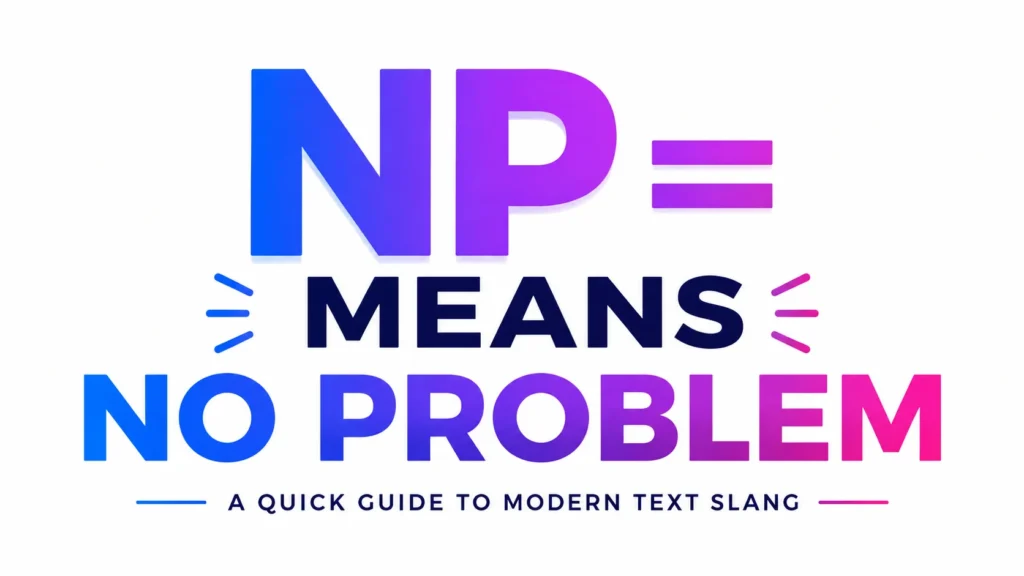
In most cases, “NP” stands for “No Problem.” It’s commonly used as a quick way to say:
- You’re welcome
- It’s okay
- Don’t worry about it
- Happy to help
But modern digital communication adds emotional layers to even the shortest messages. That’s why understanding the meaning behind “NP” matters more than ever.
This guide breaks down exactly what “NP” means, where it came from, how people use it today, and when you should — or shouldn’t — use it yourself.
What Does NP Mean? – Quick Meaning
The Basic Definition
“NP” is short for:
- No Problem
People use it to respond politely after someone says:
- Thank you
- Sorry
- Can you help me?
- I appreciate it
Instead of typing a full sentence, they shorten it to “NP.”
Simple Examples
“Thanks for sending the notes.”
“NP!”
“Sorry I replied late.”
“NP, don’t worry.”
“Thanks for covering my shift.”
“NP at all.”
What It Usually Expresses
Depending on the situation, NP can show:
- Kindness
- Reassurance
- Casual friendliness
- Emotional ease
- Social comfort
It often tells the other person: “You didn’t inconvenience me.”
That’s one reason it became so popular in texting culture.
Origin & Background
Where NP Came From
The abbreviation “NP” became common during the early internet messaging era.
Back when people used:
- AOL Instant Messenger
- MSN Messenger
- Yahoo Chat Rooms
- Early gaming chats
- SMS texting with character limits
people naturally shortened common phrases to save time.
“No problem” quickly turned into “NP.”
The Influence of Gaming Culture
Online gaming helped spread NP worldwide.
Gamers constantly communicate during fast-paced matches, so short expressions became normal:
- GG = Good game
- BRB = Be right back
- TY = Thank you
- NP = No problem
In multiplayer games, NP often showed sportsmanship and teamwork.
Example:
“Sorry, I missed the shot.”
“NP, we still got this.”
That supportive tone made the phrase emotionally popular beyond gaming communities.
Social Media Changed Its Tone
As texting evolved, NP became less formal and more emotionally flexible.
On modern platforms like:
- TikTok
- Snapchat
- Discord
people use NP almost automatically.
Today, it can sound:
- Friendly
- Chill
- Distant
- Dry
- Comforting
depending entirely on context and personality.
Real-Life Conversations
WhatsApp Conversation
Person A:
“Thank you for helping me finish the assignment last night.”
Person B:
“NP 😊 happy to help.”
This feels warm and supportive because of the emoji and wording.
Instagram DM
Person A:
“Sorry I disappeared yesterday.”
Person B:
“NP lol I figured you were busy.”
Here, NP reduces emotional tension and keeps the conversation relaxed.
TikTok Comments
Person A:
“Thanks for explaining this trend.”
Person B:
“NP! Glad it helped.”
This version feels open, casual, and community-friendly.
Text Message Between Friends
Person A:
“Can you pick me up after class?”
Person B:
“NP.”
Short replies between close friends usually feel natural because the relationship already carries emotional familiarity.
Emotional & Psychological Meaning
Why People Use NP So Often
Modern communication is fast.
People want to sound:
- Helpful
- Relaxed
- Emotionally low-pressure
- Non-dramatic
“NP” accomplishes all of that in just two letters.
It subtly reassures the other person that they are not being annoying or burdensome.
The Emotion Behind It
At its core, NP often communicates:
- Acceptance
- Emotional ease
- Social reassurance
- Informal kindness
That’s why it appears frequently after apologies or expressions of gratitude.
What It Reveals About Modern Communication
Digital culture values speed and emotional efficiency.
People often prefer:
- Short replies
- Soft reassurance
- Casual positivity
instead of long formal responses.
NP reflects that shift perfectly.
A Realistic Personal-Style Scenario
Imagine you accidentally send your friend ten voice notes while they’re at work.
You quickly text:
“Sorry for spamming you.”
They respond:
“NP 😂”
Instantly, your anxiety drops.
That tiny reply removes social tension in seconds. That emotional effect is one reason abbreviations like NP remain powerful in online communication.
Usage in Different Contexts
Social Media
On social platforms, NP is extremely common.
People use it to:
- Reply quickly
- Stay casual
- Keep conversations light
Example:
“Thanks for following back!”
“NP!”
Friends & Relationships
Among friends, NP usually sounds natural and relaxed.
In relationships, though, tone matters.
Compare these:
“NP babe ❤️”
Warm and affectionate
“np.”
Potentially cold or uninterested
Tiny details completely change emotional interpretation.
Work & Professional Settings
NP can work professionally in casual workplaces.
Example:
“Thanks for joining the meeting early.”
“NP at all.”
However, in formal business environments, full phrases are safer:
- You’re welcome
- Happy to help
- My pleasure
Casual vs Serious Situations
NP works best in relaxed conversations.
It may feel too casual during:
- Emotional conflicts
- Serious apologies
- Sensitive discussions
For example:
“I’m sorry about what happened.”
“NP.”
That response may sound emotionally disconnected.
When NOT to Use It
Formal Professional Communication
Avoid NP in:
- Academic emails
- Job interviews
- Corporate communication
- Client conversations
It can appear overly casual or rushed.
Sensitive Emotional Situations
If someone shares pain or grief, NP may sound dismissive.
Example:
“Sorry I missed the funeral.”
“NP.”
That reply may unintentionally minimize emotions.
Cross-Cultural Misunderstandings
Some cultures value formal politeness more strongly.
A very short response like NP might feel:
- Too abrupt
- Emotionally distant
- Lacking respect
Situations Requiring Warmth
Sometimes people need emotional reassurance, not efficiency.
Instead of “NP,” try:
- I understand
- It’s completely okay
- Don’t worry about it
Those responses feel more human in emotionally delicate moments.
Common Misunderstandings
People Sometimes Think NP Is Rude
This usually happens because short text replies lack vocal tone.
“NP” without emojis or extra words can feel cold.
Example:
“Thanks.”
“NP.”
Some people interpret that as impatience even if no rudeness was intended.
Literal vs Emotional Meaning
Literally, NP means:
“There is no problem.”
Emotionally, however, it often means:
“You don’t need to feel guilty.”
That emotional reassurance matters more than the literal wording.
Tone Depends on Context
Compare:
“NP!! 😊”
versus
“np.”
The first feels energetic and friendly.
The second may seem detached.
Digital punctuation now carries emotional meaning.
Comparison Table
| Expression | Meaning | Tone | Common Use |
|---|---|---|---|
| NP | No problem | Casual | Texting, gaming |
| NVM | Never mind | Dismissive/casual | Ending conversations |
| YW | You’re welcome | Neutral | Polite replies |
| IDC | I don’t care | Blunt | Emotional distancing |
| TY | Thank you | Friendly | Gratitude |
| OFC | Of course | Warm/casual | Helpful reassurance |
| No worries | Relax, it’s okay | Friendly | Everyday conversation |
| My pleasure | Happy to help | Professional | Formal situations |
Key Insight
NP succeeds because it balances politeness with emotional simplicity. It’s quicker than “you’re welcome” but softer than silence, which makes it ideal for modern online communication.
Variations / Types
NP 🙂
Means “no problem” with friendliness and warmth.
NP lol
Adds humor and emotional lightness.
NP at all
A more reassuring version of the phrase.
Np bro
Casual masculine-friendly response between friends.
NP babe
Affectionate and relationship-oriented.
NP anytime
Shows willingness to help again.
NP dude
Very relaxed and conversational.
NPPP
An exaggerated playful version used jokingly online.
No prob
A longer slang variation of NP.
No worries
A softer emotional alternative often used interchangeably.
How to Respond When Someone Uses It
Casual Replies
- “Thanks again!”
- “Appreciate it.”
- “You’re the best.”
Funny Replies
- “I owe you snacks now.”
- “You saved my life honestly.”
- “Legend behavior 😂”
Mature Replies
- “I genuinely appreciate your help.”
- “That means a lot.”
- “Thank you for understanding.”
Respectful Replies
- “Very kind of you.”
- “I appreciate your time.”
- “Thank you for being patient.”
Regional & Cultural Usage
Western Culture
In the US, Canada, and much of Europe, NP is extremely common.
It’s viewed as:
- Relaxed
- Friendly
- Efficient
especially among younger generations.
Asian Culture
Some Asian communication styles prioritize respectful phrasing.
As a result, NP may occasionally feel too informal in professional situations.
However, younger internet users use it comfortably online.
Middle Eastern Culture
Middle Eastern communication often values warmth and hospitality.
Because of that, longer responses may feel more emotionally appropriate than a short “NP” in certain contexts.
Still, younger social media users widely understand the abbreviation.
Global Internet Usage
Thanks to gaming, TikTok, and messaging apps, NP is now globally recognized.
Even non-native English speakers frequently use it in online conversations.
Generational Differences
Gen Z
Gen Z uses NP naturally and constantly.
They often combine it with:
- Emojis
- Memes
- Humor
- Lowercase texting styles
Millennials
Millennials use NP too, but often with slightly more punctuation or context.
Example:
“NP! Glad I could help.”
Older generations may prefer fuller phrases.
Is It Safe for Kids?
Yes, NP is generally safe for kids.
It’s considered:
- Harmless
- Polite
- Non-offensive
- Socially normal
Parents usually don’t need to worry about children using NP in messages or games.
However, context still matters. Kids should also learn when formal communication requires complete phrases instead of internet shorthand.
FAQs
What does NP mean in texting?
NP usually means “No Problem.” It’s a quick way to respond politely when someone thanks you or apologizes.
Is NP rude?
Not usually. However, very short replies can sometimes appear cold depending on tone and context.
What does NP mean from a girl or guy?
In most situations, it simply means “No Problem.” The emotional tone depends more on the conversation style than gender.
Is NP flirtatious?
By itself, no. But paired with affectionate wording or emojis, it can sound warm or playful.
What does NP mean in gaming?
Gamers commonly use NP to mean “No Problem” after mistakes, teamwork moments, or apologies during gameplay.
Can NP mean something else?
Yes. In specific industries or academic fields, NP can mean different things like “Nurse Practitioner” or “Net Profit.” But in texting slang, it almost always means “No Problem.”
Should I use NP in professional emails?
It’s better to avoid it in formal communication. Full responses like “You’re welcome” sound more polished and professional.
Conclusion
Language online changes quickly, but some abbreviations stay popular because they solve a real emotional need.
“NP” works because it’s short, reassuring, and socially easy. It tells people:
“You’re okay.”
“Don’t stress.”
“I’m happy to help.”
That small sense of comfort matters more than many people realize.
Whether you see it in a gaming chat, a TikTok comment, or a late-night text from a friend, NP remains one of the internet’s simplest ways to keep conversations light and human.
Now when someone replies with “NP,” you’ll understand not only what it means — but also the emotion behind it.