🫶🏻 The 🫶🏻 emoji usually means love, affection, appreciation, support, or a warm “thank you” in text. When someone sends 🫶🏻 to you, they’re often expressing genuine warmth or saying “I appreciate you,” “sending love,” or “I’m here for you.”
What Does 🫶🏻 Mean in Text?
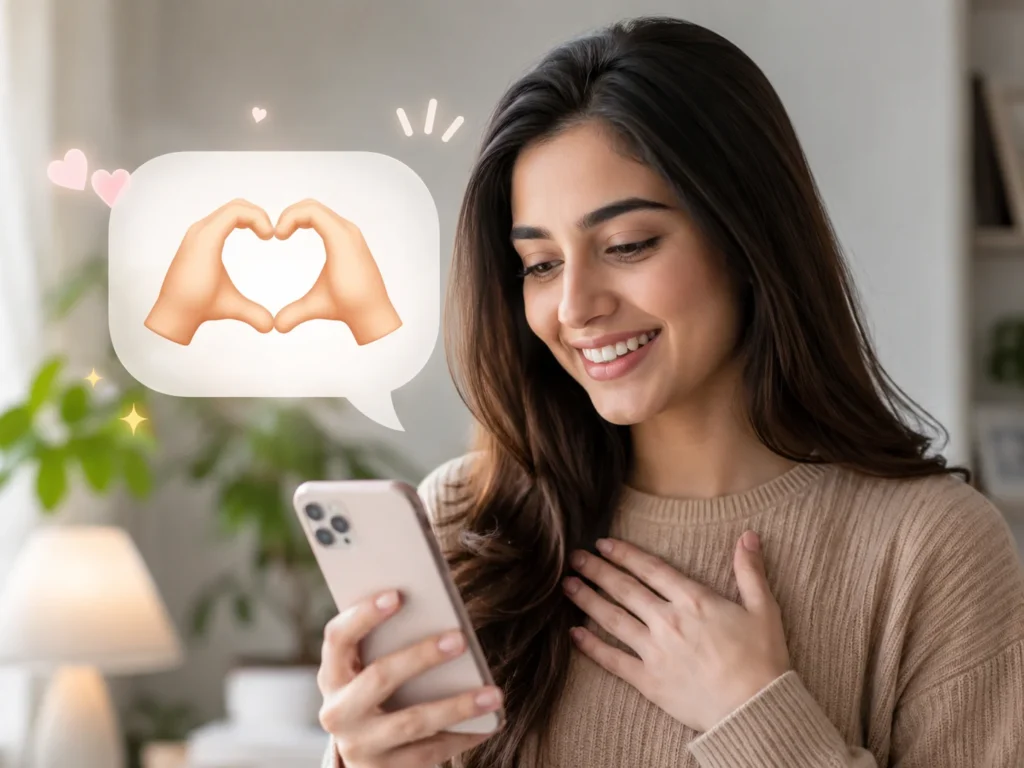
The 🫶🏻 heart hands emoji shows two hands forming a heart. In everyday texting, it commonly communicates love, care, appreciation, support, gratitude, or emotional warmth.
Unlike a traditional ❤️, which can sometimes feel strongly romantic, 🫶🏻 has a broader meaning. Friends, family members, partners, coworkers, and online friends can all use it.
The emoji is particularly useful when someone wants to make a message feel warmer without making it overly serious.
For example:
“Thank you for helping me today 🫶🏻”
Here, 🫶🏻 most likely means “I really appreciate you.”
Or:
“You’ve got this 🫶🏻”
In that context, it means support and encouragement rather than romantic love.
Is 🫶🏻 an Emoji, Acronym, or Slang Term?
🫶🏻 is an emoji, not an acronym or abbreviation.
Its commonly recognized name is Heart Hands. The emoji depicts two hands forming a heart shape.
The 🏻 portion represents a light skin tone modifier. The basic emoji is 🫶, while 🫶🏻 uses the light skin-tone variation.
People may type it as:
- 🫶
- 🫶🏻
- 🫶🏼
- 🫶🏽
- 🫶🏾
- 🫶🏿
The meaning generally stays the same, although the skin-tone choice reflects the sender’s preferred representation.
🫶🏻 Meaning in Different Texting Contexts
In SMS and iMessage
In ordinary texting, 🫶🏻 usually adds affection or appreciation to a message.
Example:
A: “I’ll drop your stuff off tomorrow.”
B: “You’re the best 🫶🏻”
The emoji makes the reply warmer and more affectionate.
In WhatsApp
WhatsApp users commonly use 🫶🏻 with friends, family, partners, and group chats.
Example:
“Thanks everyone for coming today 🫶🏻”
Here, it communicates collective appreciation.
In Instagram, Snapchat, and Discord DMs
In DMs, 🫶🏻 can be more expressive. Depending on the relationship, it can signal friendship, emotional support, affection, or flirting.
A romantic partner might use it affectionately, while a friend could use exactly the same emoji to show appreciation.
Does Capitalization Matter?
No. Emojis don’t have capitalization, so 🫶🏻 always remains visually the same.
However, the surrounding message changes the tone.
Compare:
- “Thank you 🫶🏻” — warm appreciation
- “MISS YOU 🫶🏻” — stronger emotional emphasis
- “okay 🫶🏻” — potentially playful, reassuring, or affectionate depending on context
🫶🏻 Tone Variations
Funny
A: “I ate the last slice of pizza.”
B: “You did WHAT 😭”
A: “It was calling my name.”
B: “You’re forgiven 🫶🏻”
Here, 🫶🏻 softens the playful exchange.
Sarcastic
A: “I accidentally sent the email to everyone.”
B: “Amazing work.”
A: “Thank you for your support.”
B: “Always here for you 🫶🏻”
The emoji adds a deliberately sweet layer to the sarcasm.
Playful
A: “You better save me a seat.”
B: “Only because you asked nicely.”
A: “You’re actually the best.”
B: “I know 🫶🏻”
Here, it adds friendly affection.
Serious
A: “I’m having a really difficult day.”
B: “You don’t have to handle it alone.”
A: “Thank you for listening.”
B: “Anytime. I’m here for you 🫶🏻”
In this context, 🫶🏻 clearly expresses emotional support.
Real Text Examples of 🫶🏻
1. Between Friends
A: “Thanks for covering for me today.”
B: “Of course!”
A: “I owe you one.”
B: “You really do 😂🫶🏻”
2. Between Partners
A: “Made it home safely.”
B: “Good ❤️”
A: “Miss you already.”
B: “Miss you too 🫶🏻”
Here, the emoji carries a clearly affectionate tone.
3. From a Parent
A: “Good luck with your presentation today.”
B: “Thank you! I’m nervous.”
A: “You’ll do great.”
B: “Love you 🫶🏻”
4. Between Siblings
A: “Did you take my charger?”
B: “Maybe.”
A: “Give it back 😭”
B: “Fine, come get it 🫶🏻”
The emoji keeps the exchange playful.
5. Coworkers
A: “Thanks for helping me finish that report.”
B: “No problem!”
A: “Seriously, you saved me.”
B: “Happy to help 🫶🏻”
This is friendly appreciation rather than romantic affection.
6. From a Stranger or Online Friend
A: “Your message really helped me today.”
B: “I’m glad it helped.”
A: “You’re so kind 🫶🏻”
B: “That means a lot!”
The emoji signals warmth without necessarily implying intimacy.
7. Group Chat
A: “Everyone made it home?”
B: “Yep!”
C: “Home too.”
A: “Perfect. Thanks for tonight 🫶🏻”
The emoji expresses group appreciation.
8. After an Apology
A: “I’m sorry I snapped at you earlier.”
B: “It’s okay.”
A: “I really didn’t mean it.”
B: “We’re good 🫶🏻”
Here, it reinforces reassurance.
9. After Receiving Good News
A: “I finally got the job!”
B: “NO WAY!”
A: “I start Monday.”
B: “I’m so happy for you 🫶🏻”
The emoji expresses genuine happiness and support.
10. A Flirty Conversation
A: “You’re making me smile too much.”
B: “Is that a bad thing?”
A: “Definitely not.”
B: “Good 🫶🏻”
In this situation, the surrounding conversation makes the emoji feel flirtatious.
What Does 🫶🏻 Mean From a Girl?
If a girl sends you 🫶🏻, don’t automatically assume she’s flirting.
She might mean:
- “I appreciate you.”
- “Thank you.”
- “You’re sweet.”
- “Sending love.”
- “I’m happy for you.”
- “I’m here for you.”
If she sends 🫶🏻 alongside clearly romantic language, it can contribute to a flirty or affectionate tone. On its own, however, it isn’t reliable evidence of romantic interest.
What Does 🫶🏻 Mean From a Guy?
The same principle applies when a guy sends 🫶🏻.
He could be expressing friendship, appreciation, encouragement, affection, or romantic interest. The surrounding words and your existing relationship matter much more than the emoji itself.
For example:
“Thanks for always being there 🫶🏻”
usually sounds appreciative.
But:
“Can’t wait to see you tonight 🫶🏻”
can sound more affectionate or romantic.
How to Reply to 🫶🏻
Funny Reply
“Okay okay, I’ll accept the emotional support 😂”
Serious Reply
“Thank you. I really appreciate that.”
Flirty Reply
“Careful, you’re making me like you more 🫶🏻”
Neutral Reply
“Aww, thank you 🫶🏻”
The best response depends on the relationship and the message that came before it.
🫶🏻 vs Other Heart Emojis
| Term | Meaning | Usage Context | Tone | Popularity | Confusion Risk |
|---|---|---|---|---|---|
| 🫶🏻 | Love, appreciation, support | Texts, DMs, chats | Warm | High | Low |
| ❤️ | Love, affection, strong appreciation | Texts and DMs | Emotional/romantic | Very high | Medium |
| 🤍 | Affection, support, tenderness | Texts and social messages | Soft | High | Medium |
| 💕 | Affection, love, excitement | Texts and DMs | Cute/romantic | High | Medium |
| 🥰 | Affection, happiness, feeling touched | Texts and DMs | Sweet | High | Medium |
| 💔 | Hurt, heartbreak, emotional pain | Texts and DMs | Sad | High | Low |
The important distinction is that 🫶🏻 is unusually versatile. It can communicate affection without necessarily making the message romantic.
Who Uses 🫶🏻?
People of many ages use 🫶🏻 in digital communication, especially people who regularly communicate through emojis.
Gen Z vs. Millennials
Both Gen Z and Millennials use heart-related emojis, but individual emoji habits vary significantly by person, relationship, and platform.
Gen Z texting often combines emojis with abbreviated or highly casual language, while Millennials may use emojis more selectively in everyday messages. These are broad tendencies, not fixed rules.
Regional Usage
🫶🏻 does not have a fundamentally different dictionary meaning in US, UK, or international texting. Its interpretation mainly depends on context.
Someone in the United States, United Kingdom, Pakistan, or elsewhere can use 🫶🏻 to communicate appreciation, affection, encouragement, or support.
Origin and Internet Culture
The heart-hands emoji belongs to the modern generation of Unicode emoji characters created for expressive digital communication. It doesn’t represent an old texting abbreviation like “LOL” or “BRB.”
Its appeal comes from combining two familiar visual ideas: hands and a heart. Instead of simply displaying a heart, the emoji visually shows a person making a heart gesture.
That makes it useful when words such as “love,” “thanks,” “support,” or “appreciate you” might feel too formal or repetitive.
The emoji also became particularly recognizable through social media and everyday digital communication, but its meaning isn’t limited to TikTok or any single platform.
Is 🫶🏻 Rude or Offensive?
No. 🫶🏻 is generally considered a positive and friendly emoji.
It isn’t profanity and doesn’t contain explicit language.
However, appropriateness still depends on the situation. Sending 🫶🏻 to a close friend is perfectly natural, while using it in a highly formal professional exchange may feel overly casual.
For example, instead of:
“Thank you for reviewing my application 🫶🏻”
a formal workplace message would usually work better without the emoji.
Is 🫶🏻 Romantic?
It can be, but it isn’t automatically romantic.
That’s one of the biggest sources of confusion around this emoji.
However, If your partner sends 🫶🏻, it may express love. If your best friend sends it after you help them, it may simply mean “thank you.” If someone you’re talking to romantically sends it with teasing or affectionate language, it may have a flirtatious meaning.
Context determines the tone.
Real-World Observation
In actual texting, 🫶🏻 often works less like a standalone statement and more like an emotional punctuation mark. People add it to otherwise ordinary messages to make them feel warmer, kinder, or more personal. That’s why “thanks” and “thanks 🫶🏻” don’t quite feel the same: the words communicate the information, while the emoji communicates some of the emotional attitude behind them.
Frequently Asked Questions
What does 🫶🏻 mean when someone texts it to you?
It usually means love, appreciation, affection, support, or warmth. The exact meaning depends on what the person wrote and your relationship with them. It doesn’t automatically mean they have romantic feelings.
Is it rude to reply with just 🫶🏻 in a text?
Usually, no. Sending only 🫶🏻 can work as a warm acknowledgment, especially when someone has said something kind or supportive. However, in a serious conversation, a few words may communicate your response more clearly.
What’s the difference between texting 🫶🏻 and saying it out loud?
🫶🏻 doesn’t have a direct spoken equivalent. In conversation, you might say “I appreciate you,” “love you,” “thank you,” or “I’m here for you.” The emoji lets you communicate that emotional warmth visually.
Does 🫶🏻 mean the same thing in a group chat and a 1-on-1 text?
The basic meaning stays similar, but the context changes. In a group chat, 🫶🏻 often expresses collective appreciation or support. In a private conversation, it can feel more personal or affectionate.
Does 🫶🏻 mean “I love you”?
It can communicate love, but it doesn’t literally translate to “I love you.” People also use it for friendship, gratitude, encouragement, and general affection.
What does 🫶🏻 mean from a girl?
It can mean anything from “thank you” to “I care about you.” If you’re wondering whether she’s flirting, look at the entire conversation rather than interpreting the emoji alone.
What does 🫶🏻 mean from a guy?
A guy may use it to show appreciation, friendship, emotional support, or affection. It can also appear in romantic conversations, but the emoji itself doesn’t establish romantic intent.
Is 🫶🏻 appropriate for work or school?
It’s generally fine in casual communication with people you know well. For formal emails, messages to a professor, or communication with a boss, it’s usually better to choose more neutral wording unless the relationship is already very informal.
PAA-Style Questions
What does the 🫶🏻 emoji stand for?
🫶🏻 represents heart hands. It commonly communicates love, appreciation, support, affection, or gratitude.
What does 🫶🏻 mean from a girl in text?
It usually signals warmth or appreciation. Depending on the conversation, it can also be affectionate or flirty, but you shouldn’t assume romance from the emoji alone.
What does 🫶🏻 mean from a guy in text?
It generally means that he wants to express warmth, appreciation, affection, or support. The surrounding message provides the strongest clue about his intended tone.
What is the difference between 🫶 and 🫶🏻?
They represent the same heart-hands gesture. The 🏻 is a light skin-tone modifier, so it changes the emoji’s visual appearance rather than its basic meaning.
Conclusion
The 🫶🏻 meaning in text is usually love, appreciation, affection, support, or gratitude. It’s one of the more flexible heart-related emojis because people can use it with friends, family, partners, coworkers, and online contacts.
Usage Tips
- Use 🫶🏻 when you want a message to feel warm and appreciative.
- Use it with friends without assuming a romantic meaning.
- Look at the surrounding text before interpreting it as flirting.
- Pair it with words when the conversation is serious or important.
Common Mistakes
- Assuming 🫶🏻 automatically means “I love you.”
- Assuming it always indicates romantic interest.
- Treating the emoji as having exactly the same tone in every relationship.
- Using it in highly formal communication where emojis may seem too casual.
Use 🫶🏻 for appreciation, affection, encouragement, and warmth. Avoid relying on it alone when you need to communicate something serious or unambiguous.