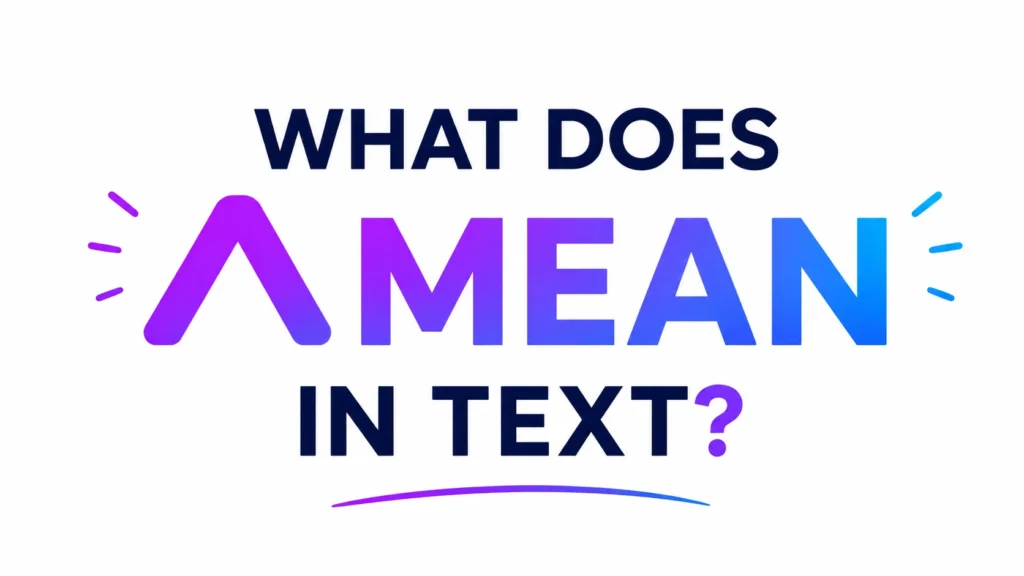
If you’ve ever received a text message, browsed social media comments, or chatted in an online community, you’ve probably seen the symbol “^” appear in unexpected places. At first glance, it looks like a simple punctuation mark or keyboard character. Yet in digital communication, it can carry several meanings depending on the context.
Many people search for “what does ^ mean in text” because they encounter it in conversations and aren’t sure how to interpret it. Is it a typo? A shortcut? A secret internet symbol? The answer depends on where and how it’s used.
The confusion often comes from the fact that the caret symbol (^) serves different purposes across texting, social media, gaming communities, coding environments, and online forums. Understanding its meaning can help you avoid misunderstandings and communicate more naturally online.
This guide explains exactly what the ^ symbol means in text, where it came from, how people use it today, and how to respond when you see it.
What Does ^ Mean in Text? – Quick Meaning
Simple Definition
In text conversations, the symbol “^” most commonly means:
- “I agree with the message above.”
- “Look at what was said above.”
- “I’m referring to the previous comment.”
- “That statement applies to me too.”
Rather than repeating a message, users place the caret symbol underneath or after another comment to point back to it.
Quick Examples
Person A: “Pizza is the best comfort food.”
Person B: “^”
Meaning: Person B agrees completely.
Person A: “Anyone else tired after today’s meeting?”
Person B: “^ Same here.”
However, Meaning: Person B feels the same way.
Person A: “This movie deserved better reviews.”
Person B: “^ Facts.”
Meaning: Person B strongly agrees.
Origin & Background
Where the Symbol Came From
The symbol “^” is officially known as a caret. Long before texting existed, writers and editors used it to indicate where missing text should be inserted into a document.
Over time, internet users adapted the symbol for online communication.
Early Internet Communities
During the early days of forums, chat rooms, and message boards, people needed a quick way to reference previous comments without quoting entire posts.
The caret became a convenient visual arrow pointing upward toward the statement being referenced.
Social Media Influence
As social media platforms expanded, shorthand communication became more common. Users preferred quick reactions over lengthy replies.
The ^ symbol spread across:
- Reddit discussions
- Discord servers
- Gaming chats
- Twitter/X threads
- Instagram comments
- Group messaging apps
How the Meaning Evolved
Originally, the caret simply pointed upward.
Today, it often carries emotional meaning as well. Depending on context, it can signal:
- Agreement
- Support
- Shared frustration
- Humor
- Validation
This evolution reflects how modern communication values speed and emotional connection.
Real-Life Conversations
WhatsApp Example
Person A:
“I’m exhausted after this week.”
Person B:
“^ Honestly, same.”
Instagram DM Example
Person A:
“This outfit took me forever to choose.”
Person B:
“^ But it was worth it.”
TikTok Comments Example
Person A:
“Nobody talks about how hard adult life really is.”
Person B:
“^ This.”
Text Message Example
Person A:
“I think we all need a vacation.”
Person B:
“^ Couldn’t agree more.”
These examples show how the symbol acts as a shortcut for agreement while keeping conversations flowing naturally.
Emotional & Psychological Meaning
What Emotion Does It Express?
The caret often communicates emotional alignment.
Instead of typing a full response, someone uses “^” to show:
- Understanding
- Empathy
- Agreement
- Shared experience
- Support
Why People Use It
Modern communication moves quickly.
People often want to acknowledge someone without repeating an entire statement. The symbol provides a simple way to connect.
Using “^” can also create a sense of belonging within a group conversation.
What It Reveals About Modern Communication
Today’s online interactions reward brevity.
Many users prefer symbols, emojis, and shorthand expressions because they save time while still conveying emotion.
The caret reflects a broader trend toward efficient communication.
Personal-Style Scenario
Imagine you’re in a group chat discussing work stress.
One friend writes:
“I feel like I haven’t had a real day off in months.”
Several people respond with:
“^”
No one needs to explain further. Everyone instantly understands the shared feeling.
That small symbol creates a moment of collective understanding.
Usage in Different Contexts
Social Media
On social media, “^” usually means agreement with a previous post or comment.
Users often combine it with phrases such as:
- “^ This”
- “^ Exactly”
- “^ Facts”
Friends & Relationships
Among friends, the symbol feels casual and friendly.
It can indicate:
- Shared opinions
- Similar emotions
- Mutual experiences
Work and Professional Settings
Professional use is less common.
Some workplace chats may use it informally during brainstorming sessions.
Example:
Manager:
“We need clearer communication between departments.”
Employee:
“^ Agreed.”
Casual vs Serious Tone
In casual conversations, the symbol feels natural.
In formal discussions, it may appear too informal or unclear.
Audience and context matter.
When NOT to Use It
Formal Business Communication
Avoid using “^” in:
- Client emails
- Job applications
- Academic writing
- Official reports
Many people may not understand the intended meaning.
Cross-Cultural Communication
Not everyone is familiar with internet shorthand.
International audiences may interpret it differently.
Important Discussions
During sensitive conversations, clear language is usually better.
Instead of:
“^”
Consider writing:
“I agree completely.”
Situations That May Cause Confusion
Problems arise when:
- Multiple messages appear above
- Conversations move quickly
- Participants are unfamiliar with online slang
In these situations, direct responses work better.
Common Misunderstandings
People Think It Means Exponentiation
In mathematics, “^” often indicates powers.
Example:
2^3 = 8
Some users mistakenly assume this meaning applies in texting.
It Is Not Always Sarcastic
Occasionally people use “^” humorously.
However, most of the time it simply signals agreement.
Context Changes Everything
The same symbol can mean different things depending on:
- Platform
- Conversation style
- User age
- Community norms
Literal vs Figurative Meaning
Literally, the symbol points upward.
Figuratively, it often means:
“I support what was just said.”
Understanding the context prevents misinterpretation.
Comparison Table
| Expression | Meaning | Tone | Common Use |
|---|---|---|---|
| ^ | Refers to previous statement | Neutral | Forums, chats |
| This | Strong agreement | Casual | Social media |
| Facts | Strong approval | Energetic | TikTok, Instagram |
| Exactly | Full agreement | Neutral | Texting |
| Agreed | Formal agreement | Professional | Work chats |
| Nope | Disagreement | Casual | Everyday texting |
| Disagree | Opposite opinion | Formal | Discussions |
Key Insight
The caret symbol is unique because it doesn’t contain a complete message on its own. Instead, it relies on context and points readers toward a previous statement, making communication faster and more efficient.
Variations / Types
^
Basic agreement or reference to the previous message.
^^
Extra emphasis or stronger agreement.
^ This
Directly means “I strongly agree with this.”
^ Same
Indicates shared feelings or experiences.
^ Exactly
Confirms complete agreement.
^ Facts
Suggests the statement is unquestionably true.
^ Yep
A relaxed form of agreement.
^ Me Too
Shows personal identification with the comment.
^ Honestly
Adds emotional sincerity.
^ Literally
Expresses strong validation of the statement.
How to Respond When Someone Uses It
Casual Replies
- “Glad you agree.”
- “Exactly what I was thinking.”
- “Right?”
Funny Replies
- “At least someone gets it.”
- “Finally, a person of culture.”
- “You understand the assignment.”
Mature Replies
- “Thanks for sharing your perspective.”
- “I’m glad we’re on the same page.”
- “That’s a good point.”
Respectful Replies
- “I appreciate your agreement.”
- “Thank you for supporting the idea.”
- “I’m happy that resonates with you.”
Regional & Cultural Usage
Western Culture
In North America and Europe, the symbol is widely recognized among internet users.
Agreement is its most common interpretation.
Asian Culture
Usage varies depending on platform and language.
Many younger users understand the symbol through global social media exposure.
Middle Eastern Culture
The meaning is increasingly recognized among younger generations active on international platforms.
Older users may not immediately understand it.
Global Internet Usage
Online communities have helped standardize the meaning across borders.
Gaming, social media, and messaging apps contribute significantly to this shared understanding.
Generational Differences
Gen Z
- Uses shorthand frequently
- Understands symbolic communication quickly
- Often combines “^” with memes and slang
Millennials
- Generally understand the symbol
- More likely to use words alongside it
Older generations may require additional context.
Is It Safe for Kids?
Understanding the Context
Yes, the “^” symbol is generally safe for children.
It is not considered offensive, explicit, or harmful.
In most situations, it simply indicates agreement with a previous message.
Parents should still encourage children to understand context because online symbols can have different meanings depending on the platform and community.
FAQs
What does ^ mean in text messages?
It usually means agreement with a previous statement or points to something written above.
Is ^ a positive or negative symbol?
Most of the time, it is positive or neutral because it often shows agreement or support.
Why do people reply with only ^?
They want to acknowledge or agree with a previous comment without repeating it.
Does ^ mean the same thing on every platform?
Not always. Context matters. In texting and social media, it usually signals agreement, while in math or coding it may have different meanings.
Is ^ internet slang?
Yes. Although it originated as a punctuation symbol, its modern conversational use is considered internet shorthand.
Can ^ be used in professional communication?
It can appear in informal workplace chats, but full sentences are usually better in formal business settings.
What is the difference between ^ and “This”?
Both show agreement, but “^” points to a previous statement while “This” directly highlights the statement itself.
Conclusion
The small caret symbol may seem insignificant, yet it plays an important role in modern digital communication. When people ask what does ^ mean in text, the simplest answer is that it usually points to a previous statement and expresses agreement with it.
Its popularity comes from efficiency. Instead of repeating words, users can instantly show support, understanding, or shared feelings with a single character. Over time, the symbol has become part of internet culture, appearing everywhere from WhatsApp chats to TikTok comments.
Understanding how and when to use “^” helps you navigate online conversations more confidently. Once you recognize its purpose, you’ll start noticing how often this tiny symbol creates connection, agreement, and shared understanding in everyday communication.