If you’ve ever opened an email, joined a group chat, or received a workplace message, chances are you’ve seen the phrase “Hi all.” It looks simple, yet many people search for its meaning because its tone can vary depending on the situation, relationship, and platform where it is used.
At first glance, “hi all” seems like nothing more than a casual greeting. However, communication today is shaped by culture, digital habits, and social expectations. A greeting that feels warm and friendly in one setting may feel too informal or distant in another.
Understanding the meaning of “hi all” helps people communicate more naturally, especially in professional emails, group conversations, social media communities, and online collaborations. This guide explores its meaning, origins, emotional impact, practical usage, and common misunderstandings so you can use it confidently.
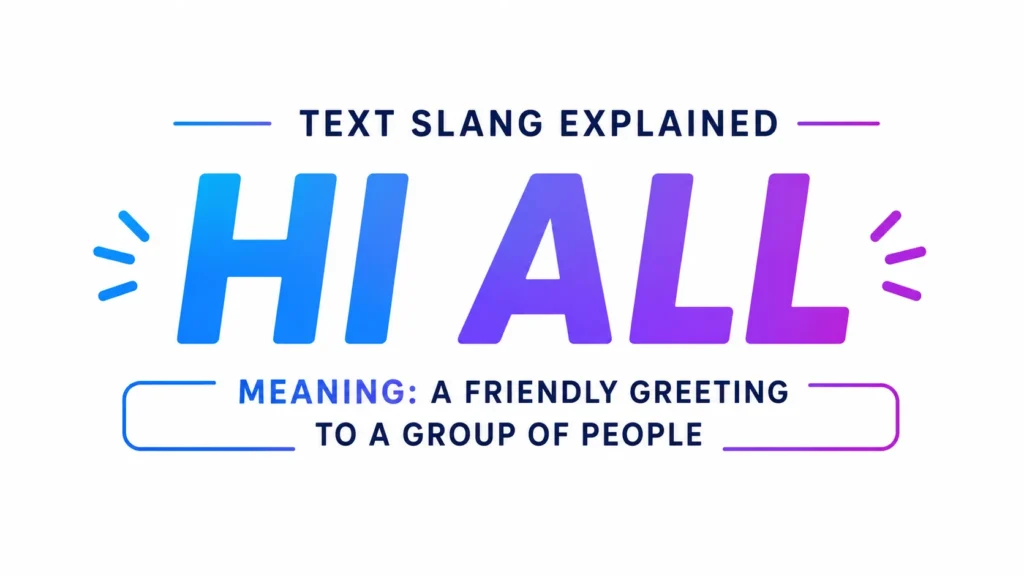
Hi All Meaning – Quick Meaning
Simple Definition
“Hi all” is a greeting used to address a group of people at the same time.
Instead of greeting individuals one by one, the speaker acknowledges everyone collectively.
Common meanings include:
- Hello everyone
- Greetings to the group
- A friendly way to start a conversation
- An inclusive opening in emails or chats
Quick Examples
“Hi all, I hope you’re having a great day.”
“Hi all, the meeting will begin in ten minutes.”
“Hi all, thanks for joining the community.”
The phrase is generally considered friendly, respectful, and efficient.
Origin & Background
Traditional Group Greetings
Long before digital communication existed, people used collective greetings such as:
- Hello everyone
- Good morning, everyone
- Greetings, all
- Ladies and gentlemen
As communication moved online, people looked for shorter and faster ways to address groups.
Rise of Email Culture
During the growth of workplace email communication in the 1990s and early 2000s, “hi all” became one of the most common opening phrases.
It offered a balance between professionalism and friendliness.
Unlike “Dear all,” which can sound formal, “hi all” feels more conversational.
Influence of Social Media
Social platforms encouraged shorter communication styles.
People began using quick greetings in:
- Facebook groups
- WhatsApp communities
- Discord servers
- Instagram group chats
- LinkedIn discussions
As a result, “hi all” became a universal digital greeting.
How the Meaning Evolved
Originally associated with workplace emails, the phrase now appears almost everywhere online.
Today it can signal:
- Inclusion
- Friendliness
- Community spirit
- Informal professionalism
Its flexibility explains why it remains popular across different generations and cultures.
Real-Life Conversations
WhatsApp Group Chat
Person A:
Hi all, does anyone know what time the event starts?
Person B:
I think it’s at 7 PM.
Person C:
Yes, that’s correct. Looking forward to seeing everyone.
Instagram DM Group
Person A:
Hi all, thanks for helping with the project.
Person B:
No problem. It turned out really well.
Person C:
Happy to be part of it.
TikTok Comments
Person A:
Hi all, what do you think about this trend?
Person B:
Honestly, it’s pretty creative.
Person C:
I agree. It’s one of the better trends lately.
Text Message Group
Person A:
Hi all, just wanted to check if everyone’s free this weekend.
Person B:
Saturday works for me.
Person C:
Same here.
Person D:
Count me in.
Emotional & Psychological Meaning
What Emotion Does It Express?
“Hi all” typically communicates:
- Friendliness
- Openness
- Respect
- Inclusion
The speaker is making an effort to acknowledge everyone equally.
Why People Use It
Many people want to avoid appearing cold or abrupt.
Starting a message with “hi all” creates a welcoming atmosphere before sharing information.
What It Reveals About Modern Communication
Modern communication values efficiency.
People want messages to be brief without sacrificing politeness.
“Hi all” achieves both goals.
A Real-Life Scenario
Imagine joining a new remote team.
On your first day, you receive a message that begins:
“Hi all, please welcome Sarah to the team.”
That greeting instantly creates a sense of belonging. Even though it’s only two words, it signals that everyone is included in the conversation.
Usage in Different Contexts
Social Media
In online communities, “hi all” often introduces announcements, questions, or discussions.
Examples:
- Hi all, what’s everyone watching lately?
- Hi all, thank you for your support.
Friends and Relationships
Friend groups use it when messaging multiple people.
It feels relaxed and natural.
Example:
“Hi all, who’s up for dinner tonight?”
Work and Professional Settings
Many professionals prefer “hi all” because it sounds polite without being overly formal.
Examples:
- Hi all, attached is the updated report.
- Hi all, please review the schedule.
Casual vs Serious Tone
Casual:
“Hi all, hope you’re having fun.”
Serious:
“Hi all, please note the deadline has changed.”
The phrase itself remains neutral, while the rest of the message determines the tone.
When NOT to Use It
One-on-One Conversations
Using “hi all” with a single person can feel awkward.
Simply saying “Hi” is better.
Formal Legal or Official Communication
Some situations require more formal greetings.
Examples include:
- Court correspondence
- Government documents
- Formal complaints
Sensitive Discussions
When addressing a personal issue, a group greeting may feel impersonal.
Individual acknowledgment is often more appropriate.
Cultural Considerations
Certain professional cultures prefer:
- Dear colleagues
- Dear team
- Good morning everyone
Understanding audience expectations helps prevent misunderstandings.
Common Misunderstandings
Assuming It Is Unprofessional
Some people think “hi all” is too casual.
In reality, it is widely accepted in modern workplaces.
Believing It Refers to Close Friends Only
The phrase works with colleagues, classmates, community members, and many other groups.
Confusing Tone
The greeting itself does not indicate emotion.
The message content provides the emotional context.
Literal vs Figurative Meaning
Literally, it means greeting everyone.
Figuratively, it often communicates inclusiveness and group connection.
Comparison Table
| Expression | Meaning | Tone | Common Usage |
|---|---|---|---|
| Hi all | Hello everyone | Friendly | Emails, chats |
| Hello everyone | Greeting the group | Neutral | Meetings, announcements |
| Dear all | Formal group greeting | Formal | Business communication |
| Hey everyone | Casual greeting | Relaxed | Friends, social media |
| Greetings all | Respectful greeting | Formal | Official settings |
| Good morning everyone | Time-based greeting | Professional | Meetings |
| Hi team | Greeting coworkers | Professional | Workplace communication |
| Goodbye all | Opposite meaning | Closing | End of discussions |
Key Insight
The biggest advantage of “hi all” is its balance. It feels friendly enough for casual communication while remaining appropriate in many professional environments.
Variations / Types
Hi Everyone
A slightly warmer alternative.
Hello All
More neutral and polished.
Hey All
Very casual and conversational.
Hi Team
Often used in workplaces.
Greetings All
More formal and respectful.
Good Morning All
Time-specific greeting.
Hi Folks
Friendly and community-oriented.
Hello Everyone
Inclusive and professional.
Hey Everyone
Relaxed and social.
Dear All
Formal and traditional.
How to Respond When Someone Uses It
Casual Replies
- Hi!
- Hello everyone!
- Hey there!
- Good to see everyone.
Funny Replies
- Hi all and hi coffee lovers.
- Hello, internet friends.
- Reporting for duty.
Mature Replies
- Hello everyone, thank you for reaching out.
- Hi, I appreciate the update.
Respectful Replies
- Good afternoon, everyone.
- Thank you for the message.
- Happy to join the discussion.
Regional & Cultural Usage
Western Culture
In North America and Europe, “hi all” is commonly accepted in both professional and casual settings.
Asian Culture
Many professionals use it in multinational workplaces.
Some traditional environments may prefer more formal greetings.
Middle Eastern Culture
Respectful introductions are highly valued.
“Hi all” is generally acceptable in modern workplaces and online communities.
Global Internet Usage
The phrase has become part of universal online language.
People from different countries understand it immediately.
Generational Differences
Gen Z
Often uses shorter greetings and may even skip greetings entirely in fast-paced chats.
Millennials
Frequently use “hi all” in emails, group messages, and collaborative platforms.
Older professionals may alternate between “dear all” and “hi all” depending on formality.
Is It Safe for Kids?
Understanding the Context
Yes, “hi all” is completely safe for children.
It is simply a polite greeting directed at a group.
There are no hidden meanings, offensive implications, or inappropriate associations attached to the phrase.
Parents and educators can comfortably encourage its use in school projects, online learning environments, and group activities.
FAQs
What does “hi all” mean in an email?
It means the sender is greeting everyone included in the email conversation.
Is “hi all” professional?
Yes. Many workplaces use it regularly because it balances friendliness and professionalism.
Can I use “hi all” in a business email?
Absolutely. It is commonly used when addressing multiple colleagues or clients.
Is “hi all” formal or informal?
It sits between formal and informal communication, making it versatile.
What is the difference between “hi all” and “dear all”?
“Dear all” sounds more formal, while “hi all” feels friendlier and conversational.
Can I use “hi all” on social media?
Yes. It is widely used in groups, communities, and online discussions.
Is “hi all” grammatically correct?
Yes. It is a standard and widely accepted English greeting.
Conclusion
The phrase “hi all” may look simple, yet it plays an important role in modern communication. It serves as a friendly greeting that welcomes everyone into a conversation without sounding overly formal or overly casual.
Whether you’re sending a workplace email, posting in a community group, chatting with friends, or starting an online discussion, this expression helps create a sense of inclusion and respect. Its popularity comes from its ability to adapt to different situations while remaining easy to understand across cultures.
Communication is often shaped by small details. A simple greeting can set the tone for everything that follows. Used thoughtfully, “hi all” can make conversations feel warmer, more connected, and more welcoming for everyone involved.