If you’ve recently come across the abbreviation “JSP” in a text message, social media comment, or online conversation, you’re probably wondering what it actually means.
Unlike common internet slang that appears everywhere, JSP can be confusing because it has multiple meanings depending on the context. In casual texting, it often represents a shortened phrase used for quick communication. In professional and technical environments, however, JSP can mean something completely different.
This is exactly why so many people search for “jsp meaning.” They want to know whether someone is joking, being serious, referring to technology, or using a piece of internet slang.
Understanding the context behind JSP helps avoid misunderstandings and allows you to communicate more confidently online and offline.
JSP Meaning – Quick Meaning
Primary Meaning of JSP
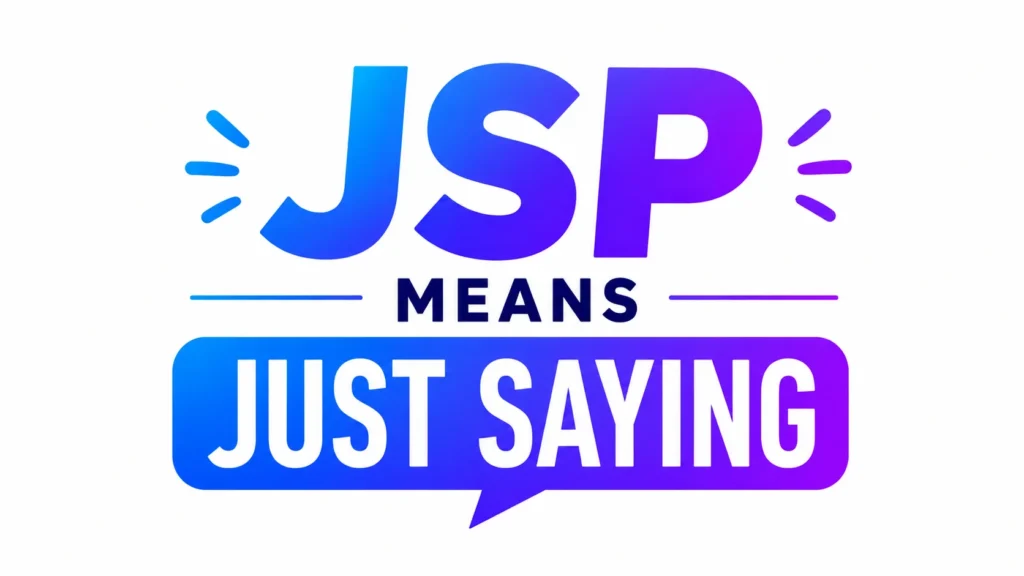
In internet slang and texting, JSP commonly stands for:
“Just Playing”
People use it when they want to indicate that a previous statement was a joke and should not be taken seriously.
Quick Definition
- JSP = Just Playing
- Used after teasing, joking, or sarcasm
- Helps soften potentially offensive comments
- Common in text messages and social media chats
Examples
“You’re the worst teammate ever. JSP 😂”
“I can’t believe you forgot my birthday… JSP!”
“I’m deleting you from my friends list. JSP lol.”
The abbreviation reassures the other person that the message was meant humorously.
Other Meanings of JSP
Depending on context, JSP can also mean:
- JavaServer Pages (technology)
- Job Skills Program
- Junior School Program
- Various organization-specific abbreviations
However, in texting and social media conversations, “Just Playing” is the most common interpretation.
Origin & Background
Where JSP Came From
Internet users have always looked for ways to communicate faster.
As texting became popular in the late 1990s and early 2000s, abbreviations like LOL, BRB, IMO, and JSP emerged to save time and typing effort.
The phrase “Just Playing” itself existed long before the internet. People often said it after teasing a friend.
Eventually, the phrase became abbreviated into JSP for digital communication.
Social Media Influence
Platforms like Instagram, Snapchat, TikTok, and WhatsApp accelerated the spread of shorthand expressions.
Short messages encouraged users to compress longer phrases into a few letters.
JSP fit perfectly into that culture because it quickly clarified that a statement wasn’t serious.
How the Meaning Evolved
Originally, JSP mostly appeared in text messages.
Today, it appears in:
- Group chats
- TikTok comments
- Instagram DMs
- Gaming communities
- Online forums
While the meaning remains largely the same, younger users often combine it with emojis and memes for extra humor.
Real-Life Conversations
WhatsApp Conversation
Person A:
“You still owe me money from last year.”
Person B:
“What? Seriously?”
Person A:
“JSP 😂”
Person B:
“You almost gave me a heart attack.”
Instagram DM
Person A:
“I’m unfollowing you because your vacation photos make me jealous.”
Person B:
“Wow, rude.”
Person A:
“JSP lol.”
TikTok Comments
Person A:
“This dance should be illegal.”
Person B:
“Why?”
Person A:
“Because it’s too good. JSP.”
Text Message
Person A:
“I saw your crush talking to someone else.”
Person B:
“Wait, what?”
Person A:
“Relax. JSP.”
Person B:
“Not funny!”
These examples show how JSP reduces tension and signals playful intent.
Emotional & Psychological Meaning
What Emotion Does JSP Express?
JSP often communicates:
- Humor
- Playfulness
- Affectionate teasing
- Light sarcasm
- Emotional reassurance
People use it to prevent their jokes from being misunderstood.
Why People Use It
Digital communication lacks facial expressions and vocal tone.
As a result, jokes can easily seem rude or aggressive.
Adding JSP helps people clarify their intentions.
What It Reveals About Modern Communication
Modern conversations prioritize speed.
At the same time, people want to maintain emotional clarity.
JSP reflects both goals by delivering reassurance in only three letters.
Personal-Style Scenario
Imagine sending a friend:
“You’re officially banned from choosing movies.”
Without context, that might sound harsh.
Adding “JSP” instantly changes the emotional tone and signals friendly teasing.
That’s the real power of the abbreviation.
Usage in Different Contexts
Social Media
On social media, JSP appears after:
- Funny comments
- Light criticism
- Memes
- Friendly trolling
It keeps interactions playful rather than confrontational.
Friends and Relationships
Friends commonly use JSP while teasing each other.
In relationships, it can soften jokes that might otherwise sound insensitive.
Work and Professional Settings
JSP is generally uncommon in professional communication.
Business emails and formal workplace chats typically require clearer language.
Writing “Just kidding” is often more appropriate.
Casual vs Serious Tone
Casual:
“You’re getting fired from our gaming team. JSP.”
Serious:
“We need to discuss your project performance.”
JSP belongs primarily in informal conversations.
When NOT to Use It
During Serious Discussions
Avoid JSP when discussing:
- Mental health
- Family emergencies
- Workplace conflicts
- Financial problems
Adding humor may appear insensitive.
Cultural Sensitivity
Some cultures prefer more direct communication.
Repeated teasing followed by JSP may still feel disrespectful.
High-Emotion Situations
If someone is upset, JSP might not undo the emotional impact of a hurtful statement.
Consider your audience carefully.
Common Misunderstandings
Confusing It With Technology
Many people associate JSP with JavaServer Pages.
This is especially common among programmers.
Assuming Everyone Knows It
Not everyone recognizes internet abbreviations.
Some readers may interpret JSP incorrectly.
Tone Misinterpretation
Even when using JSP, a joke can still feel offensive if the content crosses personal boundaries.
Literal vs Figurative Meaning
JSP doesn’t always mean the speaker is completely joking.
Sometimes it’s used to soften criticism rather than eliminate it entirely.
Comparison Table
| Expression | Meaning | Tone | Usage |
|---|---|---|---|
| JSP | Just Playing | Playful | Texting |
| JK | Just Kidding | Casual | Universal |
| LOL | Laughing Out Loud | Humorous | Social Media |
| J/K | Just Kidding | Informal | Text Messages |
| SRSLY | Seriously | Serious | Online Chat |
| IDC | I Don’t Care | Neutral/Negative | Texting |
| FR | For Real | Genuine | Social Media |
| No Cap | No Lie | Honest | Gen Z Slang |
Key Insight
JSP serves a similar purpose as JK, but it often feels slightly more playful and conversational. Both help clarify humor, but JSP can sound more personal in close friendships.
Variations / Types
JSP 😂
Indicates obvious humor.
JSP lol
Adds a lighthearted tone.
JSP bro
Used between friends.
JSP fam
Popular in group chats.
JSP jk
Double reassurance that the comment is a joke.
JSP 😭
Often used after exaggerated humor.
JSP don’t worry
Provides emotional reassurance.
JSP obviously
Emphasizes sarcasm.
JSP relax
Used when someone takes a joke seriously.
JSP seriously though
Transitions from humor to a real point.
How to Respond When Someone Uses It
Casual Replies
- “You got me.”
- “Nice one.”
- “I almost believed you.”
Funny Replies
- “My lawyer will hear about this.”
- “You owe me emotional damages.”
- “That joke aged poorly.”
Mature Replies
- “Good thing you clarified.”
- “I wasn’t sure how to take that.”
Respectful Replies
- “Haha, understood.”
- “Thanks for explaining.”
- “Makes sense now.”
Regional & Cultural Usage
Western Culture
JSP fits naturally into casual humor and sarcasm.
Many users appreciate playful teasing.
Asian Culture
Usage exists but may be less common than direct phrases.
Context often matters more than abbreviations.
Middle Eastern Culture
People may use the concept of joking, though English abbreviations vary by community.
Global Internet Usage
International users frequently encounter JSP through gaming, social media, and messaging apps.
Generational Differences
Gen Z
- More likely to use abbreviations
- Comfortable with internet slang
- Often combine JSP with emojis
Millennials
- More familiar with JK
- May recognize JSP but use it less frequently
Is It Safe for Kids?
Yes, JSP is generally considered safe for kids.
The phrase simply means “Just Playing” and is typically used to indicate joking or harmless teasing.
Parents should still encourage children to understand context, because even playful jokes can sometimes hurt feelings if used carelessly.
FAQs
What does JSP mean in texting?
JSP usually means “Just Playing,” indicating that a previous statement was intended as a joke.
Is JSP the same as JK?
They are very similar. Both signal humor, but JSP specifically means “Just Playing,” while JK means “Just Kidding.”
What does JSP mean on Instagram?
On Instagram, JSP typically tells readers that a comment or message was playful rather than serious.
Can JSP be used professionally?
Generally, no. Formal communication benefits from complete phrases instead of slang abbreviations.
Does JSP always mean a joke?
Most of the time, yes. However, some people use it to soften criticism or sarcasm.
What does JSP mean in technology?
In web development, JSP stands for JavaServer Pages, a technology used for creating dynamic web pages.
Why do people use JSP?
People use JSP to clarify humor, avoid misunderstandings, and maintain a friendly tone in digital conversations.
Conclusion
The meaning of JSP depends on context, but in most texting and social media conversations, it stands for “Just Playing.” It’s a simple way to show that a comment was intended as humor rather than criticism.
As online communication continues evolving, abbreviations like JSP help people express personality, emotion, and intent in a fast-moving digital world.
The key is understanding the situation, reading the tone, and using the expression thoughtfully. Once you know what JSP means, you’ll be able to recognize it instantly and respond with confidence.