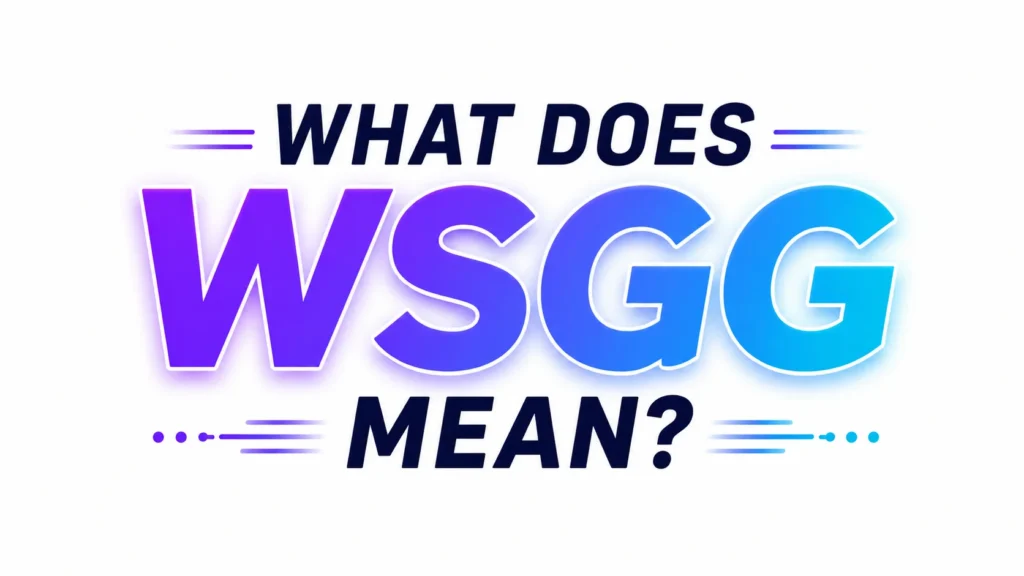
If you’ve spent time on TikTok, Instagram, Snapchat, Discord, or online gaming communities, you’ve probably seen someone type “WSGG” in a comment, message, or chat.
At first glance, it can look confusing. Some people assume it’s a typo, while others wonder whether it stands for a hidden phrase or internet code. That’s exactly why so many people search for what does WSGG mean.
The truth is surprisingly simple. WSGG is a modern internet slang expression used as a casual greeting. It’s a fast, friendly way to start a conversation without sounding formal.
As online communication continues to evolve, abbreviations like WSGG help people connect quickly while keeping conversations relaxed and natural.
In this guide, you’ll learn exactly what WSGG means, where it came from, how people use it, when you should avoid using it, and how to respond confidently when someone sends it to you.
What Does WSGG Mean? – Quick Meaning
Simple Definition
WSGG stands for:
“What’s Good?”
It is an informal greeting commonly used in texting, social media messages, gaming chats, and online communities.
Instead of asking a formal question, people use it to casually check in with someone.
What It Usually Means
WSGG can mean:
- What’s up?
- How are you?
- What are you doing?
- How’s everything going?
- Anything interesting happening?
The exact meaning depends on the conversation and relationship between the people involved.
Quick Examples
“WSGG bro?”
“Hey, WSGG tonight?”
“Long time no talk. WSGG?”
In all three examples, the sender is simply starting a conversation in a relaxed and friendly way.
Origin & Background
The Evolution of “What’s Good?”
The phrase “What’s Good?” existed long before texting slang became popular.
For decades, people used it in everyday conversations as a casual alternative to:
- How are you?
- What’s up?
- How’s it going?
Over time, internet culture encouraged shorter and faster communication. As texting became more common, users started abbreviating longer phrases.
Eventually:
“What’s Good?” became “WSG”
Later, many users began typing “WSGG” as a stylistic variation.
Influence of Social Media
Platforms such as:
- TikTok
- Snapchat
- Discord
- Twitch
helped spread the expression worldwide.
Short slang terms work well online because they are quick to type and instantly recognizable among younger audiences.
How the Meaning Evolved
Originally, “What’s Good?” mainly meant “How are you?”
Today, WSGG can also imply:
- What’s happening?
- What’s the plan?
- What are you up to?
- Tell me what’s new
As a result, the phrase became more versatile than a traditional greeting.
Real-Life Conversations
WhatsApp Conversation
Person A:
WSGG bro?
Person B:
Not much, just watching a movie. You?
Person A:
Same here. Thought I’d check in.
Instagram DM
Person A:
WSGG, haven’t seen you post lately.
Person B:
Been busy with work honestly.
Person A:
Makes sense. Hope everything’s good.
TikTok Comments
Person A:
WSGG everyone?
Person B:
Just scrolling before bed.
Person C:
Trying not to spend three hours on TikTok again.
Text Message
Person A:
WSGG tonight?
Person B:
Thinking about grabbing food later.
Person A:
Sounds good. Count me in.
These examples show how naturally WSGG fits into modern communication.
Emotional & Psychological Meaning
More Than Just a Greeting
Although WSGG appears simple, it often carries subtle emotional meaning.
People use it because it feels warmer than a basic “Hi.”
It signals:
- Interest
- Friendliness
- Curiosity
- Social connection
Why People Prefer It
Many people dislike formal greetings because they can feel distant.
WSGG creates a relaxed atmosphere immediately.
It tells the other person:
“I’m comfortable talking to you.”
What It Reveals About Modern Communication
Today’s communication values speed and authenticity.
Instead of lengthy introductions, people jump directly into conversation.
WSGG reflects that cultural shift.
Personal-Style Scenario
Imagine a friend you haven’t spoken to in months suddenly sends:
“WSGG?”
The message is short, but it often carries a deeper meaning.
They’re not just saying hello.
They’re reopening a connection and inviting conversation without pressure.
Usage in Different Contexts
Social Media
WSGG appears frequently on:
- TikTok
- Snapchat
- X
- Discord
Users often send it through comments, replies, or direct messages.
Friends & Relationships
Among friends, WSGG feels casual and natural.
Examples:
- WSGG today?
- WSGG this weekend?
- WSGG bestie?
It helps maintain social connections without sounding overly serious.
Work & Professional Settings
Generally, WSGG should not be used in professional communication.
Instead, use:
- Hello
- Good morning
- How are you?
- Hope you’re doing well
Professional environments typically require more formal language.
Casual vs Serious Tone
WSGG is best suited for:
- Informal conversations
- Friends
- Online communities
- Gaming groups
It is not ideal for:
- Business emails
- Academic communication
- Formal requests
When NOT to Use It
Professional Communication
Avoid WSGG when messaging:
- Employers
- Clients
- Professors
- Senior management
The slang may appear unprofessional.
Serious Situations
If someone is discussing:
- Grief
- Illness
- Personal struggles
A simple WSGG might seem insensitive.
Choose a more thoughtful approach instead.
Cultural Misunderstandings
Not everyone understands internet slang.
Older audiences may misinterpret the phrase or feel confused.
Important Conversations
If the conversation requires clarity, avoid slang abbreviations.
Direct communication is usually more effective.
Common Misunderstandings
Confusing It With a Typo
Many people assume WSGG is a typing mistake.
In reality, it’s an intentional slang variation.
Thinking It Has a Secret Meaning
Some users believe WSGG stands for multiple words.
Most commonly, it simply means “What’s Good?”
Tone Confusion
Depending on context, WSGG can seem:
- Friendly
- Curious
- Playful
- Flirtatious
Understanding the relationship between speakers is important.
Literal vs Figurative Meaning
Literally:
“What’s good?”
Figuratively:
“How are things going?”
Most users intend the figurative meaning.
Comparison Table
| Expression | Meaning | Tone | Common Use |
|---|---|---|---|
| WSGG | What’s Good? | Friendly | Texting |
| WSG | What’s Good? | Casual | Social media |
| WSP | What’s Up? | Informal | Messaging |
| WYD | What You Doing? | Curious | Texting |
| HYD | How You Doing? | Friendly | Chat |
| Sup? | What’s up? | Relaxed | Daily conversation |
| Yo | Hello | Casual | Friends |
| Hello | Greeting | Neutral | Universal |
| Good Morning | Formal greeting | Professional | Work |
| Goodbye | Opposite communication direction | Closing | Any setting |
Key Insight
Most slang greetings serve the same purpose: creating connection. WSGG stands out because it feels friendly, modern, and conversational without requiring a long message.
Variations / Types
WSG
Short version of “What’s Good?”
WSGG Bro
Used when talking to a male friend.
WSGG Bestie
Friendly greeting between close friends.
WSGG Fam
Used within a group or community.
WSGG Gang
Popular in gaming and online circles.
WSGG Today
Asks what someone is doing today.
WSGG Tonight
Checks evening plans.
WSGG Everyone
Greeting directed at multiple people.
WSGG Homie
Relaxed greeting among close friends.
WSGG Twin
Popular Gen Z variation used with close friends.
How to Respond When Someone Uses It
Casual Replies
- Not much, you?
- Just chilling.
- Doing good.
- Same old stuff.
Funny Replies
- Surviving adulthood.
- Trying to stay awake.
- Avoiding responsibilities.
- Living on coffee.
Mature Replies
- Things are going well, thanks.
- Busy but productive.
- Doing great. Hope you are too.
Respectful Replies
- Everything’s good here.
- Thanks for checking in.
- Appreciate you reaching out.
Regional & Cultural Usage
Western Culture
WSGG is extremely common among younger social media users.
It often replaces traditional greetings.
Asian Culture
Many young internet users understand WSGG through global social media trends.
However, local messaging habits still dominate daily communication.
Middle Eastern Culture
The term appears mostly among English-speaking online communities.
Traditional greetings remain more common offline.
Global Internet Usage
Social media has made WSGG recognizable across many countries.
Its popularity continues to grow through viral content and gaming culture.
Generational Differences
Gen Z
Uses WSGG frequently and naturally.
Millennials
Usually recognize it but may prefer more traditional greetings.
Older generations may not understand it without explanation.
Is It Safe for Kids?
Understanding the Context
Yes, WSGG is generally safe for kids.
It is not offensive, explicit, or harmful.
Parents should simply understand that it is modern internet slang for “What’s Good?” or “What’s Up?”
As with any online communication, context matters more than the phrase itself.
FAQs
What does WSGG mean in texting?
WSGG usually means “What’s Good?” and serves as a casual greeting or conversation starter.
Is WSGG the same as WSG?
Yes. WSGG is essentially a variation of WSG, both meaning “What’s Good?”
Is WSGG flirting?
Not necessarily. It can be friendly, casual, or flirtatious depending on context.
What should I reply to WSGG?
Simple responses like “Not much, you?” or “Doing good, what’s up?” work perfectly.
Is WSGG rude?
No. It is generally considered friendly and informal.
Where is WSGG most commonly used?
TikTok, Instagram, Snapchat, Discord, gaming chats, and text messaging.
Can adults use WSGG?
Absolutely. While it is popular among younger users, anyone can use it in informal conversations.
Conclusion
Understanding what does WSGG mean is easier once you see how people use it in real conversations.
At its core, WSGG simply means “What’s Good?” It’s a friendly, modern greeting designed to start conversations quickly and comfortably.
The popularity of WSGG reflects how communication continues to evolve online. People want messages that feel personal, natural, and efficient at the same time.
Whether you encounter it in a text message, Instagram DM, TikTok comment, or gaming chat, you’ll now understand exactly what it means and how to respond confidently.
Language constantly changes, but the purpose remains the same: helping people connect. WSGG is simply one of today’s many ways of saying, “Hey, how are you doing?”