If you have received a message like “kk,” “kk thanks,” or “kk got it,” you may wonder what the person really means. However, Is it friendly? Is it rude? Is it just a shorter way of saying okay?
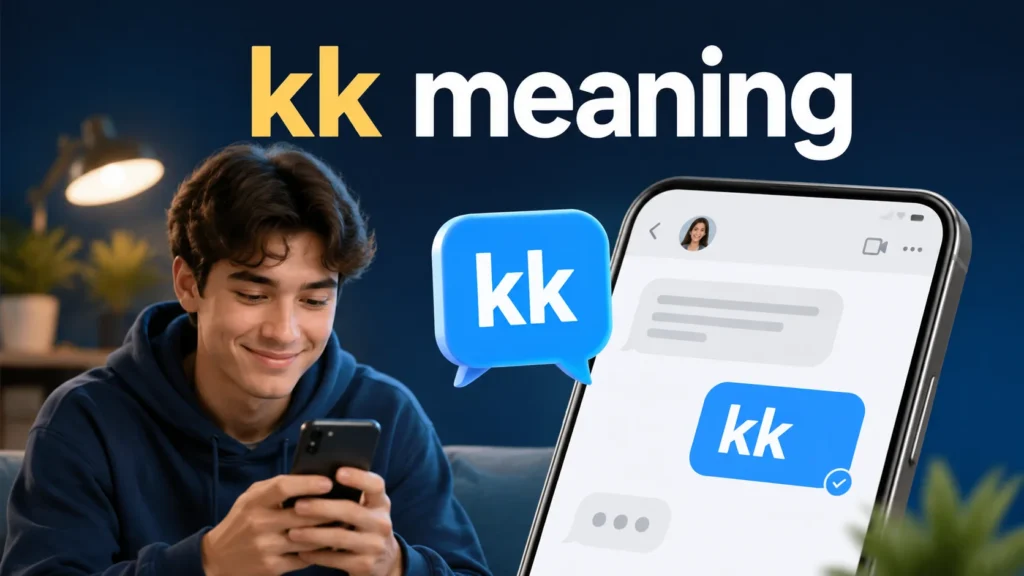
The phrase kk meaning is simple: “kk” is an informal way to say “okay” or “alright” in digital conversations.
People use it in texting, gaming chats, social media messages, and everyday online conversations when they want to quickly confirm something.
Although it looks small, the tone behind “kk” can change depending on the situation. A close friend saying “kk 😊” feels different from someone replying only “kk” after a serious discussion.
Understanding this small internet expression helps you communicate more naturally in modern digital spaces.
KK Meaning – Quick Explanation
Simple Definition of KK
KK means “okay” or “alright.”
It is commonly used to:
- Confirm that someone understands
- Accept information
- Show agreement
- End a short conversation
Examples:
“I’ll send the file tonight.”
“kk”
Meaning: “Okay, I understand.”
Another example:
“Meet me at 7.”
“kk see you.”
Meaning: “Okay, see you.”
The expression is casual and mostly used in friendly or informal conversations.
Origin & Background of KK
Where Did KK Come From?
The exact origin of “kk” is connected to early online communication, gaming communities, and internet chat culture.
Typing “okay” repeatedly during fast conversations could feel unnecessary, so people shortened it. Since “K” was already used as an abbreviation for “okay,” repeating it as “KK” became a more casual and recognizable version.
Cultural Influence
Online gaming helped popularize “kk” because players needed quick responses while focusing on gameplay.
Over time, the term moved from gaming chats into:
- Text messages
- Social media DMs
- Online forums
- Workplace messaging apps
Today, many people use it naturally without thinking about its internet history.
READ MORE: What Does MHM Mean in Texting? Meaning & Examples
Real-Life Conversations Using KK
WhatsApp Conversation
Person A:
Can you bring the documents tomorrow?
Person B:
kk, I’ll bring them.
Meaning: “Okay, I will.”
Instagram DM Conversation
Person A:
Your photos look amazing!
Person B:
kk thank you 😄
Meaning: A casual acknowledgment.
TikTok Comment Example
Person A:
The new update is actually better.
Person B:
kk I’ll try it.
Meaning: “Okay, I’ll check it out.”
Text Message Example
Person A:
Don’t forget to call me later.
Person B:
kk
Meaning: “Got it.”
Emotional & Psychological Meaning of KK
What Emotion Does KK Express?
The emotion behind “kk” depends heavily on the conversation.
It can express:
- Agreement
- Comfort
- Quick understanding
- Casual friendliness
A person writing “kk” usually wants to keep communication simple and efficient.
However, some people interpret a short “kk” as cold or uninterested because it contains very little emotional expression.
For example, if someone shares a personal problem and receives only “kk,” they may feel ignored.
In my experience observing everyday communication, small words often carry emotional meaning beyond their dictionary definition. The relationship between two people usually decides whether “kk” feels friendly or distant.
Usage in Different Contexts
Social Media
On platforms like Instagram, TikTok, and Snapchat, “kk” is usually a relaxed response.
Example:
“Your video is funny.”
“kk 😂”
It keeps the conversation light.
Friends and Relationships
Among friends, “kk” is usually harmless.
Close friends often use short replies because they already understand each other’s communication style.
Work and Professional Settings
Using “kk” at work depends on the environment.
In very casual workplaces, it may be acceptable.
In formal communication, “okay,” “understood,” or “confirmed” sounds more professional.
Casual vs Serious Tone
Casual:
“kk see you later”
Serious:
“Okay, I understand the changes.”
The second option feels more respectful in important conversations.
When NOT to Use KK
Professional Messages
Avoid using “kk” in:
- Formal emails
- Job applications
- Client communication
- Official requests
It may appear too casual.
Emotional Conversations
If someone is discussing feelings or a serious issue, “kk” may seem dismissive.
A better response would be:
“I understand.”
“I’m sorry you’re dealing with that.”
“Thanks for telling me.”
Cultural Sensitivity
Not everyone understands internet slang. Older generations or people unfamiliar with online language may not recognize the meaning.
Common Misunderstandings About KK
Is KK Rude?
Not always.
Many people use “kk” casually without negative intention.
However, the tone depends on the relationship and situation.
Does KK Mean Someone Is Angry?
Usually no.
A person may simply be busy and giving a quick response.
Is KK Different From OK?
The meanings are almost identical, but the style is different.
“Okay” sounds more neutral.
“KK” sounds more informal and internet-based.
KK Compared With Similar Expressions
| Expression | Meaning | Tone |
|---|---|---|
| KK | Okay / alright | Casual |
| OK | Agreement | Neutral |
| K | Okay | Sometimes feels cold |
| Got it | Understanding | Clear |
| Sure | Agreement | Friendly |
| Alright | Acceptance | Casual |
Key Insight
The meaning of “kk” is simple, but the emotional tone depends on the person using it, the situation, and the relationship between the speakers.
Variations of KK
1. kk
Basic form meaning okay.
2. kk thanks
A polite casual acknowledgment.
3. kk got it
Shows understanding.
4. kk sure
Shows agreement.
5. kkk
A longer version sometimes used playfully, although in some cultures it can have different meanings.
6. kk bye
A quick way to end a conversation.
7. kk 😊
Adds friendliness and warmth.
8. kk lol
Makes the reply more playful.
9. kk cool
Shows approval.
10. kk then
Means acceptance of a decision.
How to Respond When Someone Uses KK
Casual Replies
- “Cool”
- “Alright”
- “Thanks”
- “Perfect”
Funny Replies
- “Only two Ks? 😂”
- “The legendary kk response!”
- “Short and sweet.”
Mature Replies
- “Thanks for confirming.”
- “Great, appreciate it.”
- “Sounds good.”
Respectful Replies
- “Thank you, I appreciate it.”
- “Understood.”
- “I’ll keep that in mind.”
Regional & Cultural Usage
Western Culture
In many Western online communities, “kk” is a normal casual abbreviation.
Asian Culture
Internet users in many Asian countries also use short chat expressions frequently, especially among younger users.
Middle Eastern Culture
Young internet users may use “kk” in English-based online conversations, especially on social platforms.
Global Internet Usage
Because English dominates much online communication, “kk” has become globally recognizable.
Generational Differences
Gen Z often uses short digital expressions naturally.
Millennials may understand “kk” but sometimes prefer traditional words like “okay” or “sure.”
Is KK Safe for Kids?
Yes, “kk” is generally safe for children because it is simply a casual way of saying “okay.”
Parents should still teach children that online language changes depending on context.
A child should know when informal slang is appropriate and when respectful language is needed.
FAQs
What does kk mean in texting?
KK means “okay” or “alright” in texting. It is a casual way to confirm understanding or agreement.
Is kk rude?
KK is not automatically rude. Its meaning depends on the situation and tone.
What does kk mean on Snapchat?
On Snapchat, kk usually means “okay” or “got it.”
Is kk the same as OK?
Yes, both usually mean agreement, but kk is more informal.
Why do people type kk instead of okay?
People use kk because it is faster, shorter, and common in online communication.
What does kk mean from a girl or guy?
The meaning is usually simply “okay.” The person’s tone and relationship matter more than gender.
Conclusion
The kk meaning is simple: it is a casual digital way to say “okay” or “alright.”
Although it contains only two letters, it reflects how modern communication has become faster and more flexible. People use small expressions like “kk” to save time while staying connected.
The best way to understand it is not only by looking at the word itself but also by considering the conversation around it.
When used with friends and casual chats, “kk” is perfectly normal. In professional or emotional situations, choosing a clearer response can create better communication.
Understanding these small online expressions helps you communicate confidently in today’s digital world.