If you’ve recently seen “RLS” in a text message, TikTok comment, Snapchat streak, or Instagram DM, you’re not alone. A lot of people search for “rls meaning text” because the abbreviation can feel confusing without context.
Unlike obvious slang terms, RLS has multiple meanings depending on who’s using it, where it appears, and the tone of the conversation. In some chats, it’s playful. In others, it’s connected to gaming, relationships, or even emotional expression online.
Modern texting culture moves fast. Short abbreviations save time, create group identity, and sometimes make conversations feel more personal or exclusive. That’s exactly why terms like RLS spread so quickly across social media.
This guide breaks everything down in a simple, human way. You’ll learn what RLS means in text, how people use it emotionally, where it came from, when not to use it, and how to reply naturally without sounding awkward.
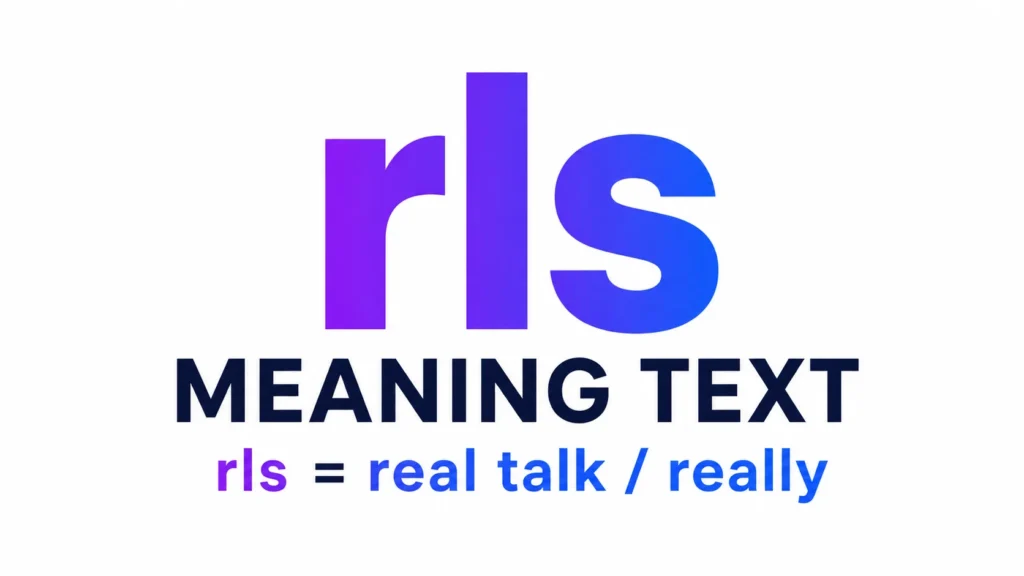
RLS Meaning Text – Quick Meaning
What Does RLS Mean in Text?
In texting and online slang, “RLS” most commonly stands for:
- “Real Life Stuff”
- “Real Life Situation”
- “Real Life Struggles”
People usually use it when talking about offline responsibilities, emotions, stress, or personal situations happening outside social media or gaming.
Simple Definition
RLS is shorthand for something happening in a person’s actual daily life rather than online activity.
Common Examples
“Sorry I disappeared yesterday, had some RLS going on.”
“Gaming later? I’m busy with RLS tonight.”
“She’s been distant because of RLS.”
Quick Breakdown
| Term | Meaning |
| RLS | Real Life Stuff |
| Tone | Casual, emotional, explanatory |
| Used In | Texts, gaming chats, social media |
| Emotion | Stress, honesty, responsibility |
Origin & Background
Where Did RLS Come From?
RLS started appearing more frequently in online communities during the rise of gaming forums, chat rooms, and instant messaging platforms.
People needed quick ways to explain why they were inactive or unavailable online. Instead of writing long explanations, they simply typed “RLS.”
Over time, the phrase moved beyond gaming spaces into regular texting culture.
Early Internet Culture
In older online communities, especially multiplayer gaming groups, people separated “online life” from “real life.”
Someone might say:
“AFK for RLS.”
That basically meant:
“I need to deal with something happening outside the internet.”
Social Media Influence
Platforms like TikTok, Instagram, and Snapchat accelerated the spread of shorthand communication.
Users started adopting abbreviations because:
- They save typing time
- They feel trendy
- They create social belonging
- They fit fast-paced conversations
Today, RLS is widely recognized among younger internet users and gaming communities.
How the Meaning Evolved
Originally, RLS mainly referred to responsibilities.
Now it can also imply:
- Emotional exhaustion
- Personal drama
- Mental overwhelm
- Family obligations
- Relationship issues
The phrase has become more emotionally layered than it used to be.
Real-Life Conversations
WhatsApp Conversation
Person A:
Hey, you vanished during the group call.
and
Person B:
Yeah sorry, some RLS came up at home.
Person A:
Everything okay?
More,
Person B:
Better now, just stressful.
Instagram DM Conversation
Person A:
Why haven’t you posted lately?
and,
Person B:
Honestly dealing with RLS rn.
Person A:
Take your time. Social media can wait.
TikTok Comment Section
Person A:
Where have you been? Missed your videos.
Person B:
RLS hit hard this week 😭
Person A:
Hope things get easier for you.
Text Message Conversation
Person A:
Movie tonight?
Person B:
Can’t. Too much RLS today.
Person A:
No worries, rest up.
Emotional & Psychological Meaning
What Emotion Does RLS Express?
RLS often carries emotional weight.
Even though it looks casual, people usually use it when they don’t want to fully explain a difficult situation.
It can express:
- Stress
- Burnout
- Emotional exhaustion
- Responsibility
- Personal pressure
Why People Use It
Many people prefer abbreviations because they soften emotional conversations.
Saying:
“I’m dealing with RLS”
can feel easier than explaining:
- family problems
- financial stress
- relationship conflict
- mental fatigue
It creates emotional distance while still communicating honesty.
What It Reveals About Modern Communication
Modern digital communication values speed and emotional efficiency.
People often want to:
- explain themselves quickly
- avoid oversharing
- maintain privacy
- stay socially connected
RLS perfectly fits that communication style.
Personal-Style Scenario
Imagine someone who usually replies instantly suddenly disappears for days.
Instead of writing a long emotional paragraph, they text:
“Sorry, RLS has been overwhelming lately.”
That single sentence communicates stress, honesty, and vulnerability without forcing a deep conversation.
That’s why abbreviations like RLS feel emotionally powerful despite being short.
Usage in Different Contexts
Social Media Usage
On social media, RLS usually explains absence or inactivity.
Examples include:
- taking breaks
- missing uploads
- replying late
- disappearing from group chats
Creators often use it casually with followers.
Friends & Relationships
Among friends, RLS can signal emotional exhaustion or personal responsibilities.
In relationships, it may indicate:
- needing space
- being mentally overwhelmed
- balancing life priorities
Tone matters a lot here.
Work & Professional Settings
RLS is generally too casual for formal workplaces.
You might see it in:
- coworker chats
- gaming industry communities
- startup Slack conversations
But not in official emails or professional reports.
Casual vs Serious Tone
| Tone | Meaning |
| Casual | Busy with life |
| Emotional | Struggling personally |
| Serious | Facing difficult circumstances |
| Humorous | Light excuse for disappearing |
When NOT to Use It
Formal Professional Communication
Avoid using RLS in:
- job applications
- client emails
- academic writing
- formal workplace communication
It can appear vague or unprofessional.
Sensitive Conversations
Sometimes using “RLS” instead of explaining emotions can feel dismissive.
For example, if someone is asking sincerely about your wellbeing, the abbreviation may sound emotionally distant.
Cultural Sensitivity
Not everyone understands internet slang.
Older generations or less online communities may misunderstand the phrase entirely.
Situations That May Cause Confusion
RLS also has medical meanings in some contexts, especially referring to Restless Legs Syndrome.
Without context, people may misinterpret your message.
Common Misunderstandings
Confusing It With Medical Terms
One major misunderstanding is assuming RLS always means a health condition.
In medical conversations, RLS commonly refers to:
- Restless Legs Syndrome
But in texting culture, it usually means “Real Life Stuff.”
Tone Confusion
Some people use RLS casually.
Others use it during emotionally difficult moments.
That difference can create misunderstandings.
Literal vs Figurative Meaning
Sometimes RLS refers to actual responsibilities.
Other times it’s simply a vague excuse to avoid conversation.
Context changes everything.
Comparison Table
| Expression | Meaning | Tone |
| RLS | Real Life Stuff | Emotional/casual |
| AFK | Away From Keyboard | Neutral |
| BRB | Be Right Back | Temporary |
| IRL | In Real Life | Descriptive |
| Busy rn | Busy right now | Direct |
| Ghosting | Ignoring communication | Negative |
| Offline mode | Taking a break socially | Relaxed |
Key Insight
RLS feels more emotionally layered than many internet abbreviations. It doesn’t just explain absence — it often hints at stress, pressure, or emotional fatigue happening behind the screen.
Variations / Types
RLS rn
Means someone is currently overwhelmed with real-life responsibilities.
Heavy RLS
Used humorously to describe intense stress or adult responsibilities.
RLS hit hard
Suggests emotional or practical struggles became overwhelming.
Too much RLS
Means life feels chaotic or mentally exhausting.
Dealing with RLS
A softer way to explain personal absence or stress.
RLS problems
Refers to personal challenges happening offline.
RLS mode
Used jokingly when someone becomes busy with adult responsibilities.
Got caught in RLS
Implies life unexpectedly became stressful.
RLS break
A pause from social media, gaming, or online communication.
RLS overload
Describes feeling mentally drained from responsibilities.
How to Respond When Someone Uses It
Casual Replies
- “Hope things calm down soon.”
- “No worries, take your time.”
- “Real life comes first.”
Funny Replies
- “RLS really attacks at the worst times 😭”
- “Adulting strikes again.”
- “The offline world is undefeated.”
Mature Replies
- “I understand. Take care of yourself.”
- “Hope everything works out okay.”
- “Thanks for letting me know.”
Respectful Replies
- “Sending good energy your way.”
- “No pressure to reply quickly.”
- “Take all the time you need.”
Regional & Cultural Usage
Western Culture
In Western online culture, RLS is commonly tied to work stress, burnout, and balancing online life with responsibilities.
Asian Culture
In many Asian communities, indirect communication is valued. RLS can help people express stress politely without oversharing personal struggles.
Middle Eastern Culture
In Middle Eastern communication styles, people often value emotional warmth and social connection. Using RLS casually may sometimes feel emotionally incomplete unless followed with reassurance.
Global Internet Usage
Globally, RLS is most common among:
- gamers
- Gen Z users
- online creators
- Discord communities
- texting-heavy friend groups
Generational Differences
| Generation | Usage Style |
| Gen Z | Frequent shorthand usage |
| Millennials | Understand but use less often |
| Gen X | May find it unfamiliar |
| Older adults | Often misunderstand abbreviation culture |
Is It Safe for Kids?
Understanding Context Matters
RLS itself is generally safe and harmless.
It does not contain offensive language or inappropriate content.
However, parents should still understand the emotional context behind slang use. Sometimes kids use abbreviations to hide stress, social pressure, or emotional struggles in ways adults may not immediately notice.
Open communication matters more than policing slang.
FAQs
What does RLS mean in text messages?
RLS usually means “Real Life Stuff” in text messages. People use it to explain being busy, stressed, or emotionally overwhelmed offline.
Is RLS positive or negative?
It depends on context. Sometimes it’s casual and harmless. Other times it suggests emotional stress or difficult personal situations.
Does RLS mean the same thing on TikTok?
Mostly yes. On TikTok and social media, RLS usually refers to offline responsibilities or emotional struggles affecting online activity.
Is RLS rude to use?
No, but it can feel vague in serious conversations. Tone and context matter.
What is the difference between RLS and IRL?
IRL means “In Real Life,” while RLS usually means “Real Life Stuff” or personal responsibilities.
Can adults use RLS?
Absolutely. Although younger users popularized it online, many adults use it casually in texts and digital conversations.
Why do people use abbreviations like RLS?
People use abbreviations for speed, convenience, emotional softness, and social identity in modern digital communication.
Conclusion
The meaning of RLS in text goes far beyond a simple abbreviation. At its core, it reflects something deeply human: the balance between online life and real-world emotions, responsibilities, and struggles.
Whether someone uses RLS casually after missing a group chat or emotionally during a stressful moment, the phrase carries honesty in a compact form.
Understanding internet slang today isn’t just about decoding words. It’s about understanding how people communicate feelings, pressure, exhaustion, and connection in fast-moving digital spaces.
Now when you see “RLS” in a text, DM, or comment section, you’ll understand not only what it means — but also the emotion and culture behind it.