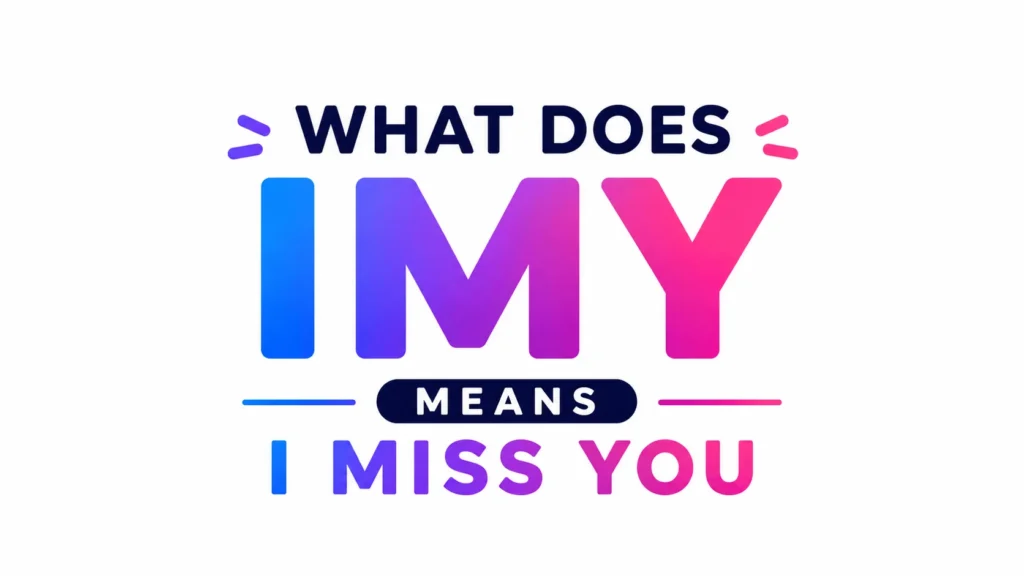
If someone has sent you “IMY” in a text, DM, or comment, they are usually saying something warm and emotional: “I miss you.”
It is short, soft, and personal. That is why people often search what does imy mean when they see it for the first time. The letters look casual, yet the feeling behind them can be surprisingly deep.
In modern texting, people do not always write long emotional messages. Sometimes, three letters can carry the same feeling as a full sentence. “IMY” is one of those small expressions that can make a conversation feel more intimate.
It may come from a friend, a romantic partner, a family member, or someone you have not spoken to in a while. Depending on the relationship, it can sound sweet, sad, flirty, nostalgic, or even awkward.
This guide explains what IMY means, where it came from, how people use it, how to respond, and when it may not be the best choice.
What Does IMY Mean – Quick Meaning
IMY means “I miss you.”
It is an abbreviation commonly used in texting, social media, online chats, and direct messages. People use it when they want to express that they feel someone’s absence.
Simple Definition
IMY is a short way to say:
- I miss you.
- I wish you were here.
- I feel your absence.
- I have been thinking about you.
- Things feel different without you.
It is usually emotional, but the depth depends on the situation.
A close friend may use it casually. A romantic partner may use it lovingly. An ex may use it with regret or nostalgia.
Short Examples
“IMY so much.”
“Just saw our old pictures. IMY.”
“Come back soon, IMY already.”
In each example, the message feels short, but the emotion is clear.
Origin & Background
IMY became popular because texting changed the way people communicate. When SMS messages had character limits, people shortened common phrases to save time and space.
Words like “LOL,” “BRB,” “TTYL,” and “ILY” became normal. IMY followed the same pattern.
Where It Came From
IMY most likely grew from early internet chats, SMS culture, and instant messaging. People wanted quick ways to express common emotions without typing full sentences every time.
“I miss you” is a phrase people use often, especially in long-distance friendships, family relationships, and romantic situations. Naturally, it became shortened to “IMY.”
Cultural Influence
The phrase became stronger with the rise of online relationships. People now maintain friendships and romance across cities, countries, and time zones.
Because of that, missing someone has become a common digital emotion. IMY fits perfectly into this world because it feels quick but still affectionate.
Social Media Impact
Instagram, TikTok, Snapchat, and WhatsApp helped IMY become even more common. People use it in captions, comments, replies, and private messages.
For example, someone may post an old group photo and write:
“Best summer ever. IMY guys.”
That kind of usage makes IMY feel nostalgic and emotionally casual at the same time.
How the Meaning Evolved
At first, IMY simply meant “I miss you.” Over time, the tone became more flexible.
Now it can mean:
- “I miss talking to you.”
- “I miss our friendship.”
- “I miss how things used to be.”
- “I wish we were close again.”
- “I miss your energy.”
This is why context matters. IMY is small, but it can carry different emotional layers.
Real-Life Conversations
IMY feels most natural when seen inside real conversations. The meaning changes depending on who sends it and why.
WhatsApp Conversation
Person A:
You have been so quiet lately. Everything okay?
Person B:
Yeah, just busy with work and family stuff.
Person A:
I get it. Still, IMY. Our late-night talks were my therapy.
Person B:
IMY too. Let’s talk tonight?
This sounds caring and friendly. It shows emotional closeness without being too dramatic.
Instagram DM Conversation
Person A:
Your beach pictures made me remember our trip.
And,
Person B:
That trip was honestly perfect.
Person A:
It really was. IMY and our crazy travel plans.
Person B:
Same. We need another trip soon.
Here, IMY carries nostalgia. It is not only about missing the person but also missing shared memories.
TikTok Comment Conversation
Person A:
This song reminds me of 2020 friendships.
Person B:
Same. I lost touch with so many people.
Person A:
Send them a text. Sometimes “IMY” is enough.
Person B:
You are right. I might actually do it.
In TikTok comments, IMY often appears in emotional or nostalgic discussions.
Text Message Conversation
Person A:
I know we said we needed space, but I hope you are okay.
Person B:
I am okay. Just processing everything.
Person A:
No pressure to reply fast. I just wanted to say IMY.
Person B:
I miss you too, but I think we still need time.
This example shows that IMY can be sensitive. It may open emotional doors, so it should be used carefully.
Emotional & Psychological Meaning
IMY is more than a texting abbreviation. It expresses attachment, memory, longing, and emotional connection.
People use it when they want to feel closer to someone without writing a long message.
What Emotion It Expresses
IMY usually expresses:
- Affection
- Loneliness
- Nostalgia
- Emotional closeness
- Desire for reconnection
- Romantic longing
- Friendship warmth
It can be light or serious. The tone depends on the relationship and timing.
Why People Use It
Many people struggle to say emotional things directly. Writing “I miss you” can feel too exposed, especially if the relationship is complicated.
IMY feels softer. It gives the sender emotional safety because it is brief and casual.
Someone may use IMY when they want to be honest but do not want to sound too intense.
What It Reveals About Modern Communication
Modern communication is fast, but emotions are still human. People may use abbreviations, emojis, and short replies, yet they still want to feel remembered.
IMY shows how digital language can carry real emotion. A small message can remind someone that they matter.
Personal-Style Scenario
Imagine two friends who used to talk every day but slowly became distant because of studies, work, or life changes. One of them sees an old photo and sends, “IMY.”
That message may feel small, but it can restart a friendship. Sometimes, people do not need a perfect paragraph. They just need a sign that the bond still exists.
Usage in Different Contexts
IMY can appear in many places, but its meaning changes with context.
Social Media
On social media, IMY is often used in captions, comments, and stories.
Examples:
“IMY summer days.”
“IMY bestie.”
“Old memories hit different. IMY.”
In this context, it may be emotional, nostalgic, or playful.
Friends & Relationships
Between friends, IMY often sounds warm and casual.
A friend might say:
“IMY, call me soon.”
In romantic relationships, it feels more intimate.
A partner might write:
“Can’t sleep. IMY.”
The same abbreviation becomes deeper because the relationship is different.
Work / Professional Settings
IMY is usually not suitable for professional communication.
For example, sending “IMY” to a coworker may feel too personal unless you are close friends outside work.
In workplace settings, it is better to say:
“It was great working with you.”
“Looking forward to seeing the team again.”
“We missed having you in the meeting.”
These sound more respectful and professional.
Casual vs Serious Tone
Casual IMY:
“IMY bro, come online.”
Serious IMY:
“I know things changed, but IMY.”
The first feels light. The second feels emotional and possibly vulnerable.
When NOT to Use It
Although IMY is common, it does not fit every situation.
Inappropriate Contexts
Avoid using IMY:
- In formal emails
- With someone you barely know
- During professional conversations
- After someone has asked for space
- When it may seem emotionally manipulative
- In sensitive situations without context
A short message can still create pressure if the timing is wrong.
Cultural Sensitivity
In some cultures, direct emotional language is normal. In others, it may feel too intimate.
Before using IMY, think about your relationship with the person. Also, consider whether they are comfortable with affectionate texting.
Situations Where It May Cause Misunderstanding
IMY can be misunderstood if sent to an ex, a coworker, or someone who thinks you are flirting.
For example, if you send “IMY” to an old friend who once had feelings for you, they may read it romantically.
To avoid confusion, add context:
“IMY as a friend. Hope you are doing well.”
“IMY our old group hangouts.”
That small detail makes your intention clearer.
Common Misunderstandings
IMY is simple, but people still misunderstand it because tone is hard to read in text.
What People Get Wrong
Some people think IMY always means romantic interest. That is not true.
It can be romantic, but it can also be friendly, family-related, nostalgic, or casual.
A cousin, classmate, best friend, or sibling can say IMY without any romantic meaning.
Tone Confusion
The tone depends on punctuation, emojis, and context.
“IMY 😂” feels playful.
“IMY.” feels serious.
And,
“IMY 🥺” feels emotional.
“IMY 😘” may feel romantic or flirty.
Because of this, the same word can create different feelings.
Literal vs Figurative Meaning
Sometimes IMY does not mean the person literally wants to meet you. It may mean they miss a version of the relationship.
For example:
“IMY” may mean “I miss how close we were.”
It may also mean “I miss the old days.”
So, when someone sends IMY, look at the bigger emotional context.
Comparison Table
| Expression | Meaning | Tone | Common Use |
|---|---|---|---|
| IMY | I miss you | Emotional, sweet | Friends, partners, family |
| ILY | I love you | Deep, affectionate | Romantic or close bonds |
| IMU | I miss you | Casual variation | Texting and DMs |
| Miss u | Miss you | Soft, casual | Everyday chats |
| WYD | What are you doing? | Casual | Starting conversation |
| HBU | How about you? | Friendly | Keeping chat going |
| TTYL | Talk to you later | Casual ending | Text conversations |
| IDK | I don’t know | Neutral | Casual replies |
| IDC | I don’t care | Dismissive | Negative or blunt tone |
| IHY | I hate you | Harsh or joking | Risky without context |
Key Insight
IMY is emotional but not always romantic. It works best when there is already some warmth, trust, or shared history between two people.
Variations / Types
IMY has several variations. Some are sweet, some are casual, and some feel more intense.
IMU
Meaning: I miss you.
It is another short version of IMY, often used in casual texting.
Miss U
Meaning: Miss you.
This feels soft, simple, and slightly more personal than IMY.
I Miss U
Meaning: I miss you.
It is still casual, but it feels clearer and warmer.
IMYSM
Meaning: I miss you so much.
This is stronger and more emotional than IMY.
IMY2
Meaning: I miss you too.
People use this as a quick reply when someone says IMY first.
IMY Already
Meaning: I already miss you.
This is often used after saying goodbye or ending a call.
IMY Bestie
Meaning: I miss you, best friend.
This sounds friendly, playful, and affectionate.
IMY Babe
Meaning: I miss you, babe.
This is romantic and usually used between partners.
IMY Guys
Meaning: I miss you all.
This is common in group friendships or family chats.
Lowkey IMY
Meaning: I secretly or quietly miss you.
This sounds casual but can carry emotional tension.
How to Respond When Someone Uses It
Your response depends on how you feel and who sent it.
Casual Replies
“IMY too.”
“Same here.”
“Miss you more.”
“We need to catch up soon.”
“Come online later.”
Funny Replies
“IMY too, but mostly your snacks.”
“Finally, someone admits I am unforgettable.”
“IMY more than my sleep schedule misses peace.”
“Same. Our chaos had balance.”
Mature Replies
“I miss you too. Let’s plan a proper catch-up.”
“That means a lot. I have missed you as well.”
“I appreciate you saying that. Life has been busy, but I care.”
“I miss you too, and I hope we can reconnect slowly.”
Respectful Replies
“I appreciate that. I hope you are doing well.”
“That is kind of you to say.”
“I miss the good memories too.”
“Thank you for being honest.”
If you do not feel the same way, be gentle. You can acknowledge the message without forcing fake emotion.
Regional & Cultural Usage
IMY is understood globally, but the emotional meaning may shift across cultures.
Western Culture
In Western texting culture, IMY is common among friends, couples, and family members. People often use it openly without much hesitation.
It may sound affectionate, but it does not always feel overly serious.
Asian Culture
In many Asian cultures, people may express emotions more indirectly. Because of that, IMY can feel meaningful even if it is short.
A person who does not usually express feelings may use IMY as a gentle way to show attachment.
Middle Eastern Culture
In Middle Eastern communication, emotional warmth is often valued in close relationships. IMY may be used between friends, cousins, siblings, or partners.
However, context matters, especially between men and women, because affectionate language may be interpreted differently depending on family, culture, or personal boundaries.
Global Internet Usage
Globally, IMY is part of internet language. Young people from different countries understand it through social media, music captions, memes, and online friendships.
It has become a shared emotional shortcut.
Generational Differences
Gen Z often uses IMY casually with emojis, memes, and lowercase texting.
Millennials may use it more directly, especially with close friends or romantic partners.
Older generations may understand “I miss you” better than “IMY,” so spelling it out may be clearer.
Is It Safe for Kids?
IMY is generally safe for kids because it simply means “I miss you.”
However, parents should teach children that emotional messages should be used with trusted people. Context matters online, especially when chatting with strangers.
For younger children, it is better to explain that IMY is a kind phrase, but they should only use it with people they know and feel safe talking to.
FAQs
What does IMY mean in texting?
IMY means “I miss you.” It is used to express that someone feels your absence or wishes they could talk to or see you.
Is IMY romantic?
IMY can be romantic, but it is not always romantic. Friends, family members, and close classmates can also use it warmly.
What does IMY mean from a girl?
From a girl, IMY usually means she misses you. Depending on your relationship, it may be friendly, romantic, nostalgic, or emotionally honest.
What does IMY mean from a guy?
From a guy, IMY means “I miss you.” It may show affection, emotional vulnerability, friendship, or romantic interest depending on the situation.
How do I reply to IMY?
You can reply with “IMY too,” “Miss you more,” “Same here,” or “That means a lot.” Choose a reply that matches your real feelings.
Is IMY the same as ILY?
No. IMY means “I miss you,” while ILY means “I love you.” IMY expresses absence, while ILY expresses love.
Can I use IMY with friends?
Yes, IMY is very common between friends. It sounds natural when you genuinely miss talking, hanging out, or spending time together.
Conclusion
IMY may look like a tiny abbreviation, but it carries a real human feeling. It means “I miss you,” and people use it when they want to express closeness, longing, affection, or nostalgia without writing a long message.
The beauty of IMY is its simplicity. It can fit into a friendly chat, a romantic message, a family conversation, or a soft moment of reconnection.
Still, context matters. Before using it, think about your relationship with the person and the emotion you want to send. Used well, IMY can make someone feel remembered, valued, and emotionally close.
Sometimes, three letters are enough to say what the heart has been holding quietly.