Scrolling through text messages, social media comments, or instant chats, you may have stumbled across the letters “WB” and wondered what it means. Is it a typo, a secret code, or just a casual shorthand? In today’s fast-paced digital conversations, abbreviations like WB have become a language of their own—compact, convenient, and culturally loaded.
People often search for “what does WB mean in text” because it appears in replies, group chats, or DMs where context is minimal. Without clarity, a simple “WB” can confuse recipients or make conversations feel awkward. Understanding its meaning not only improves communication but also prevents misinterpretation, helping you respond confidently in any chat setting.
Let’s break down WB in a way that’s beginner-friendly yet insightful, so you can recognize it in everyday digital exchanges and even use it naturally yourself.
WB – Quick Meaning
Clear Definition
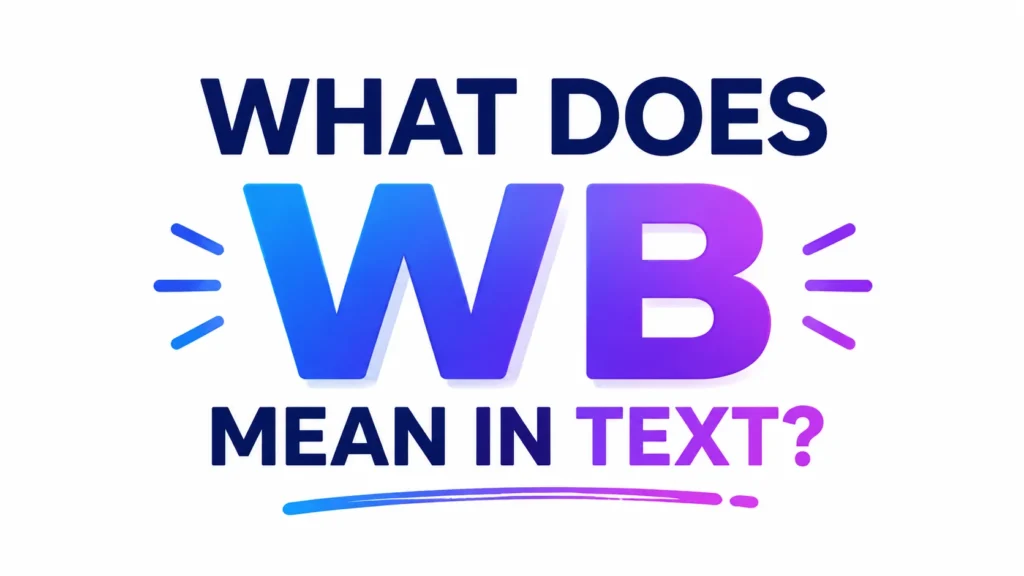
In texting and online messaging, WB stands for “Welcome Back.” It’s used to greet someone who has returned to a conversation, chat group, or online platform after being away for some time.
Key points about WB:
- Short, informal, and friendly.
- Common in chats, social media platforms, and gaming communities.
- Expresses warmth and acknowledgment without lengthy text.
Examples in conversation:
- “WB! How was your vacation?”
- “Hey, WB to the group chat!”
- “WB, we missed you yesterday!”
Why WB Works
WB is efficient, emotional, and context-sensitive. Instead of typing a full “Welcome back,” you acknowledge someone quickly and warmly. This is especially useful in fast-moving conversations or when texting on mobile.
Origin & Background
Where It Came From
The abbreviation WB has roots in early internet culture, especially in chatrooms and instant messaging services like ICQ, MSN Messenger, and AOL in the late 1990s and early 2000s. Users wanted quick ways to express common greetings without slowing down the conversation.
Cultural Influence
Over time, WB spread to social media platforms, online forums, and mobile messaging apps. Its popularity grew because it was concise and universally understood in online communities.
Social Media Impact
Platforms like WhatsApp, Instagram, and TikTok have reinforced WB usage. In live streams, comment threads, and group chats, WB signals recognition and inclusion without needing a long text.
Evolution of Meaning
While WB predominantly means “Welcome Back,” it occasionally has other context-specific uses, such as in gaming or fan communities, but these are rare compared to its social messaging meaning. In texting, the usage has remained remarkably consistent.
Real-Life Conversations
WhatsApp Chat
Person A: “Hey, long time no see!”
Person B: “WB! How’s everything going?”
Instagram DM
Person A: “You’ve been MIA from my stories 😅”
Person B: “WB! Just been busy with work.”
TikTok Comment
Commenter 1: “You’re back posting! 😍”
Commenter 2: “WB! Missed your content!”
Text Message
Friend A: “Where have you been?!”
Friend B: “WB, finally free from exams!”
These examples show that WB is casual, friendly, and often paired with questions or expressions of interest.
Emotional & Psychological Meaning
What Emotion WB Expresses
WB conveys warmth, acknowledgment, and inclusivity. It’s a subtle way of saying, “I noticed you’re back, and I’m glad.”
Why People Use It
In fast digital conversations, WB shows attention without overwhelming the chat. It’s a psychological signal of recognition and social connection.
What It Reveals About Modern Communication
The prevalence of WB highlights how digital communication favors brevity, emotional nuance, and instant acknowledgment. It reflects a culture where people want to maintain relationships efficiently.
Scenario: You join a group chat after a week off. A simple “WB!” instantly makes you feel noticed, bridging the gap between absence and presence with a few letters.
Usage in Different Contexts
Social Media
WB is perfect for quick comments and live interactions. Example: replying to a friend returning to Instagram stories.
Friends & Relationships
Use WB to signal casual warmth or rekindle conversation. It’s informal but welcoming.
Work / Professional Settings
Occasionally, WB can appear in professional group chats but should remain friendly and light. Example: “WB! Hope the client meeting went well.”
Casual vs Serious Tone
- Casual: “WB! Let’s catch up soon.”
- Serious: Avoid using WB in sensitive contexts; opt for full greetings if needed.
When NOT to Use It
Inappropriate Contexts
Avoid WB in serious emails, formal announcements, or official communication. It can seem too casual.
Cultural Sensitivity
While widely understood in Western and global online cultures, WB may confuse those unfamiliar with texting slang.
Situations of Misunderstanding
Using WB for someone who just left due to illness, conflict, or sensitive matters might seem dismissive. Context awareness is key.
Common Misunderstandings
What People Get Wrong
Some think WB is a typo for “Web” or “Well-Being.”
Tone Confusion
The brevity of WB can sometimes seem abrupt or sarcastic without emojis or context.
Literal vs Figurative Meaning
WB rarely carries literal meaning beyond “Welcome Back,” but misreading tone can lead to overthinking.
Comparison Table
| Expression | Meaning | Tone | Usage Example |
|---|---|---|---|
| WB | Welcome Back | Friendly / Casual | “WB! Missed you!” |
| LOL | Laughing Out Loud | Humorous / Casual | “LOL that was funny” |
| BRB | Be Right Back | Neutral / Casual | “BRB, grabbing coffee” |
| WBU | What About You | Neutral / Conversational | “I’m fine, WBU?” |
| Welcome | Full form | Formal / Polite | “Welcome back to the team” |
Key Insight
WB works best when you want a quick, friendly acknowledgment. Unlike formal greetings, it emphasizes efficiency, connection, and warmth in everyday chats.
Variations / Types
Common WB Variations
- WB! – Standard greeting; simple acknowledgment.
- Wb, dude! – Casual, friendly tone.
- WB 😊 – Adds warmth via emoji.
- wb everyone – Group-friendly greeting.
- WB, friend! – Personal touch in 1:1 chats.
- WB @username – Mentions specific person in social media.
- wb buddy – Informal, playful.
- WB fam – Group or friend circle context.
- WB!! – Emphasized excitement.
- wb team – Professional yet informal acknowledgment.
How to Respond When Someone Uses It
Casual Replies
- “Thanks! Missed you too 😄”
- “WB! How’s it going?”
Funny Replies
- “WB! You finally escaped the void?”
- “Look who’s back 😎”
Mature Replies
- “WB. Hope you’ve been well.”
- “Thank you. It’s good to reconnect.”
Respectful Replies
- “WB, glad to have you back with us.”
- “Welcome back, hope everything’s okay.”
Regional & Cultural Usage
Western Culture
WB is widely recognized, casual, and friendly.
Asian Culture
Common among younger users online; slightly less used in professional messaging.
Middle Eastern Culture
WB may appear in informal messaging; official greetings usually avoid abbreviations.
Global Internet Usage
Globally, WB transcends borders among internet-savvy users, especially in English-language platforms.
Generational Differences
- Gen Z: Frequent use with emojis and casual tones.
- Millennials: Understand WB, often use slightly more formal acknowledgments.
Is It Safe for Kids?
Yes, WB is safe for children and teens. It’s non-offensive and simply communicates acknowledgment. Parents should ensure children understand context, as tone can vary.
FAQs
What does WB mean in text?
WB stands for “Welcome Back”, used to greet someone returning to a chat, group, or platform.
Can WB be used in professional settings?
Yes, in informal professional chats, but avoid in formal emails or serious communications.
Is WB the same as “Welcome”?
Not exactly. WB is casual and abbreviated; “Welcome” is formal and full-length.
Does WB have other meanings?
Occasionally, WB can refer to initials, gaming terms, or usernames, but in texting, it primarily means “Welcome Back.”
How do I reply to WB?
You can reply casually, humorously, or respectfully depending on context. Example: “WB! Great to see you!”
Is WB universal?
Mostly among English-speaking online communities, but it’s recognized globally by internet users.
Can WB be misinterpreted?
Yes, if context is missing, WB can seem abrupt or confusing, especially to non-native speakers.
Conclusion
Understanding WB unlocks a small but meaningful piece of modern communication. This simple abbreviation shows warmth, recognition, and social connection in a way full sentences can’t always match. Using WB thoughtfully can make digital conversations smoother, more inclusive, and genuinely friendly. Next time you see WB in a chat, you can respond confidently, knowing you’re part of a language that’s casual, emotional, and human at its core.