If you spend time on TikTok, Instagram, X, Tumblr, Reddit, or even modern dating apps, chances are you’ve seen the term “WLW” pop up in captions, bios, hashtags, or conversations. For many people, the first reaction is simple confusion: What does WLW mean, and why is everyone using it?
The term has become increasingly common in online culture, especially among younger generations and LGBTQ+ communities. But despite how often it appears, many people still misunderstand its meaning, emotional context, and social significance.
Some assume it refers only to dating. Others think it’s just another random internet abbreviation. In reality, WLW carries much deeper cultural and emotional meaning.
Understanding the phrase helps people communicate more respectfully, connect with online communities, and better understand modern identity-based conversations.
In this guide, you’ll learn exactly what WLW means, where it came from, how people use it in real conversations, and why it matters in today’s digital culture.
WLW – Quick Meaning
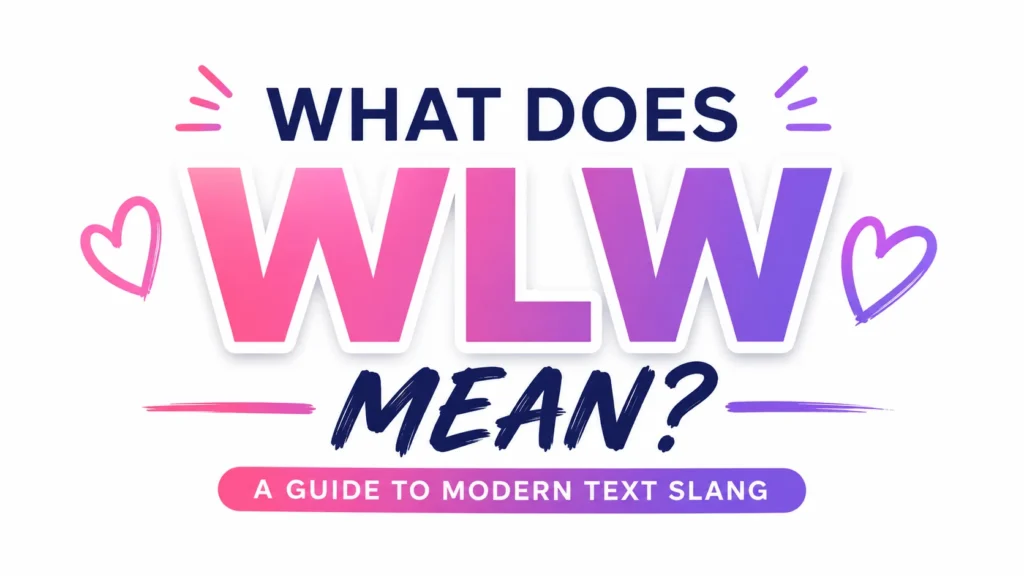
What Does WLW Mean?
WLW stands for “Women Loving Women.”
It is commonly used to describe women who are emotionally, romantically, or physically attracted to other women.
The term is broad and inclusive. It may include:
- Lesbian women
- Bisexual women
- Pansexual women
- Queer women
- Women exploring same-gender attraction
Rather than focusing on strict labels, WLW often emphasizes shared experiences and emotional connection.
Simple Definition
WLW is an umbrella term used for women who love, date, or are attracted to women.
Common Places You’ll See It
- TikTok captions
- Instagram bios
- LGBTQ+ discussions
- Fan communities
- Dating app profiles
- Relationship memes
- Twitter/X conversations
Quick Example Quotes
“This movie has strong WLW energy.”
“I need more WLW recommendations on Netflix.”
“She writes the cutest WLW romance stories.”
These examples show how naturally the phrase appears in online culture today.
Origin & Background
Where Did WLW Come From?
The phrase developed within LGBTQ+ communities as a more inclusive alternative to labels that sometimes felt too narrow.
For years, terms like “lesbian” were commonly used to describe women attracted to women. But many people wanted language that felt broader, softer, and more flexible.
WLW became useful because it includes women with different identities while still acknowledging shared attraction and emotional experiences.
The Influence of Internet Culture
Social media accelerated the popularity of WLW dramatically.
Platforms like TikTok and Tumblr helped normalize identity-related abbreviations because shorter terms work better online. Instead of writing long explanations, people could simply use “WLW.”
Hashtags also played a major role:
- #WLW
- #WLWBooks
- #WLWMovies
- #WLWCouple
- #WLWArt
Over time, the term became recognizable far beyond LGBTQ+ spaces.
How the Meaning Evolved
Originally, WLW was mostly used inside queer communities.
Today, it’s widely understood online and often used casually in entertainment discussions, fandom spaces, and pop culture conversations.
For example, someone may describe a TV show as “WLW-coded” even if the relationship is subtle rather than officially confirmed.
That shift reflects how internet culture constantly reshapes language.
Real-Life Conversations
WhatsApp Conversation
Person A:
Did you finish that series I recommended?
Person B:
YES. The WLW storyline completely destroyed me emotionally.
Person A:
Same. I cried during the finale.
Instagram DM
Person A:
Your playlist gives major WLW vibes.
Person B:
That’s honestly the best compliment ever.
TikTok Comments
Person A:
Why are all WLW edits so painfully beautiful?
Person B:
Because heartbreak and longing are basically an art form online now.
Text Message
Person A:
I think I might like girls too.
Person B:
That’s okay. You don’t need to figure everything out immediately.
Person A:
Thanks. Seeing WLW creators online has honestly helped me feel less alone.
These conversations reflect how emotionally supportive and identity-driven the term can feel in real life.
Emotional & Psychological Meaning
Why People Use WLW
WLW is not just shorthand.
For many people, it creates a sense of belonging and emotional safety.
Some individuals feel pressured by labels or worry about being judged. WLW offers softer language that feels less restrictive.
It allows people to describe attraction without immediately placing themselves into one rigid category.
What Emotion Does It Express?
Depending on context, WLW can express:
- Affection
- Emotional intimacy
- Identity
- Community
- Comfort
- Pride
- Vulnerability
In many online spaces, using WLW signals acceptance and inclusivity.
What It Reveals About Modern Communication
Modern internet language often prioritizes emotional nuance over rigid definitions.
Terms like WLW reflect a generation that values personal identity, flexibility, and emotional honesty.
People increasingly want language that feels human rather than boxed-in.
Personal-Style Scenario
A college student scrolling TikTok late at night might discover creators discussing WLW relationships openly and confidently. For someone questioning their identity, that visibility can feel deeply comforting.
Sometimes a simple abbreviation becomes more than slang. It becomes reassurance that other people understand your experience.
Usage in Different Contexts
Social Media
WLW appears heavily across social platforms.
Examples include:
- “Best WLW movies?”
- “WLW book recommendations”
- “Cute WLW couple content”
- “My WLW awakening started with this show”
It’s especially common in fandoms and entertainment communities.
Friends & Relationships
Among friends, WLW can be used casually and affectionately.
For example:
“You two are literally the cutest WLW couple.”
Or:
“I only trust WLW music recommendations.”
In these settings, the tone is usually warm and community-oriented.
Work or Professional Settings
WLW is generally less common in formal workplaces unless discussing diversity, representation, or LGBTQ+ topics professionally.
Using it casually in corporate communication may confuse people unfamiliar with internet culture.
Casual vs Serious Tone
The tone depends entirely on context.
Casual:
“This café feels like a WLW rom-com scene.”
Serious:
“WLW representation in media still matters deeply.”
Understanding tone helps avoid awkward misunderstandings.
When NOT to Use It
In Professional Formality
Avoid using WLW in highly formal business communication unless directly relevant.
For example, using internet shorthand in legal documents or workplace reports may appear unprofessional.
When You Don’t Understand the Context
Some people use identity-related terms casually without understanding their significance.
If you’re unsure what someone means, it’s better to ask respectfully rather than make assumptions.
Cultural Sensitivity Matters
In some cultures or regions, LGBTQ+ discussions remain socially sensitive.
That doesn’t mean WLW is wrong to use, but awareness of context matters.
Avoid Mocking Usage
Never use WLW sarcastically to stereotype women, relationships, or queer communities.
Respectful intent makes a huge difference in modern communication.
Common Misunderstandings
Confusing WLW With “Lesbian”
Not all WLW individuals identify as lesbians.
Some may identify as bisexual, queer, pansexual, or questioning.
WLW is broader than one single identity label.
Assuming It’s Always Romantic
WLW often refers to attraction or identity, but sometimes people use it simply to describe themes, aesthetics, or emotional energy in media.
Thinking It’s Only Online Slang
Although internet culture popularized it, WLW reflects real communities and experiences.
For many people, it carries personal emotional meaning.
Misreading Tone
Someone using WLW casually is not automatically making a political statement.
Often, it’s simply descriptive.
Comparison Table
| Term | Meaning | Similarity to WLW | Main Difference |
|---|---|---|---|
| Lesbian | Woman attracted to women | Closely related | More identity-specific |
| Sapphic | Women attracted to women | Very similar | More poetic/cultural tone |
| Queer | Broad LGBTQ+ identity | Overlaps sometimes | Wider umbrella term |
| MLM | Men loving men | Parallel term | Refers to male attraction |
| Straight | Opposite-gender attraction | Opposite context | Different orientation |
| Bi | Attraction to multiple genders | Sometimes included in WLW | Not limited to women |
| LGBTQ+ | Broad community label | WLW fits inside it | Much larger umbrella |
Key Insight
WLW works because it balances inclusivity with emotional clarity. It allows people to express attraction and identity without forcing overly strict definitions.
Variations / Types
Sapphic
A softer cultural term for women attracted to women.
WLW Couple
Refers to a romantic relationship between women.
WLW Media
Movies, books, or shows featuring women-loving-women relationships.
WLW TikTok
Content centered around queer female experiences and humor.
WLW Representation
Visibility of women-loving-women characters in entertainment.
WLW Romance
Stories focused on emotional or romantic relationships between women.
WLW Community
Online or offline spaces where women connect through shared experiences.
WLW Aesthetic
A visual or emotional style associated with queer feminine culture.
WLW Creator
Content creators who openly discuss or represent WLW experiences.
WLW Coding
Subtle hints in media suggesting romantic tension between female characters.
How to Respond When Someone Uses It
Casual Replies
- “That makes sense now.”
- “I’ve been seeing that term everywhere lately.”
- “Okay, I finally understand TikTok comments.”
Funny Replies
- “The algorithm definitely knows your vibe.”
- “Internet slang evolves faster than my attention span.”
- “WLW playlists always hit emotionally.”
Mature Replies
- “Thanks for explaining respectfully.”
- “I appreciate learning more about modern identity terms.”
- “Language online changes so quickly now.”
Respectful Replies
- “That’s completely valid.”
- “I’m glad people have terms that feel comfortable for them.”
- “Thanks for sharing your perspective.”
Regional & Cultural Usage
Western Culture
In North America and Europe, WLW is widely recognized in LGBTQ+ discussions and online communities.
It’s often used openly in media conversations and dating culture.
Asian Culture
Usage varies significantly depending on country and social openness.
In some urban online spaces, younger generations use WLW frequently, especially in fandom communities.
Middle Eastern Culture
The term exists online but may be used more privately due to cultural sensitivities around LGBTQ+ topics in certain regions.
People may communicate more subtly in public settings.
Global Internet Usage
The internet has made WLW globally recognizable.
Even users whose first language is not English often understand the abbreviation through TikTok, fandoms, and streaming culture.
Generational Differences
Gen Z tends to use WLW more naturally and casually.
Millennials may recognize it but use it less frequently in daily speech.
Older generations sometimes confuse it entirely because internet identity slang evolved rapidly over the last decade.
Is It Safe for Kids?
Understanding Context Matters
WLW itself is not an explicit or harmful term.
It simply refers to women loving women.
For younger audiences, the phrase usually appears in discussions about relationships, identity, entertainment, or community.
Parents should understand the context rather than panic over the abbreviation itself.
Like many internet terms, meaning depends on how and where it’s being used.
FAQs
What does WLW mean in texting?
WLW means “Women Loving Women.” It describes women who are romantically or emotionally attracted to women.
Is WLW the same as lesbian?
Not exactly. Lesbian is a specific identity, while WLW is a broader umbrella term that may include bisexual, queer, or pansexual women.
What does WLW mean on TikTok?
On TikTok, WLW often appears in videos about relationships, representation, memes, romance edits, or LGBTQ+ discussions.
Can bisexual women use WLW?
Yes. Many bisexual women use WLW because they may also experience attraction toward women.
Is WLW offensive?
No, WLW is generally considered respectful and inclusive when used appropriately.
What is the male version of WLW?
The male equivalent is often MLM, which means “Men Loving Men.”
Why is WLW so popular online?
The term became popular because it is short, inclusive, emotionally flexible, and easy to use across social media platforms.
Conclusion
Language online changes constantly, but some terms become meaningful because they help people feel understood. WLW is one of those terms.
At its core, it simply means “Women Loving Women,” yet the phrase carries emotional depth, identity, community, and connection for many people around the world.
Whether you encountered it in a TikTok comment, a Netflix discussion, a friend’s bio, or a text message, understanding WLW helps you navigate modern communication with more awareness and empathy.
You don’t need to memorize every internet abbreviation to communicate well. Sometimes, learning the meaning behind a single term can open the door to better conversations and deeper understanding of how people express themselves today.